
There is a specific kind of tired I only get on stressful work days. Not the earned tiredness after a hard training session. This one is different. Exhausted and buzzing at the same time. Desperate to sleep and completely unable to.
The word for it, apparently, is “wired but tired.” It is what happens when cortisol stays high into the evening, when it is supposed to be dropping. And the thing I did not expect when I started reading the research is how much of that is shaped by what you eat.
Not supplements. Not a protocol. Just food, and timing. That is what the whole cortisol diet comes down to.
First, Cortisol Is Not the Enemy
Cortisol gets talked about like a villain. It is not. It is a hormone that follows a daily rhythm, peaking 30 to 45 minutes after you wake up, then falling through the day to its lowest point around midnight. You need that rhythm. It wakes you up, manages inflammation, and helps you handle stress.
The problem is not cortisol. The problem is cortisol at the wrong time. A November 2025 review in the International Journal of Molecular Sciences (PMC12653711) put it clearly: what predicts poor health outcomes is not the total amount of cortisol, but the loss of its rhythm. High in the morning, low at night. When that flips, everything from sleep to metabolism suffers.
And here is the part that pulled me in. That same review confirmed that food is what researchers call a zeitgeber, a time signal. What and when you eat directly shapes the cortisol rhythm.
The Coffee Habit I Am Still Working On

I drink coffee the moment I wake up. Every day.
This is probably one of the less helpful things I do for my cortisol. That morning peak is already the highest point of your day. A controlled study by Lovallo et al. published in Psychosomatic Medicine found that caffeine raised cortisol significantly across the entire waking day, and that daily users still showed the response even if it was slightly reduced. Pouring caffeine on top of an already-peaking cortisol morning extends the spike rather than replacing it.
I have not fully changed this habit. But on the days I manage to wait even half an hour before the first cup, my afternoon feels steadier and less likely to tip into that wired feeling by evening.
What the Research Actually Says to Eat
The 2025 review looked at the full body of evidence. Here is what genuinely held up.
Do not skip breakfast. Consider a lighter dinner. Skipping breakfast pushed midday cortisol higher. People who skipped dinner instead showed lower cortisol and better sleep. Eating earlier in the day and lighter at night supports the drop your body is already trying to make.
Avoid a heavy, sugary evening meal. A high-glycemic dinner causes a blood sugar spike followed by a drop, which triggers a cortisol release at exactly the wrong time. This is one direct mechanism behind the 3am wake-up I wrote about in this post.
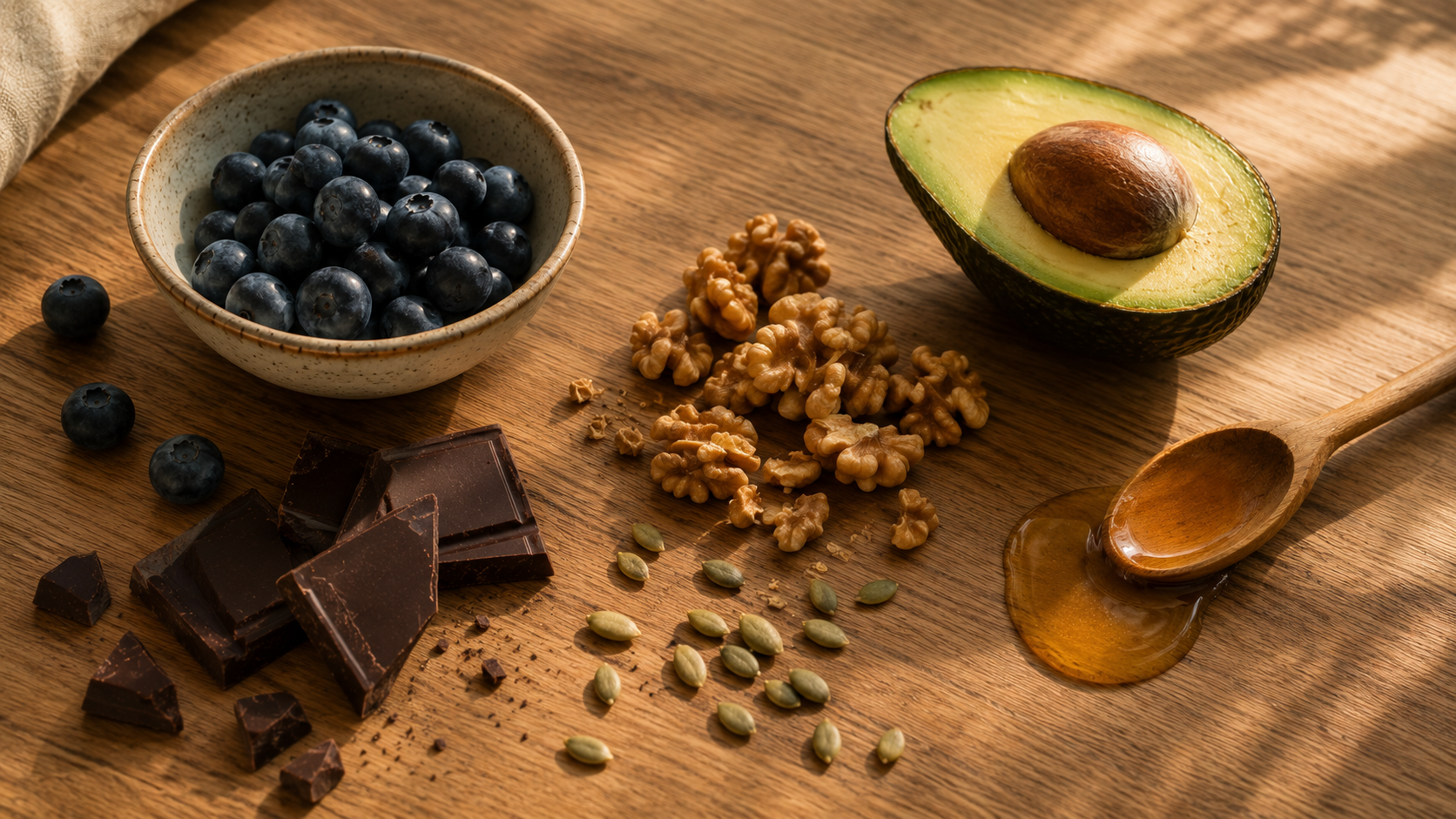
Omega-3s genuinely help. In one study included in the review, fish oil for three weeks measurably reduced the cortisol stress response in healthy men. Salmon, sardines, walnuts.
Vitamin C and polyphenols. Vitamin C reduced cortisol reactivity in healthy adults under stress. Polyphenol-rich foods including dark chocolate showed reductions too. The square or two after lunch is doing something real, not just something you enjoy. If you are not a fan of vitamin c rich food like paprika, you could try supplementing with NatureWise Extra Strength Vitamin C Chewable.
A Mediterranean pattern lowers it. A Western one raises it. The review found that a diet high in fibre, vegetables, and whole grains with low sugar and saturated fat lowered urinary cortisol. The opposite raised it.
Magnesium supports the whole system. It supports HPA axis regulation, and I already take magnesium glycinate in the evenings for reasons I covered in the leg cramps post. Food sources: spinach, pumpkin seeds, dark chocolate, avocado.

The Training Detail That Reassured Me
I train in the mornings and I was curious whether that was working against my cortisol.
The review was reassuring. Morning aerobic exercise is associated with a reduced cortisol awakening response and improved sleep architecture over time. It is high-intensity evening training that pushes cortisol up at night and delays melatonin onset. So my morning sessions are working with my rhythm, not against it. The banana or date with nut butter I have before training helps too, since having some carbohydrate available blunts the cortisol response to the workout itself.
What I Have Actually Changed
Honestly, not everything at once.
The coffee timing is still a work in progress. The magnesium is a fixed habit. The dark chocolate after lunch I now enjoy without guilt. I eat breakfast and a lighter dinner most days, and I make sure there is some protein alongside my pre-training carbs rather than just a banana alone.
The real shift was mental. The wired-but-tired feeling on a stressful evening is not just something that happens to me. It is partly a cortisol rhythm that stayed elevated too long, and that is partly built from what I ate that day. That makes it feel fixable rather than inevitable.
FAQ
Does the cortisol diet mean low carb?
No. The goal is stable blood sugar, not cutting carbs. Severe restriction can actually raise cortisol because low blood sugar triggers its release. Balanced meals with protein and fibre beat any extreme.
How quickly might I notice a difference?
Blood sugar and energy changes tend to be noticeable within days of consistent changes. The deeper cortisol rhythm shifts over a few weeks rather than overnight.
Does intense exercise raise cortisol?
Acutely, yes, that is normal and expected. Morning and moderate training normalises quickly and supports your rhythm over time. It is repeated high-intensity evening sessions that push cortisol into the night.
The Bottom Line
The cortisol diet is not a superfood list. It is a rhythm. Eat earlier, lighter at night, keep blood sugar stable, get your omega-3s and magnesium, enjoy the dark chocolate, and give the coffee at least a small delay.
The wired-but-tired evening is not inevitable. It is partly a pattern, which means it is partly something you can change.
I am still working on the coffee. Everything else I have managed to make stick.
Do you notice a link between what you eat on stressful days and how you sleep that night? I would genuinely like to know!



Leave a Reply