
I’ll be honest — I was sceptical.
“Anti-inflammatory eating” sounded like the kind of phrase that gets attached to expensive powders and complicated protocols that nobody actually follows past day three. Every second wellness account seemed to be talking about it, and the more something trends, the more suspicious I get.
So I did what I always do when something keeps coming up: I went looking for the actual research.
What I found surprised me. Not because the science was dramatic or full of miracle claims — it wasn’t. But because it was considerably more consistent than I expected. The same dietary patterns, the same foods, the same ingredients kept appearing across decades of independent research from different countries and research groups.
Here’s what I actually learned — and the five meals you could try.
First — What Does “Inflammation” Actually Mean Here?
I want to be clear about this because the word gets used so loosely it can lose all meaning.
Inflammation isn’t inherently bad. When you sprain your ankle or fight off a cold, inflammation is your body doing exactly what it’s supposed to do. It’s targeted, temporary, and essential to healing.
The kind researchers are interested in is different. Chronic, low-grade inflammation — the kind that simmers quietly in the background over months or years without obvious symptoms. It’s this type that studies have connected to cardiovascular disease, type 2 diabetes, and other long-term conditions.
A 2020 review in the journal Biomedicines (Tsigalou et al., PMID 32650619) covering fifty years of research found consistent associations between dietary patterns and these chronic inflammatory markers — specifically CRP and interleukin-6, which are the two markers most commonly measured in clinical research.
Fifty years of research pointing in the same direction is worth paying attention to. Even if you’re sceptical, as I was.
Expectations vs Reality
Here’s what I wasn’t expecting when I started reading: the foods that appear most consistently in anti-inflammatory research aren’t exotic. There’s no obscure berry from a rainforest. No proprietary supplement blend.
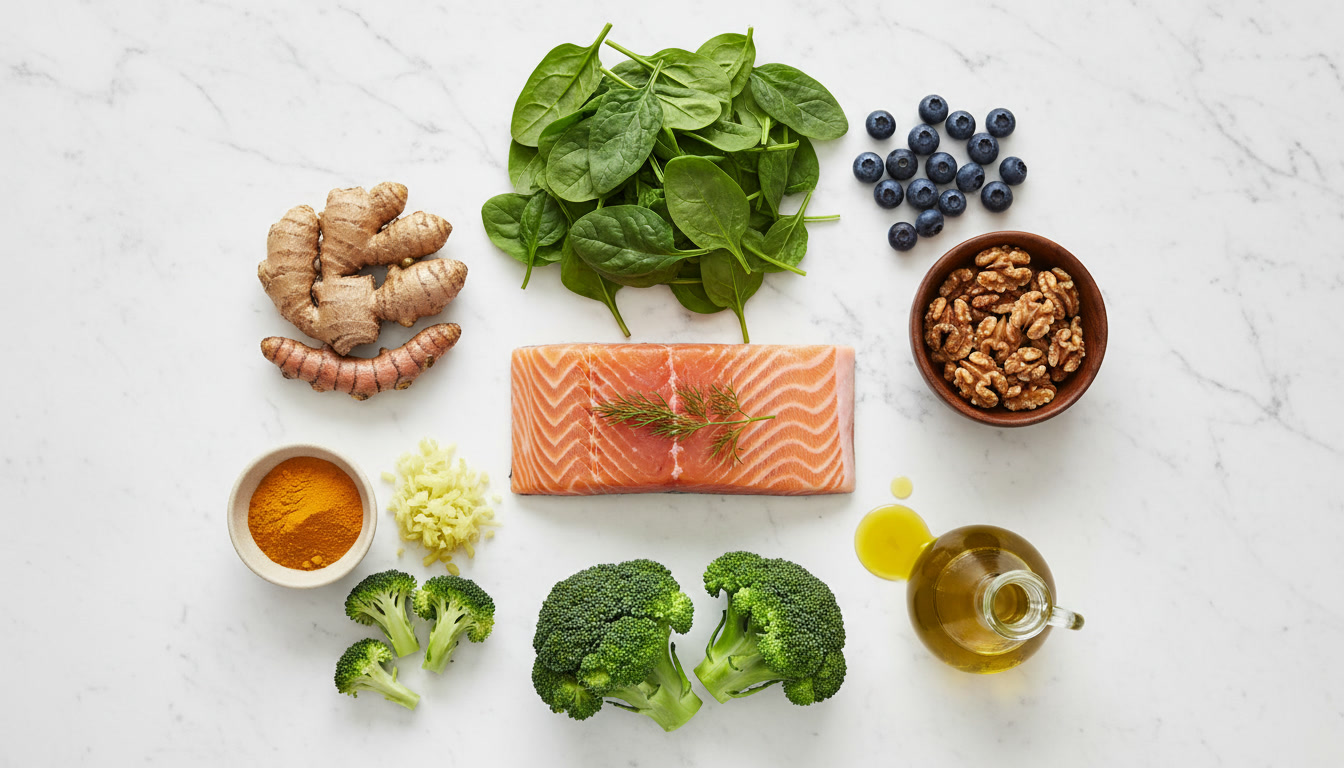
It’s salmon. Olive oil. Turmeric. Ginger. Walnuts. Leafy greens. Berries. Lentils.
Completely ordinary foods that most people already know about — just eaten more deliberately and more consistently.
The dietary pattern with the strongest evidence base is the Mediterranean diet. A 2022 narrative review in Current Opinion in Clinical Nutrition and Metabolic Care (PMID 36039924) concluded that greater adherence to a traditional Mediterranean diet is consistently associated with lower rates of cardiovascular disease, diabetes, and certain cancers — and lower all-cause mortality. A 2025 umbrella meta-analysis in Nutrition Reviews (Reyneke et al., PMID 40657695) covering 225 independent studies found significant beneficial associations between Mediterranean-style eating and inflammatory markers across multiple populations and research groups.
That’s not one study. That’s 225 primary studies across 35 years, synthesised into one review published in 2025.
In practice, the Mediterranean diet looks like: vegetables, legumes, whole grains, fish, extra virgin olive oil, nuts, and fruit. Limited red meat and ultra-processed food. That’s it. No calorie counting, no food scales, no eliminating entire food groups.
The meals below are built on this foundation.
A Few Ingredients Worth Knowing About
Extra virgin olive oil — Olive oil is the defining ingredient of the Mediterranean diet. Its anti-inflammatory properties are linked primarily to oleocanthal, a phenolic compound studied for its effects on inflammatory pathways. A review in Nutrients (Pang & Chin, 2018, PMID 29734791) found consistent evidence for these effects across multiple study types. The distinction between extra virgin and refined olive oil matters here — refining significantly reduces the phenolic content.
Fatty fish — The omega-3 fatty acids EPA and DHA found in salmon, sardines, and mackerel are among the most consistently studied anti-inflammatory dietary compounds. They work by competing with pro-inflammatory compounds for the same enzymatic pathways, essentially shifting the body’s chemistry in a less inflammatory direction. A 2025 review in Frontiers in Immunology (Fares et al., PMC11745436) noted consistent findings on omega-3s and inflammatory cytokine modulation across multiple clinical studies.
Turmeric with black pepper — Curcumin, the active compound in turmeric, has been studied extensively for its effects on inflammatory pathways. Professor Janet Funk of the University of Arizona, who has evaluated hundreds of human trials on curcumin, noted in a 2025 Scientific American review that multiple small clinical trials consistently point toward beneficial effects — with some cases where the results resembled those of over-the-counter anti-inflammatory drugs. The black pepper part is not optional: piperine significantly increases curcumin bioavailability. Without it, most of the curcumin passes through unabsorbed.
Ginger — Contains gingerol and zingerone, compounds studied for their effects on inflammatory enzyme inhibition. A 2024 review in Frontiers in Nutrition (Ayustaningwarno et al., DOI 10.3389/fnut.2024.1364836) provided a detailed look at ginger’s anti-inflammatory mechanisms — adding to a body of research that’s been building for decades.
Walnuts and chia seeds — The main plant-based sources of ALA, a precursor omega-3 fatty acid. Multiple clinical trials have found associations between walnut consumption and reduced CRP levels.
5 Meals With These Ingredients
1. Golden Turmeric Salmon Bowl
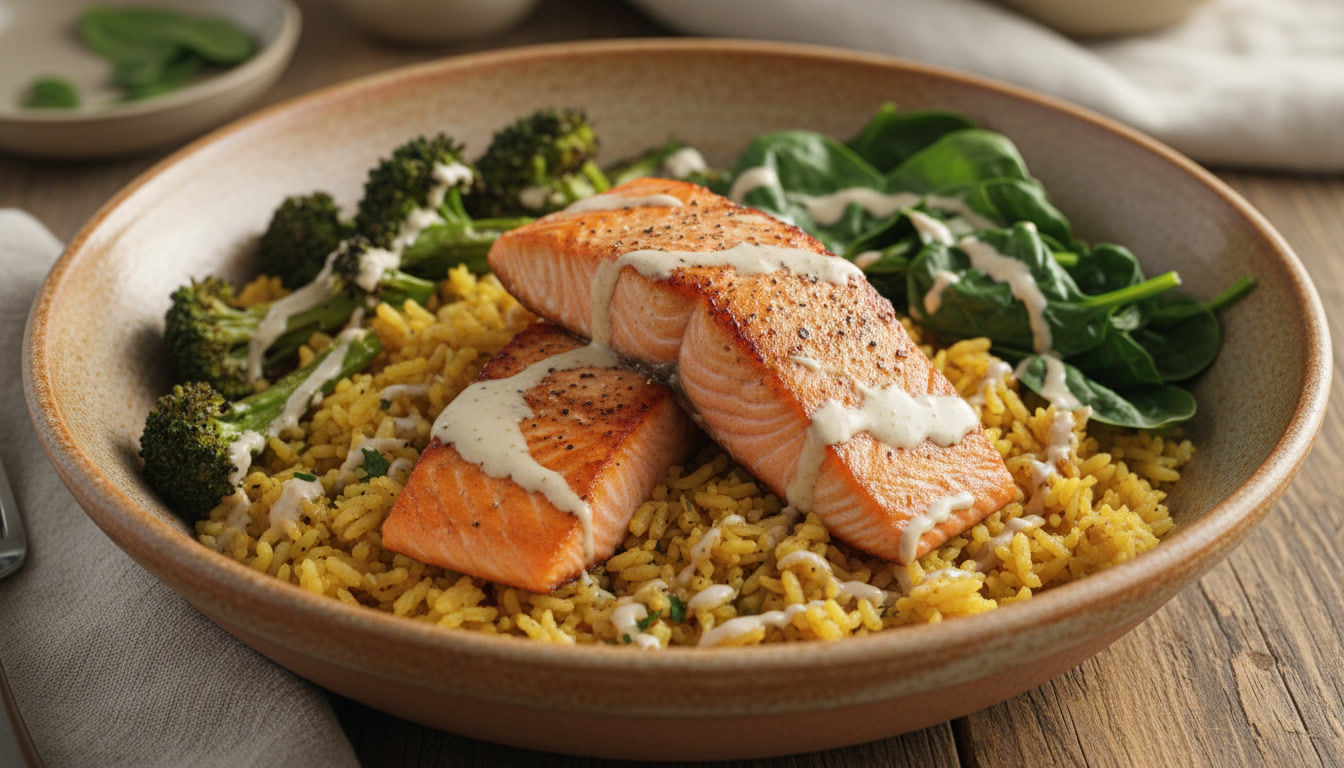
It puts together more of the researched anti-inflammatory ingredients in one bowl than almost anything else I make — and it takes about twenty minutes on a weeknight.
Serves 2 | Prep: 5 min | Cook: 15 min

TURMERIC RICE:
→ 200g basmati or brown rice
→ 1 tsp turmeric
→ ¼ tsp black pepper — essential
→ Pinch of salt
→ Cook as normal with spices stirred through

SALMON:
→ 2 salmon fillets
→ 1 tsp extra virgin olive oil
→ ½ tsp turmeric
→ ½ tsp garlic powder
→ Salt and black pepper
→ Pan-sear 3-4 min each side

GREENS:
→ 2 large handfuls spinach
→ 1 tbsp olive oil
→ 1 garlic clove, minced
→ Wilt in pan 2 minutes

TAHINI DRESSING:
→ 2 tbsp tahini
→ Juice of half a lemon
→ Splash of water to thin
→ Salt to taste

Build the bowl: rice, spinach, salmon, dressing, sesame seeds, lemon wedge. Done.

Keeps: 2 days
Olive oil for the oleocanthal. Turmeric and black pepper together for curcumin absorption. Salmon for the omega-3s. Spinach for polyphenols and vitamin K. It’s a lot of anti-inflammatory ingredient value in one completely normal dinner.
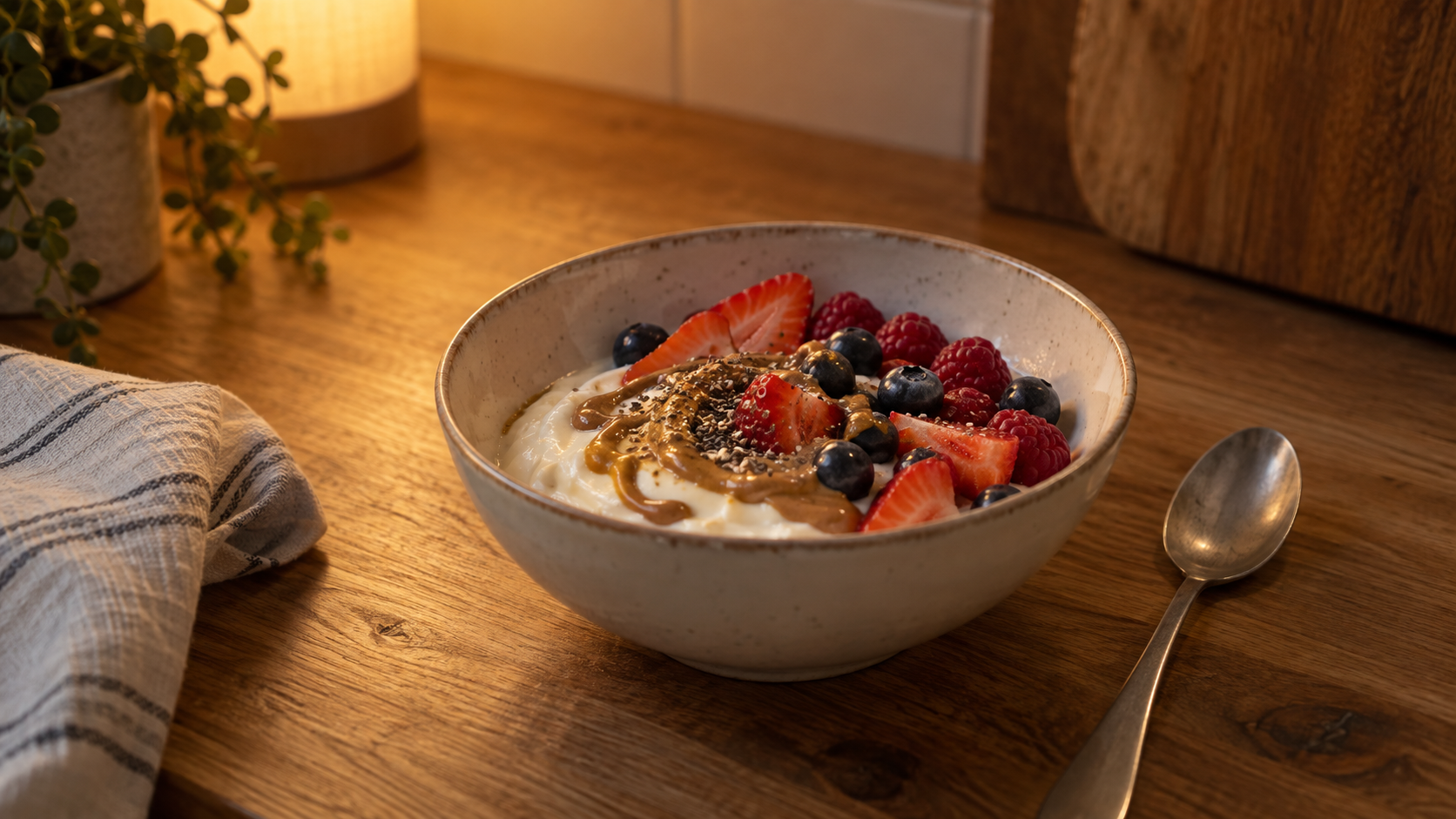
2. The 5-Minute Breakfast Bowl
I wasn’t a fan of this one for a while because it sounds like I wouldn’t like it. But I do. Five minutes and it’s done before I’ve finished my coffee.
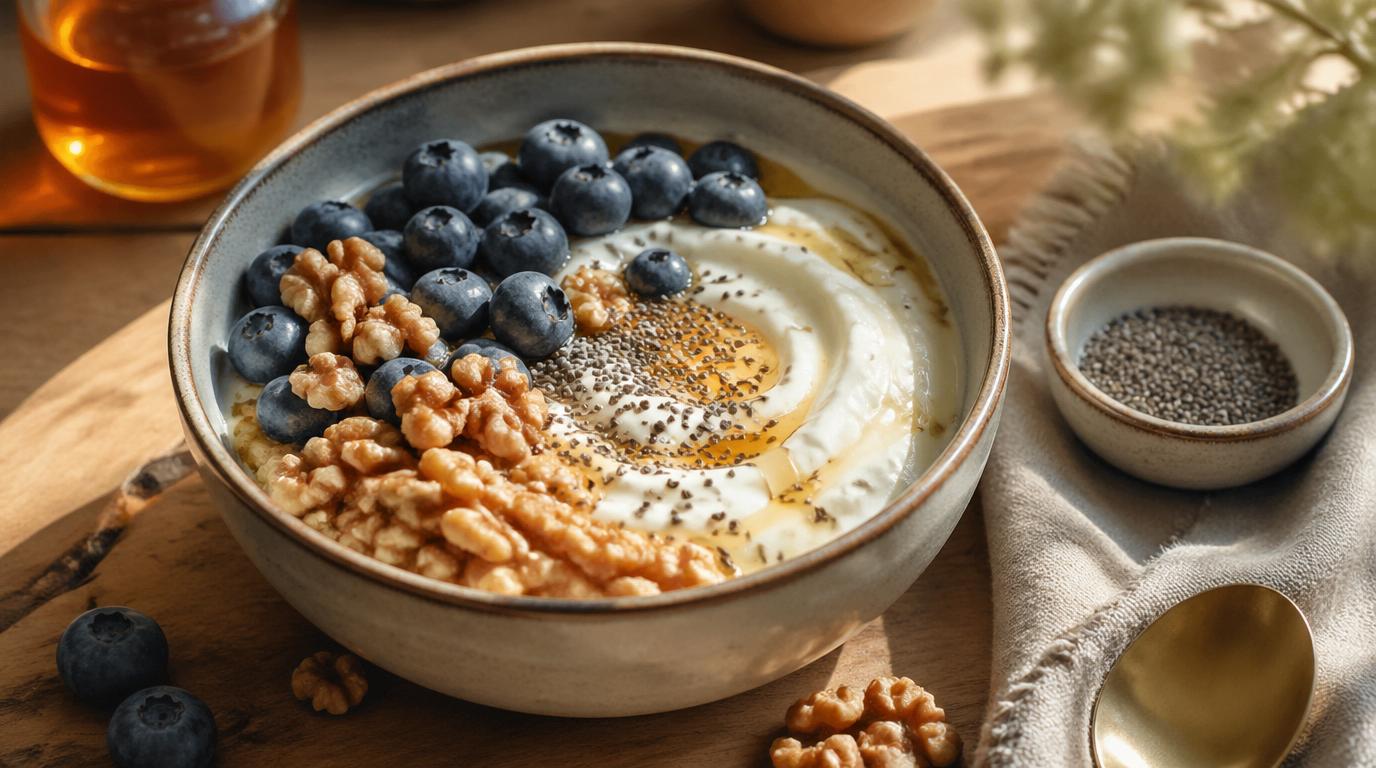
Serves 1 | Prep: 5 min

→ 150g plain Greek yogurt
→ Large handful blueberries
→ 1 tbsp walnuts, roughly chopped
→ 1 tbsp chia seeds
→ ½ tsp turmeric
→ Pinch of black pepper
→ Half a teaspoon of fresh ginger, grated
→ Drizzle of honey
→ Optional: 1 tbsp ground flaxseed

Everything in a bowl or big glas.
Drizzle honey. Eat.
The turmeric-black pepper-ginger combination sounds odd in a breakfast bowl. It actually doesn’t taste of much.
3. Ginger Turmeric Lentil Soup
This is THE Sunday batch-cook. Forty minutes on a Sunday evening and you’ll have lunch for most of the week. It tastes better on day two than day one, and better on day three than day two.
Lentils are an underrated ingredient here. The 2025 Nutrition Reviews meta-analysis found positive trends for legume consumption across multiple inflammatory marker outcomes. Combined with ginger, turmeric, garlic, and olive oil — this soup has most of the key anti-inflammatory bases covered in one pot.
Serves 4-6 | Prep: 10 min | Cook: 30 min

→ 2 tbsp extra virgin olive oil
→ 1 large onion, diced
→ 4 garlic cloves, minced
→ 2 tsp fresh ginger, grated
→ 2 tsp turmeric
→ 1 tsp cumin
→ ½ tsp black pepper
→ 300g red lentils, rinsed
→ 400g tin chopped tomatoes
→ 1.2L vegetable stock
→ Juice of 1 lemon
→ Large handful spinach or kale

1. Sauté onion in olive oil 5 min
2. Add garlic, ginger and all spices — cook 2 min
3. Add lentils, tomatoes, stock — simmer 20-25 min
4. Stir in spinach and lemon
5. Taste and adjust — it always needs more lemon than you think

Keeps 4 days | Freezes well
4. Walnut and Salmon Salad
No cooking required if you use tinned salmon — which keeps its omega-3 content well and costs a fraction of fresh. Ten minutes. Filling enough to actually be lunch rather than a side dish.
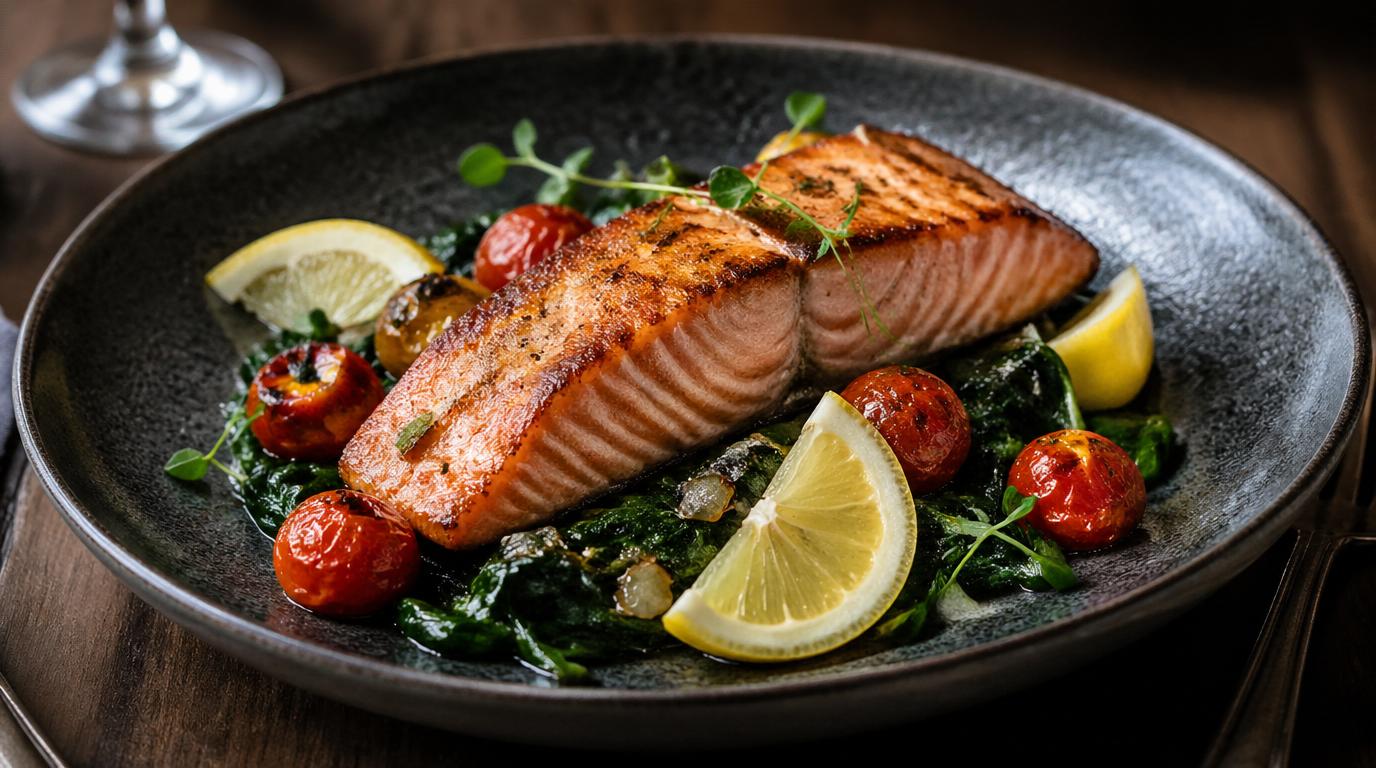
Serves 2 | Prep: 10 min

→ 2 large handfuls rocket or mixed dark greens
→ ½ cucumber, sliced
→ 200g cherry tomatoes, halved
→ 1 avocado, sliced
→ Large handful walnuts
→ 2 tbsp pumpkin seeds
→ 2 cooked salmon fillets, flaked — or 2 tins of wild salmon, drained

DRESSING:
→ 3 tbsp extra virgin olive oil
→ 1½ tbsp lemon juice
→ 1 tsp Dijon mustard
→ ½ tsp fresh ginger, grated
→ Salt and black pepper

Assemble. Whisk dressing. Pour over. Done.
The dark stoneware plates I use: https://amzn.to/41V1hOr
5. Golden Latte
Not a meal — more of a ritual. I make this in the evening sometimes instead of another cup of coffee and I’ve genuinely come to look forward to it. Warm, slightly sweet, a little spiced. The turmeric-black pepper combination is the same logic as in the food recipes — the piperine in black pepper dramatically improves curcumin absorption. But a pinch is enough!
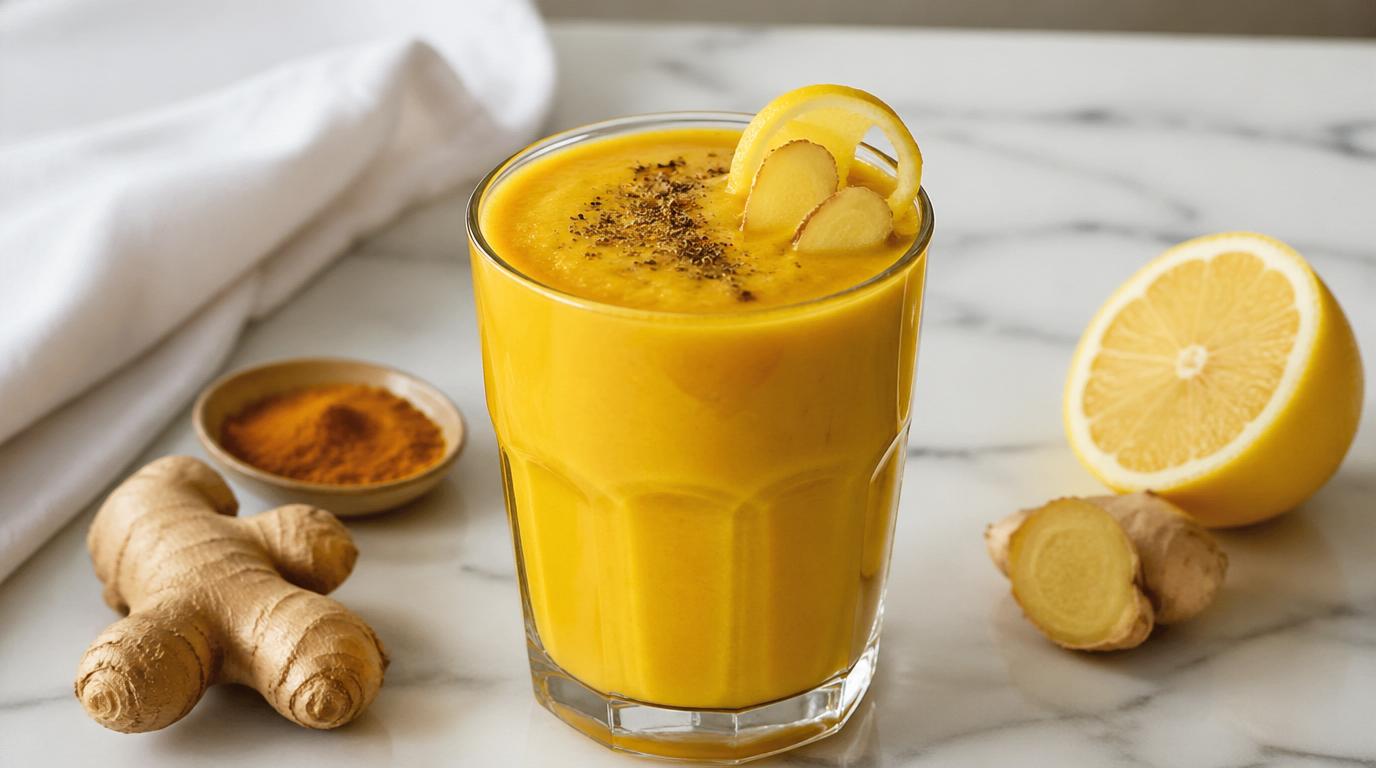
Serves 1 | Prep: 3 min

→ 250ml oat or coconut milk
→ 1 tsp turmeric powder
→ ½ tsp ground ginger
→ ½ tsp cinnamon
→ Pinch of black pepper
→ 1 tsp raw honey
→ Pinch of cardamom if you like it

Warm the milk gently — don't boil.
Whisk everything in.
Drink slowly.
The Truth
I want to be clear about what this evidence actually shows — because wellness content has a tendency to overclaim.
Most of what we know about anti-inflammatory eating comes from observational research. Large groups of people followed over time, with their diets and health outcomes tracked. These studies consistently show that people who eat Mediterranean-style diets have better inflammatory outcomes. They can’t tell us definitively that the food caused the outcome, because people who eat this way also tend to do other things that support health.
The 2022 review in Current Opinion in Clinical Nutrition was explicit about this: while the evidence is strong and consistent, larger controlled trials are still needed to fully understand the mechanisms.
What I can say with confidence: the pattern is consistent across fifty years of research in multiple countries. The foods involved are ordinary and accessible. And reducing ultra-processed food and refined sugar probably matters at least as much as adding anything to your diet — possibly more.
That’s the honest version.
I went in sceptical and came out genuinely convinced — not because of dramatic findings, but because of how consistent the evidence is across fifty years of independent research.
The foods are ordinary. The pattern is practical. And the gap between what the research shows and what most wellness content claims is, honestly, enormous.
Five meals. Maybe start with the salmon bowl?
What’s your go-to anti-inflammatory ingredient? I’m always curious — driftlyblog@gmail.com




Leave a Reply