
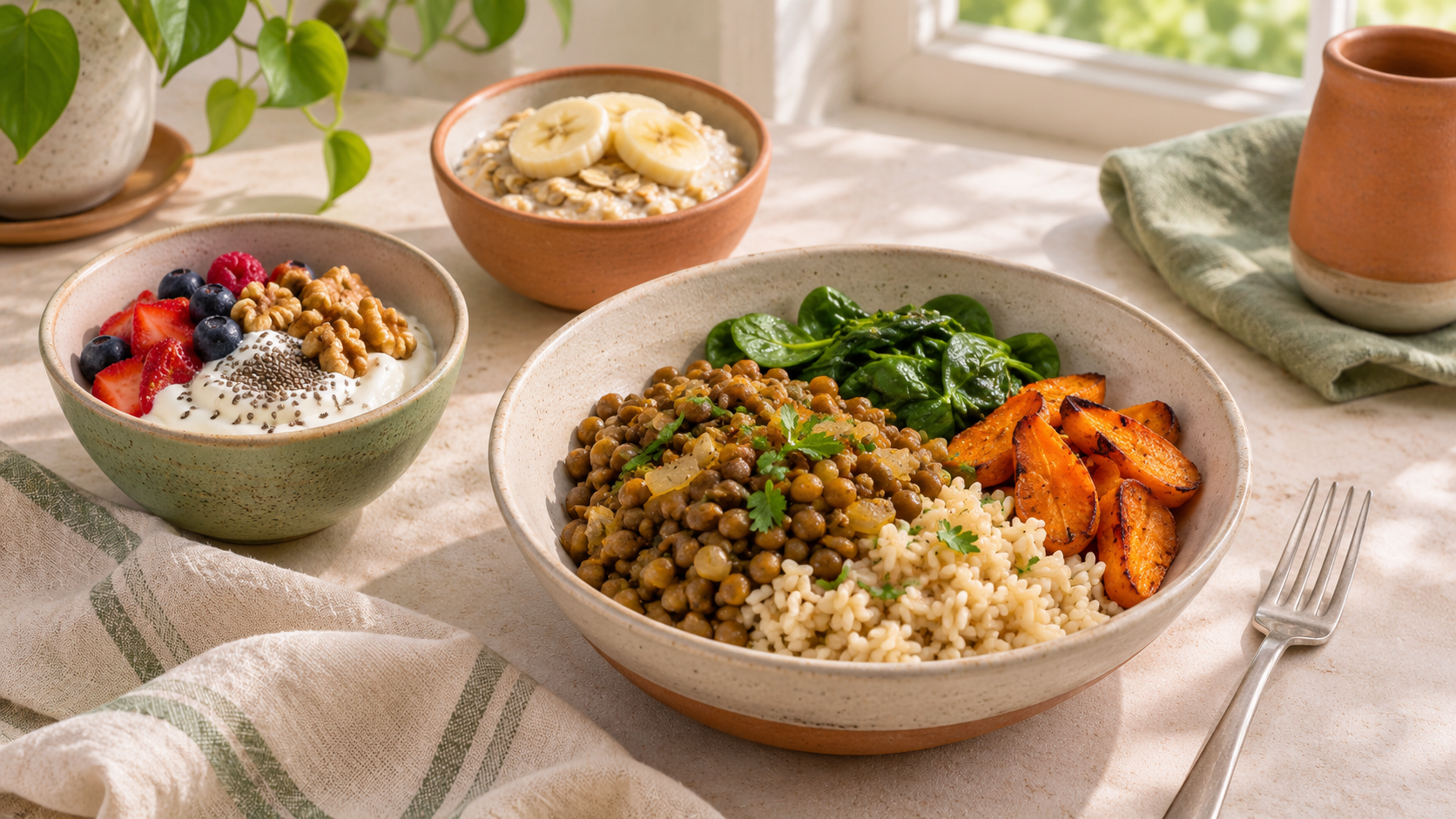
Gut health meal planning sounds more organized than my usual oats after a workout. After a gym session, I often make them with banana and chia seeds. Sometimes I add protein powder because I am working on muscle growth. Most days, berries end up in my yogurt bowl. I also love cabbage with carrots, and kimchi when I am in the mood for something spicy.
None of this began as a gut health meal planning system. They are simply foods I enjoy and eat often. But when I looked at the research, they gave me a sensible starting point: familiar meals, more sources of fiber, and fermented foods when I want them. No “gut reset” required.
This three day plan is a template, not a diary of exactly what I eat. It is built so that one shopping trip and a little preparation give you several possible meals without deciding every bite in advance.
What the research says about gut health meal planning
Fiber is the first practical place to start. Oats, beans, lentils, fruit, vegetables, nuts, and seeds provide different types of it. The National Institute of Diabetes and Digestive and Kidney Diseases lists these foods as fiber sources and advises increasing fiber gradually, with enough fluid, rather than making a sudden jump. A 2026 systematic review of 113 randomized trials found that more fiber had small to modest benefits for bowel function in generally healthy people. The effects varied by fiber type. That is useful evidence for including fiber rich foods, not for calling any one ingredient a cure.
Fermented foods are interesting, but the details matter. In a 2021 Stanford trial published in Cell, 36 generally healthy adults followed either a high fiber or a high fermented food diet. The fermented food group showed greater microbiome diversity and lower levels of several inflammatory markers. The fiber group showed changes in microbial function but no group wide rise in diversity. This was a small study without a usual diet control group. Some authors disclosed interests in microbiome related companies. It did not test a three day meal plan, digestive symptoms as a treatment outcome, or sleep.
Also, “fermented” does not automatically mean “probiotic.” The NIH Office of Dietary Supplements explains that not every fermented food contains live microbes when eaten, and live microbes are not automatically proven probiotics. My cabbage with carrots might be a fermented food if it is made by fermentation. If it is simply pickled in vinegar, it still counts as a vegetable, just not as evidence of live cultures. Check the label or how it was made rather than guessing.
The three day plan
The meals repeat ingredients on purpose. Portions are flexible, and a snack is optional. If beans or fermented foods are new to you, start with a small serving and see how you feel.
| Day | Breakfast | Lunch | Dinner |
|---|---|---|---|
| 1 | Oats with banana, chia seeds, and yogurt | Lentil, rice, spinach, and carrot bowl with lemon and olive oil | Roasted vegetables with chickpeas and an egg or tofu |
| 2 | Greek yogurt with berries, oats, chia seeds, and walnuts | Leftover roasted vegetable and chickpea bowl | Quick tomato, lentil, and spinach soup with whole grain toast |
| 3 | Overnight oats with banana and berries | Leftover lentil soup, plus fruit if you want it | Rice bowl with vegetables, egg or tofu, and a little kimchi or fermented cabbage if it suits you |
This is food, not a protocol. Swap a meal you dislike. Use canned lentils and chickpeas if cooking dried beans is one decision too many this week. If yogurt does not suit you, use a dairy free alternative and choose a separate protein source that works for you.
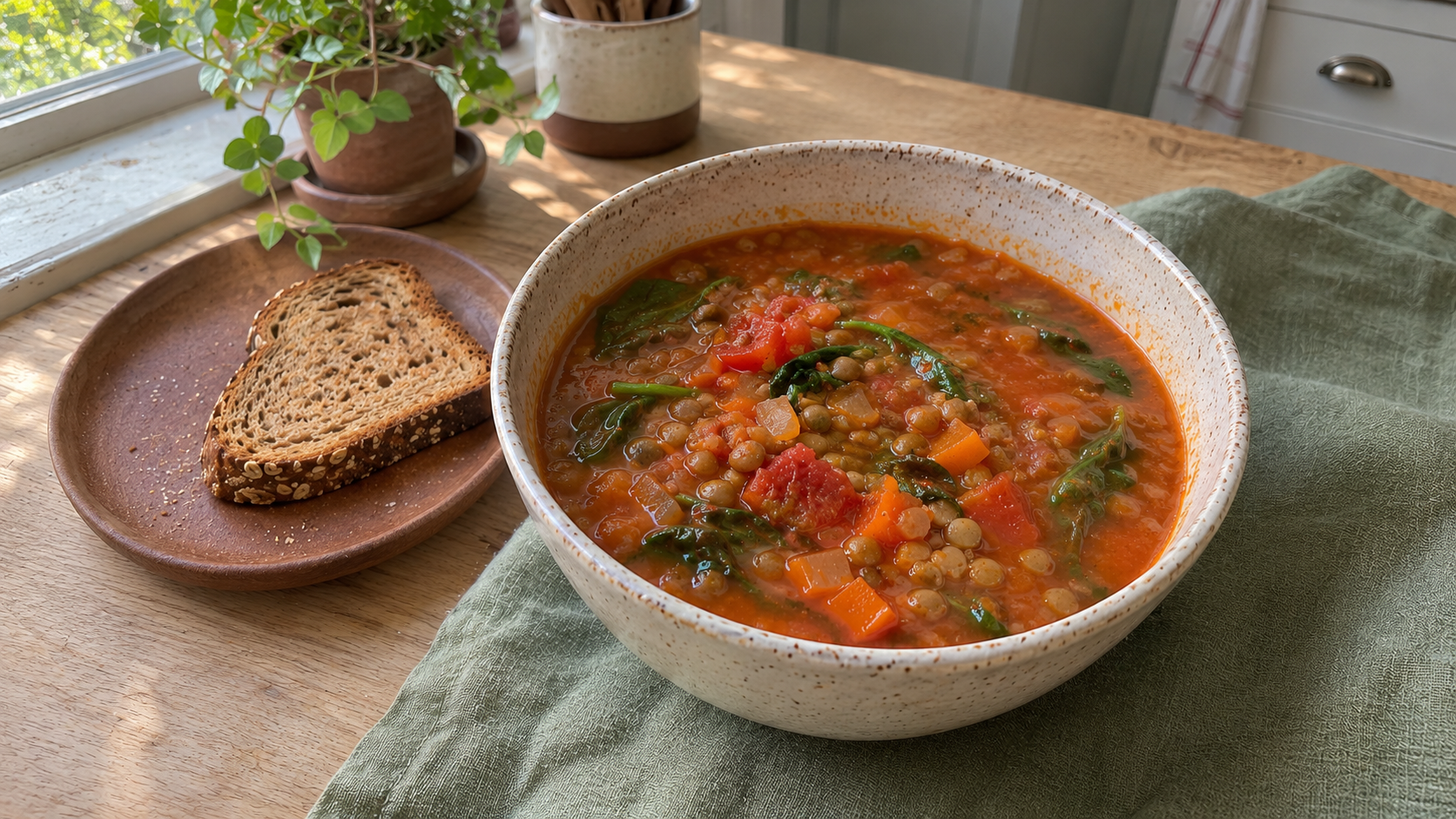
The oats after training reflect something I already like eating. The dinner bowl with kimchi is a meal idea, not a claim that I have tested this exact combination. For another berry breakfast, my strawberry protein recipes offer a few variations.
One grocery trip, a short prep session
For one person over three days, start with rolled oats, rice, two cans of lentils, one can of chickpeas, plain yogurt, eggs or tofu, bananas, frozen or fresh berries, chia seeds, walnuts, spinach, carrots, a couple of vegetables you like roasting, canned tomatoes, a lemon, and olive oil. Add kimchi, kefir, or fermented cabbage only if you enjoy and tolerate it. Adjust quantities to your appetite and household.
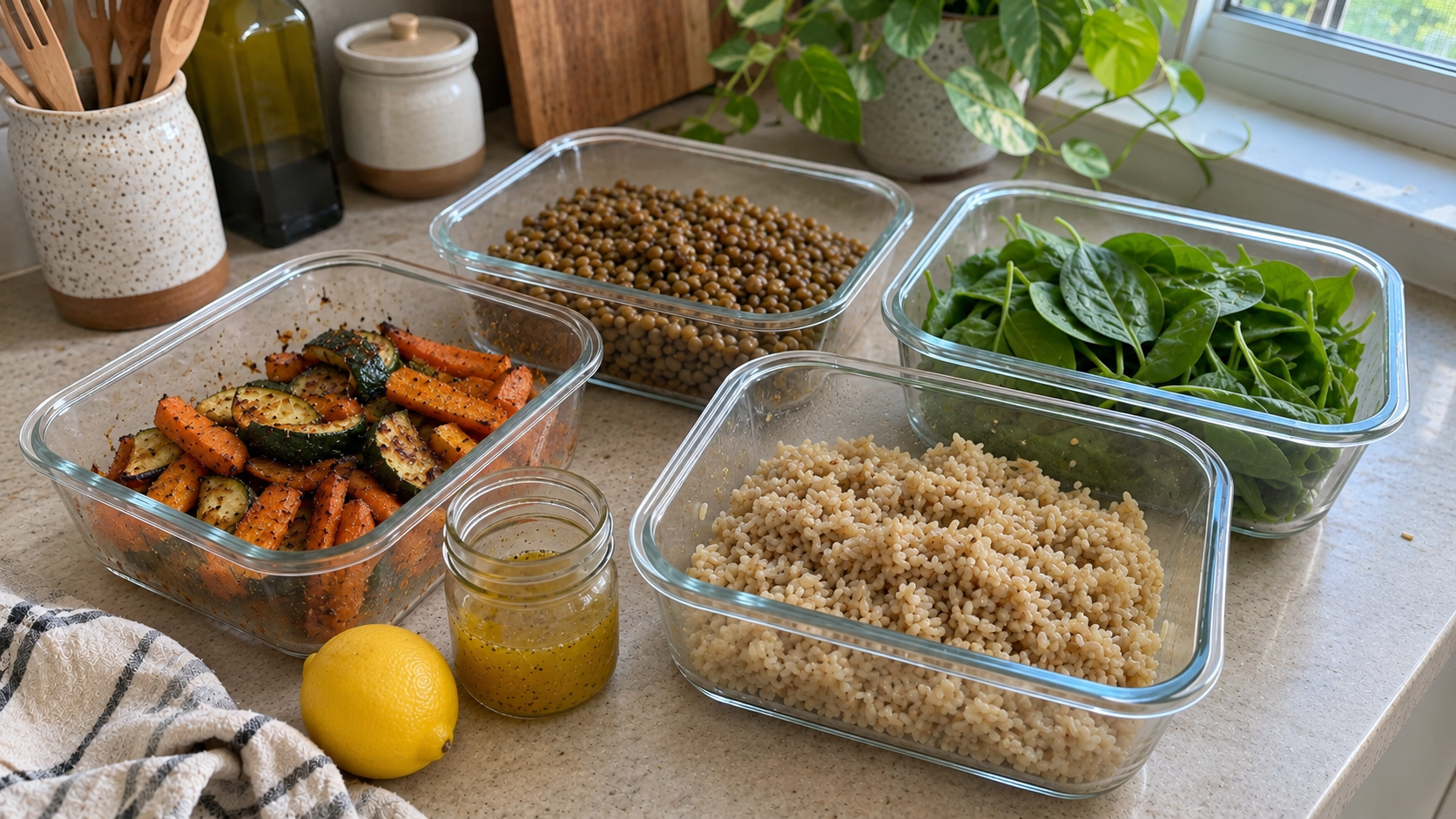
Cook the rice, roast the vegetables, and rinse the canned legumes. Mix lemon juice and olive oil for the bowls. Keep the yogurt, fruit, and optional fermented food separate until serving. The next day, the same ingredients can become a bowl or a quick soup. For another adaptable lunch, see my high protein bowls.
Put cooked food in shallow containers and refrigerate it promptly. FoodSafety.gov advises refrigerating perishables within two hours, keeping the refrigerator at 40°F (4°C) or below, and using cooked leftovers within three to four days. Freeze extra portions if you will not eat them in that window.
Does this help sleep?
I write mainly about sleep, so I wanted to check this carefully. There is research on the gut microbiome and sleep, but it does not establish that this meal plan will improve anyone’s sleep. A 2023 meta-analysis of randomized trials found no significant improvement in sleep quality or duration from prebiotic or probiotic interventions. A newer 2026 review reported small improvements in some subjective sleep measures with probiotic supplements, but judged the evidence generally low certainty. Supplements, strains, and study populations differ, and neither review tested these meals.
The honest Driftly reason to plan these foods is simpler: the meals are varied, practical, and easier to repeat than a strict diet. I can care about digestion and still leave sleep claims to studies that actually measure sleep.
Five questions before you shop
Do I need to eat fermented food every day?
No. This plan makes it optional. Choose a food you enjoy and tolerate, and remember that fermented foods are not interchangeable with a tested probiotic supplement.
What if beans make me bloated?
Start with a smaller portion or leave them out of this template. The NIDDK recommends increasing fiber gradually. Persistent symptoms deserve individual advice, especially if you have IBS.
Can I use frozen berries and canned lentils?
Yes. Both make the plan easier to repeat. Rinse canned lentils if you prefer, and check labels if sodium or other ingredients matter to you. It’s recommended to heat the frozen fruits before eating.
Is this a low FODMAP meal plan?
No. Some ingredients may not suit people with IBS. The NIDDK notes that different dietary changes help different people, and a clinician may recommend a specific approach such as a low FODMAP diet.
How many plants should I eat each week?
There is no magic number in this article. Try adding variety that you can comfortably eat, such as a different fruit, vegetable, grain, or legume. Consistency matters more than turning dinner into a counting exercise.
The bottom line
Gut health meal planning can start with three days and foods you already like. My oats, berries, yogurt, chia seeds, and cabbage gave me the idea. The plan adds a few more fiber sources and leaves room for fermented food without making it compulsory.
The research supports gradual fiber increases and suggests fermented foods can change the microbiome. It does not prove that this menu fixes digestion or sleep. That is a less dramatic promise, but it is one I can stand behind.
What would you keep or swap in this plan?

Leave a Reply