
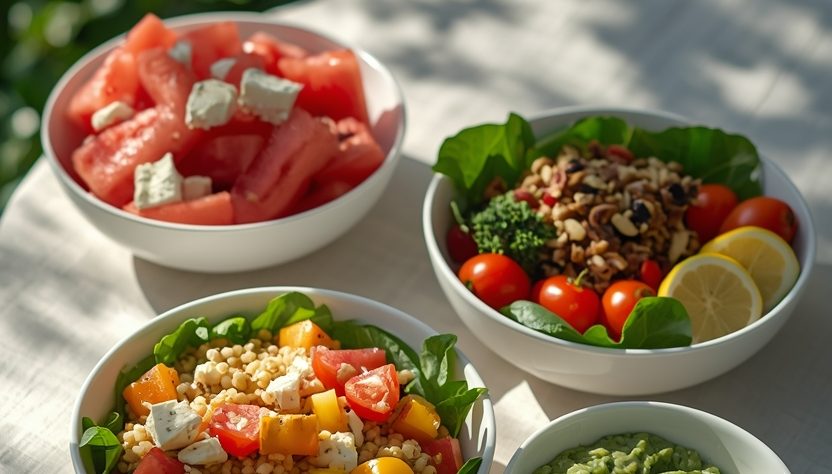
Summer salads are having a moment on Pinterest right now — and honestly, it makes complete sense.
When it’s warm outside and the idea of standing over a hot stove feels like a personal attack, a bowl of something cold, colourful, and genuinely satisfying is exactly what most people want. The problem is that most salads — the ones you throw together in five minutes because you feel like you should eat something green — leave you hungry again an hour later.
The ones that don’t? They have something in common: they’re built with ingredients that actually do something. Not in a “superfood” marketing way. In a quieter, more practical way — the kind that research keeps pointing to.
These are two of my favourites. Both are trending on Pinterest right now for good reason. And both have ingredients worth knowing about.
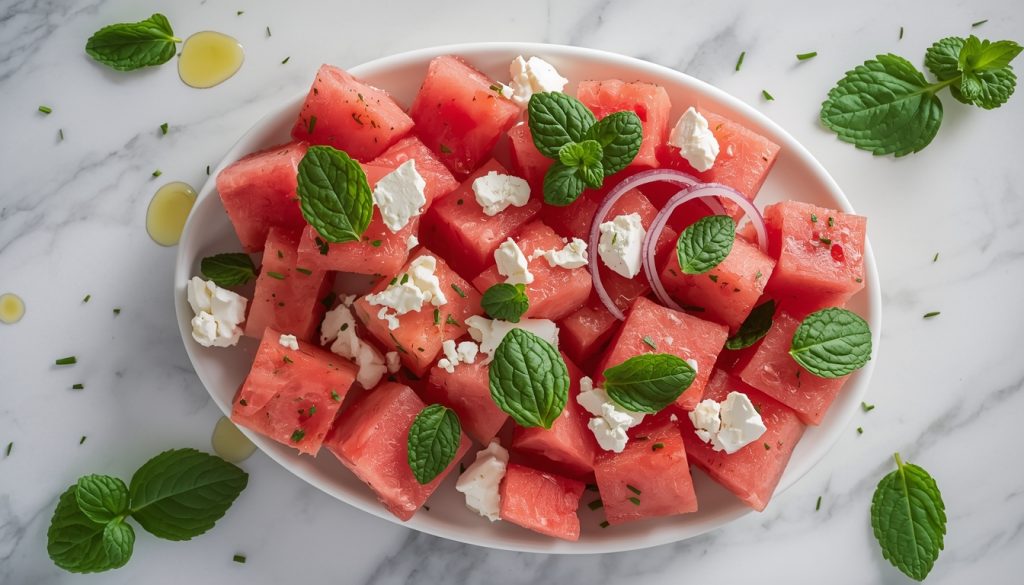
The Watermelon Feta Salad
I made this for the first time at a summer barbecue years ago, mostly because I had half a watermelon that needed using and someone had brought a block of feta. I assumed it would be a bit of an odd combination. It wasn’t. It was immediately one of my favourite things.
The sweet-salty-cold combination is genuinely hard to beat on a warm day. But the thing I found more interesting when I looked into it later was how much research exists on the main ingredient.
The Recipe
Serves 2-4 | Prep: 10 minutes

INGREDIENTS:
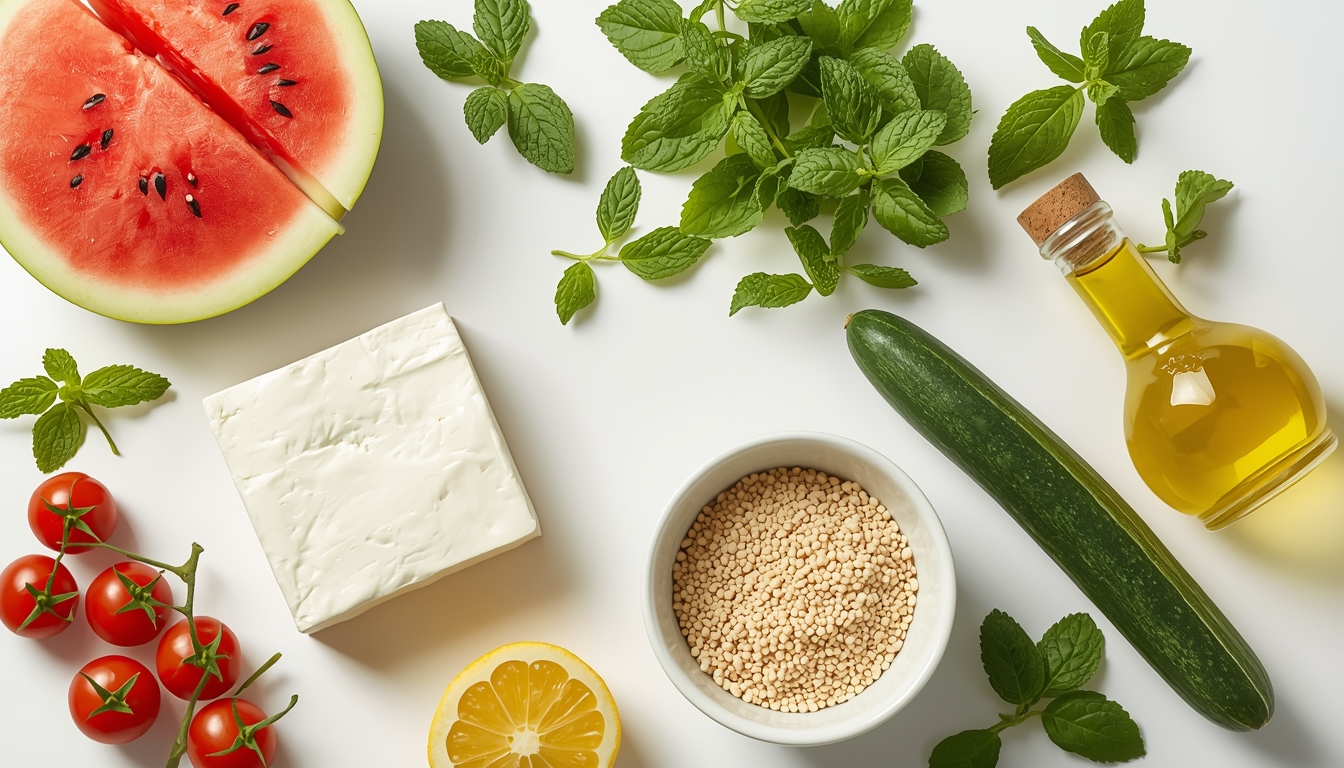
→ ½ medium watermelon, cubed
   (roughly 4-5 cups)
→ 200g feta cheese, crumbled
→ A large handful of fresh mint leaves
→ ½ red onion, very thinly sliced
→ 2 tablespoons good olive oil
→ Juice of half a lime
→ Freshly ground black pepper
→ Optional: a small handful of
   rocket or watercress

METHOD:
1. Cube the watermelon and arrange in a wide, shallow bowl.

2. Scatter the crumbled feta generously over the top.

3. Add the thinly sliced red onion — if you find raw onion sharp, soak the slices in cold water for 10 minutes first.

4. Tear the mint leaves and scatter across the salad.

5. Drizzle with olive oil and lime juice. Season with black pepper. A handheld citrus press makes this much less fiddly, especially when you’re cooking in summer. I use one for both the lime here and the lemon dressing below. Shop my favourite citrus press.

6. Serve immediately — this one doesn't travel well or sit happily in the fridge.
Why Watermelon Is More Interesting Than It Sounds
Watermelon gets dismissed as basically flavoured water — which is both unfair and also partially true. Watermelon is composed of over 90% water, making it an outstanding source of hydration, with only 46 calories per cup. It is particularly rich in lycopene — a potent antioxidant — containing more lycopene than any other fresh fruit or vegetable, even more than tomatoes. Anai
Lycopene is a natural compound with antioxidant properties that has been shown to decrease the risk of cancer, heart disease, and age-related eye disorders. Research suggests it may have blood pressure-lowering effects when consumed regularly through dietary means. Northwestern Health Sciences University
There’s also something less well-known worth mentioning. Watermelon contains the amino acids citrulline and arginine, which act as a precursor to nitric oxide — a molecule that plays a role in blood pressure regulation, lipid reduction, and glucose control. Watermelon
And the hydration element isn’t trivial in summer. Watermelon provides electrolytes such as potassium, which are important for hydration — a combination that could make watermelon particularly beneficial in hot weather or after physical activity. Medical News Today
None of this means watermelon is a miracle food. But for something that tastes like summer in a bowl and requires zero cooking, the nutritional profile is considerably more interesting than its reputation suggests.
A Word on the Feta
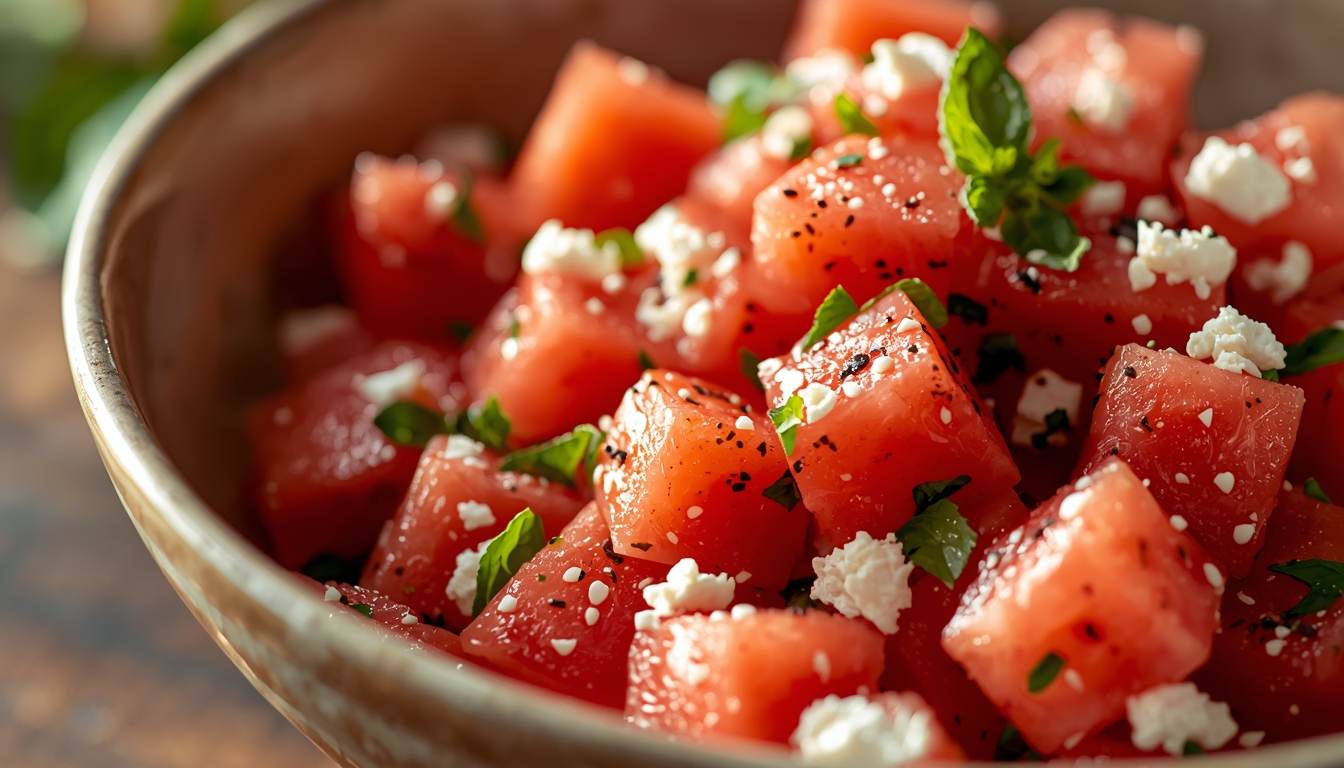
Feta doesn’t have the research track record of watermelon, but it earns its place in this salad. It’s a meaningful source of protein and calcium, and the saltiness is what makes the whole combination work — the contrast with the cold, sweet watermelon is the whole point.
If you’re watching sodium, a smaller amount of feta goes a long way here. The flavour is strong enough that you don’t need a lot.
The Couscous Salad
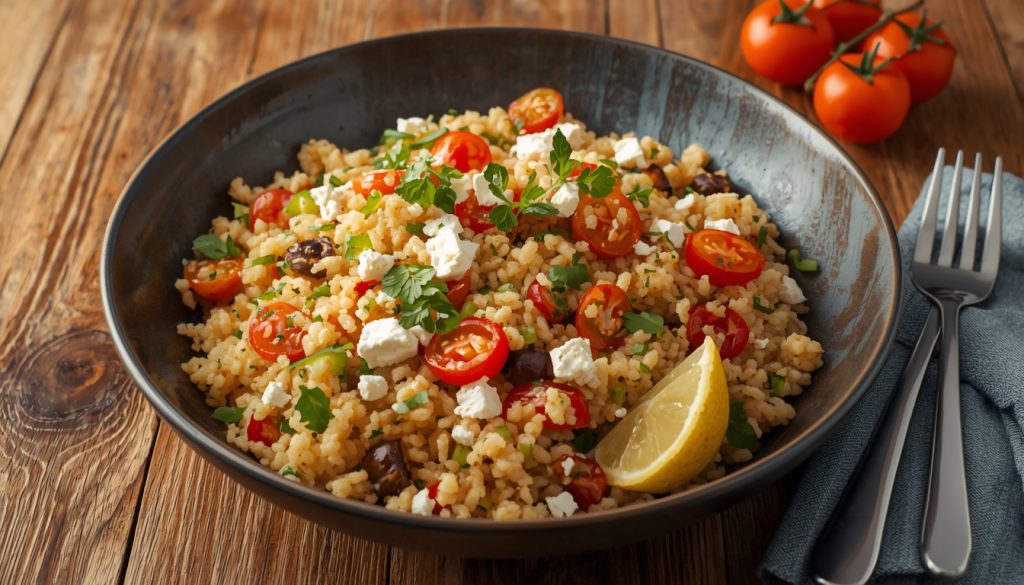
This one is my more practical summer salad — the one I make at the beginning of the week and eat for lunch for three days in a row without getting bored of it.
Couscous salad is endlessly adaptable, which is a big part of why it works. The base is reliable, and you can change almost every other element depending on what’s in the fridge or what’s in season.
The Recipe
Serves 4 | Prep: 15 minutes

INGREDIENTS:

BASE:
→ 200g couscous (whole wheat if you can find it)
→ 250ml hot vegetable stock
→ 1 tablespoon olive oil

SALAD:
→ 1 cucumber, diced
→ 200g cherry tomatoes, halved
→ ½ red onion, finely diced
→ 1 can (400g) chickpeas, drained and rinsed
→ 100g feta, crumbled
→ Large handful of fresh parsley and/or mint
→ Optional: handful of rocket, kalamata olives, roasted red peppers

DRESSING:
→ Juice of 1 large lemon
→ 3 tablespoons olive oil
→ 1 teaspoon cumin
→ Salt and black pepper
→ Optional: pinch of chilli flakes

METHOD:
1. Pour hot stock over couscous in a bowl. Add olive oil, cover and leave for 5 minutes.

2. Fluff with a fork and allow to cool completely before assembling — warm couscous makes everything soggy.

3. Combine all salad ingredients in a large bowl.

4. Add the cooled couscous and toss everything together.

5. Whisk dressing ingredients and pour over. Toss well.

6. Taste and adjust seasoning — it usually needs more lemon than you expect.

7. Keeps well in the fridge for max. 3 days. Add fresh herbs just before serving. or make-ahead lunches, I store this in glass containers with leak-proof lids and keep the fresh herbs separate until serving. It stays far more enjoyable that way. Shop the glass containers I use.
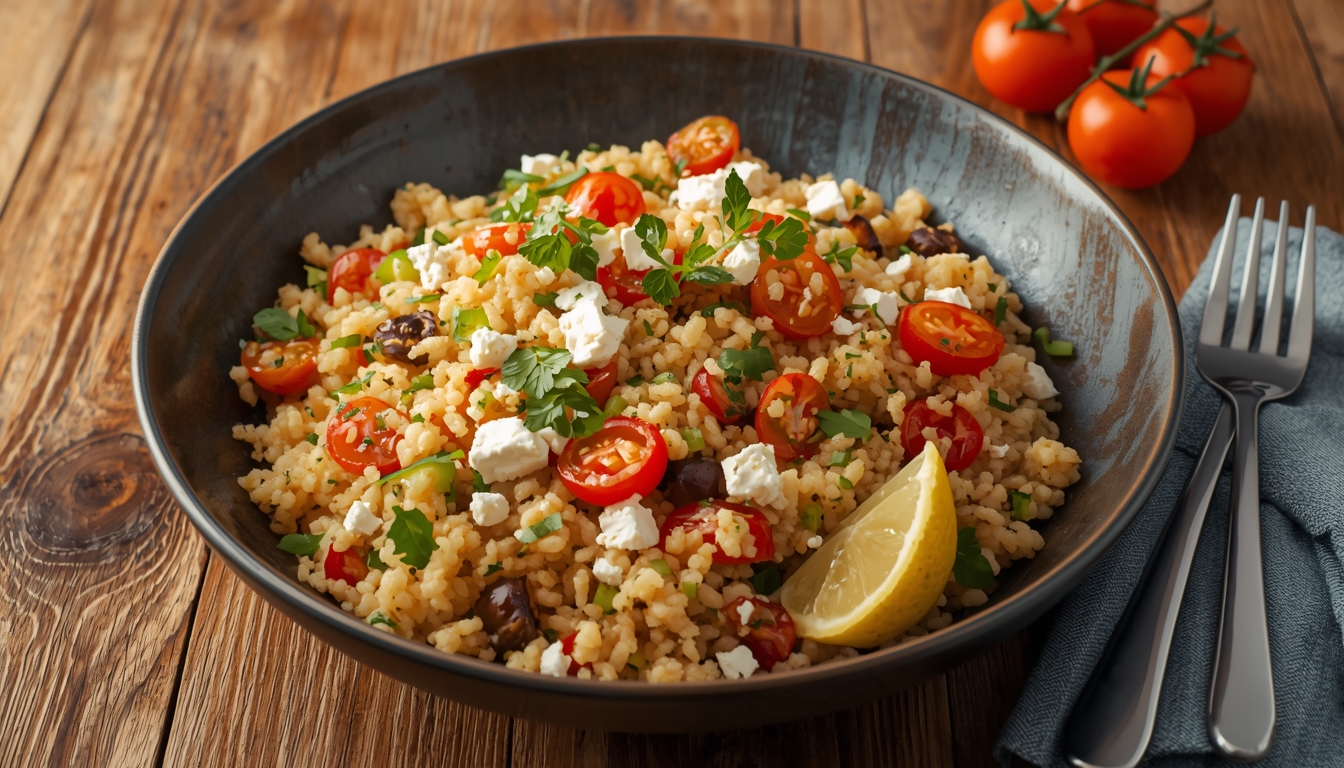
What the Research Says About Couscous
Couscous has a somewhat mixed nutritional reputation — and honestly, it deserves a nuanced assessment rather than either enthusiasm or dismissal.
One of the most important nutrients in couscous is selenium — a vital antioxidant mineral with many benefits, including positive antiviral effects and decreased risks of cancer and autoimmune diseases. Healthline
Whole-grain couscous is a good source of fibre, which can stop blood sugar from spiking and help keep you fuller longer. It may also help lower cholesterol and reduce the chances of heart disease. WebMD
The honest caveat: whole grains such as quinoa, brown rice, and oats are better sources of fibre than couscous, and it contains gluten making it unsuitable for those with celiac disease or gluten sensitivity. Healthline
As a complex carbohydrate source, couscous provides steady energy — since the carbs are absorbed gradually rather than all at once, it can help maintain stable blood sugar and prevent sharp energy crashes. Medium
The practical takeaway: choose whole wheat couscous where possible, and build the salad around it with chickpeas, vegetables, and olive oil. The chickpeas add protein and additional fibre — which is where the “staying full until dinner” part actually comes from.
Why Summer Salads Often Don’t Fill You Up (And How to Fix It)
The reason most people find salads unsatisfying isn’t the salad — it’s the construction.
A bowl of lettuce and cucumber with a light dressing is, nutritionally, not much. It’s mostly water and fibre with minimal protein or fat. Your body processes it quickly and signals hunger again within an hour or two.
The salads that genuinely satisfy share a few things in common:
Protein — chickpeas, feta, grilled chicken, hard-boiled eggs, white beans, or lentils. Something with staying power. Aim for at least 15–20g of protein in a main salad.
Healthy fat — olive oil, avocado, nuts, seeds. Fat slows digestion and significantly extends the feeling of fullness.
Fibre — vegetables, legumes, whole grains. Fibre feeds gut bacteria and slows the absorption of everything else in the bowl.
Volume — this is actually where watermelon is underrated. Its high water content means you can eat a large, satisfying amount without consuming many calories.
Both recipes above tick most of these boxes. The couscous salad in particular, with chickpeas and olive oil, is designed to work as a complete meal rather than a side dish.
A Few Variations Worth Trying
Summer salads are trending because they’re genuinely good — fast, colourful, and built for warm weather. The ones worth making are the ones constructed with enough protein, fat, and fibre to last beyond the first hour.
Watermelon and feta is one of those combinations that sounds unlikely and tastes immediately right. Couscous salad is the reliable workhorse — meal-prep friendly, endlessly adaptable, and considerably more interesting nutritionally than its reputation suggests.
Both are worth making this week. And both will end up saved on someone’s Pinterest board before the summer is out.
Which summer salad is your current obsession? I’m always collecting new ideas — driftlyblog@gmail.com


Leave a Reply