
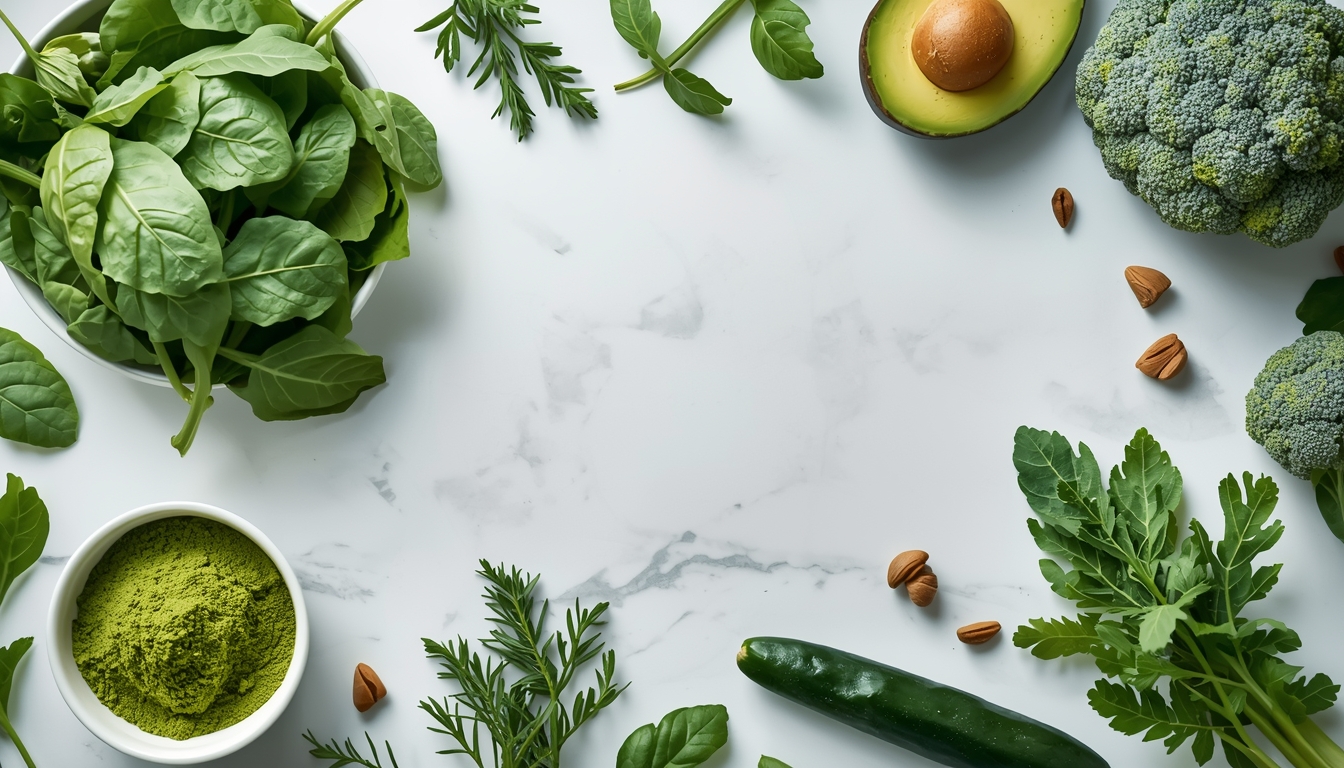
It started, embarrassingly, with a smoothie I made mostly to use up a bag of spinach that was about to go bad.
I threw in a banana, some frozen mango, a handful of spinach, and blended it with my Ninja Mixer. It tasted like mango. Completely. Not even a hint of green.
I’ve been adding greens every day since then and never regret— not because I’m particularly disciplined, but because that first smoothie sent me down a research rabbit hole I haven’t fully climbed out of yet.
What I found surprised me. Not in a “this superfood will change your life” way — I’m deeply skeptical of that kind of language. In a quieter, more interesting way. The research on green foods is genuinely compelling. And it’s been building for decades.
Here’s what I learned — and what I actually noticed.
The Study That Stopped Me Mid-Scroll
I want to start here because this is the finding that genuinely made me put my phone down and stare at the ceiling for a moment.
A prospective study published in the journal Neurology (Morris et al., 2018) followed nearly 1,000 older adults over an average of almost five years, tracking their diets and cognitive function. The rate of cognitive decline among those who consumed one to two servings of green leafy vegetables per day was the equivalent of being 11 years younger compared with those who rarely or never consumed them.
Eleven years. From spinach.
I know that’s an observational study — people who eat more vegetables also tend to do other things that support health, and correlation is not causation. The researchers acknowledge this. But when the same association shows up across multiple large, independent studies over multiple decades, it becomes harder to dismiss.
Higher food intakes of folate, phylloquinone, and lutein were each associated with slower cognitive decline and appeared to account for the protective relationship of green leafy vegetables to cognitive change.
Folate. Vitamin K. Lutein. All three found in meaningful quantities in the kind of greens I’d been throwing into smoothies without thinking about it.
I’m not saying spinach makes you smarter. I’m saying the research on this has been consistent enough that I find it worth paying attention to.
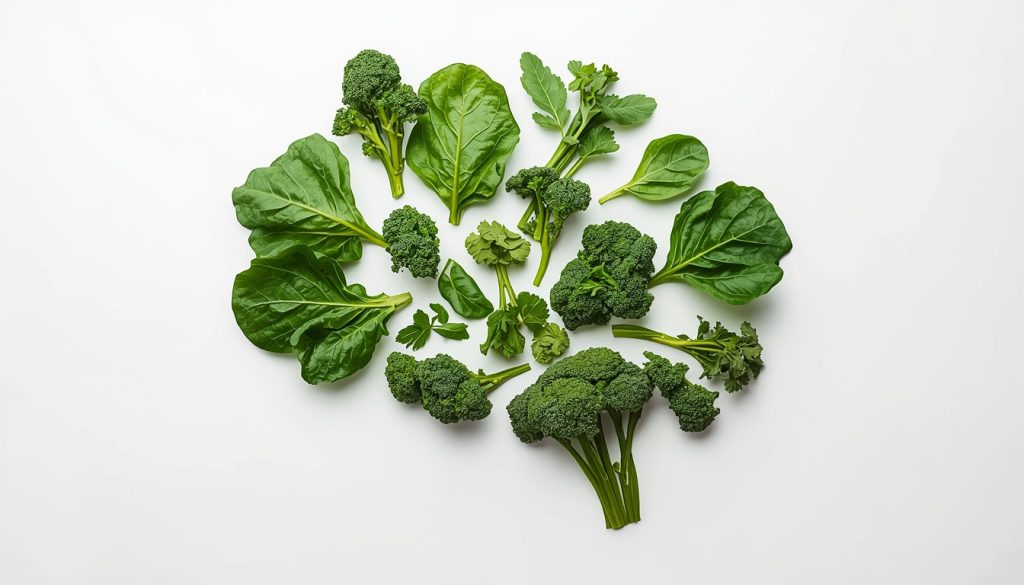
What Else Kept Coming Up
Once I started reading, I kept finding the same foods mentioned across different research areas. Here’s what stood out:
Heart Health
Consumption of 100g of green leafy vegetables per day is associated with a reduced risk of coronary heart disease and stroke mortality by approximately 25%.
100g is roughly two large handfuls of raw spinach, or one good-sized portion of cooked greens. That’s not a dramatic dietary overhaul — it’s a side dish.
The mechanisms researchers point to include the natural nitrates found in leafy greens, which appear to support blood vessel function, and the potassium content, which may help counterbalance sodium’s effects on blood pressure. Leafy greens deliver natural nitrates that may support blood vessel relaxation and promote smooth circulation.
I’m not going to pretend I immediately felt my cardiovascular system improving. But knowing this made me less likely to skip the side salad.
Blood Sugar
This one I genuinely didn’t expect to find in the green foods research.
A cross-sectional study involving older adults reported that dietary intake of phylloquinone — vitamin K — in leafy green vegetables was associated with a lower prevalence of type 2 diabetes. Increased intake over a median follow-up of 5.5 years was associated with a 51% reduction in the risk of diabetes onset in adults at high cardiovascular risk.
51% is a number that requires caveats — this is one study, in a specific population, and observational data. But it added to a broader pattern I kept seeing: the more I read, the more green leafy vegetables appeared across different health outcomes, in ways that went well beyond “vegetables are good for you, eat more of them.”
Eye Health
Lutein and zeaxanthin are the most common xanthophylls in green leafy vegetables, found particularly in kale, spinach, and broccoli. The presence of lutein in the diet may reduce the occurrence of conditions including macular degeneration and cataracts. PubMed Central
Lutein and zeaxanthin accumulate specifically in the retina, where research suggests they act as a kind of natural filter against oxidative damage. This is one of the more consistent areas of green food research — there are randomised controlled trials here, not just observational data, which is relatively rare in nutrition science.
I spend a lot of time staring at screens because of my job. I found this one personally motivating!
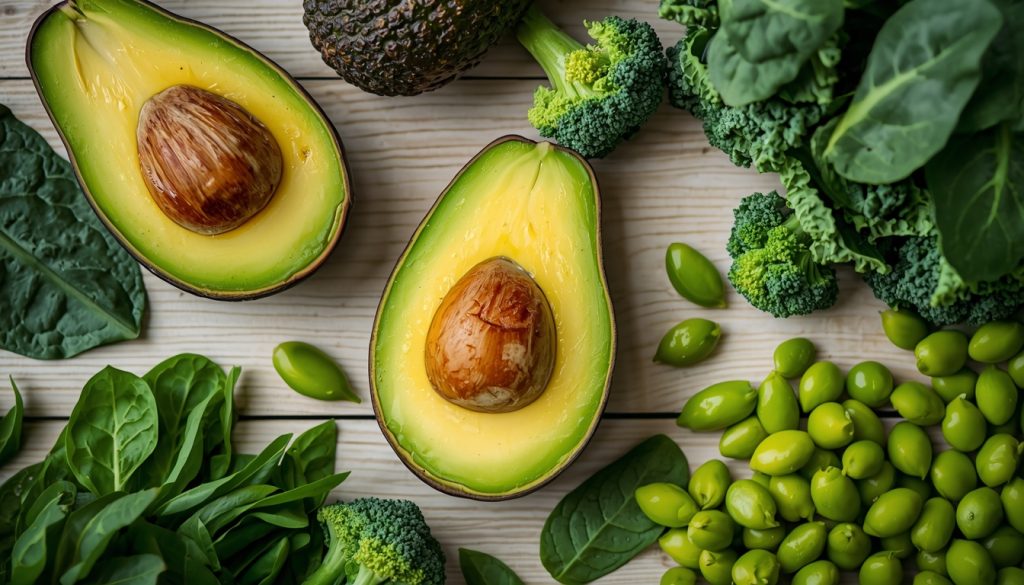
The 2 Green Foods I Actually Eat The Most And Love So Much
Not a comprehensive list of every green vegetable that exists. Just the ones that have become genuinely regular for me — and why.
Broccoli
Broccoli kept appearing in the research because of sulforaphane — a compound that has attracted significant scientific attention for its potential anti-inflammatory and cellular health effects. Most of the interesting research has been in laboratory settings, and human trials are still limited, but it’s enough to make broccoli worth eating rather than avoiding.
The practical note that surprised me: overcooking significantly reduces sulforaphane content. Lightly steamed or eaten raw (e.g. in shredded in salads) retains more of what makes broccoli interesting.
My honest version: Slightly undercooked. I used to steam it until it was soft. Now I steam it for three to four minutes max — still with a little bite. Better texture anyway.
Avocado
Technically a fruit. Consistently grouped with green foods in nutrition research, and for good reason.
Avocados are packed with nutrients including a variety of B vitamins, vitamin K, and vitamin E, and are a good source of heart-healthy monounsaturated fats. They contain substantial fibre — approximately 14g in one avocado.
What I find most interesting about avocado is something I stumbled across almost accidentally: the monounsaturated fat content appears to support the absorption of fat-soluble nutrients from other vegetables eaten in the same meal. Adding avocado to a salad may increase how much you actually absorb from the leafy greens alongside it. Whether this translates into meaningful real-world effects is unclear, but it’s a reason I now put avocado in salads rather than just on toast.
My honest version: On toast, obviously. But also genuinely blended into smoothies or added to salad — it adds a creaminess that keeps me full considerably longer than without it.
What I Actually Noticed
I want to be careful here. I’m not claiming any of the following is caused by eating more greens. Too many variables changed simultaneously, and I wasn’t running a controlled experiment on myself.
My digestion improved noticeably. This one I’m more confident about — the fibre content of leafy greens is substantial, and fibre’s effects on digestion are well-established. The fibrous matrices found in nutrient-rich vegetables like spinach cultivate thriving colonies of beneficial bacteria, contributing to gut health. LifeChoice
Everything else? Hard to say. I feel well. I’ve been consistent. Whether the greens are responsible or simply correlating with a period where I’ve generally been paying more attention to how I eat — I can’t know.

The Simplest Ways to Actually Eat More Greens
The research is interesting. The harder part is actually doing it. Here’s what you could try:
The smoothie trick: A large handful of frozen spinach in a fruit smoothie is completely undetectable. Mango, banana, spinach, and a splash of oat milk. It tastes like mango. This is not a myth. I was sceptical too. If you are not a vegetable/fruit person, you could try the all-in-one supplement AG1. AG1 is a research-backed daily health supplement that combines a multivitamin, probiotic, and superfood blend into a single scoop. It makes your health routine easier by delivering what your body needs most – daily nutritional coverage and gut health support.
The base swap: Replacing iceberg lettuce with spinach or rocket in anything that requires a salad base. The nutritional difference is significant. The taste difference is negligible.
The dinner handful: Whatever I’m cooking — stir-fry, pasta, curry, soup — I add a handful of whatever leafy green is in the fridge in the last two minutes. It wilts down to almost nothing. You barely notice it’s there.
Buying pre-washed: The main reason most people don’t eat more greens is friction. Pre-washed spinach that you can grab and use directly removes almost all the friction. Worth the small premium.

A Honest Note on What Research Can Tell Us
Nutrition science is genuinely difficult, and I want to be honest about its limitations.
Most of what I’ve described above comes from observational studies — large groups of people tracked over time. These studies show association, not causation. People who eat more vegetables also tend to sleep better, exercise more, smoke less, and have higher incomes 😉 . Untangling the specific contribution of greens is complicated.
What I find meaningful is the consistency. The same associations appear across multiple large studies, conducted by independent research groups, in different populations, over several decades. That pattern — even without definitive causal proof — is worth taking seriously.
I’m not going to tell you that eating spinach will add years to your life. The research doesn’t support that kind of certainty.
What I will say is this: of all the dietary changes I could make, eating one to two servings of dark leafy greens daily is one of the most consistently well-researched, lowest-risk, most accessible, and — once I found the right way to do it — genuinely easiest changes I’ve made.
That felt like enough reason to start.
So what I am telling you..
I didn’t overhaul my diet. I didn’t go plant-based overnight or start juicing every morning.
I just started adding a handful of spinach to my smoothie, pasta, …. swapping iceberg for rocket in my salads, and throwing greens into whatever I was cooking for dinner. That’s it.
And somewhere in there I read enough research to feel genuinely confident that it was worth doing — not because of one dramatic finding, but because the same pattern kept appearing across decades of independent studies.
One to two servings of dark leafy greens per day. Research consistently points to it. And it turns out to be considerably easier to do than I expected. 🙂
What’s your go-to way to eat more greens? I’m always looking for ideas



Leave a Reply