
⚕️ Medical Disclosure:
This post shares general lifestyle and interior design information based on publicly available research. It is not medical advice. If you’re experiencing significant sleep difficulties, please speak with a healthcare professional.
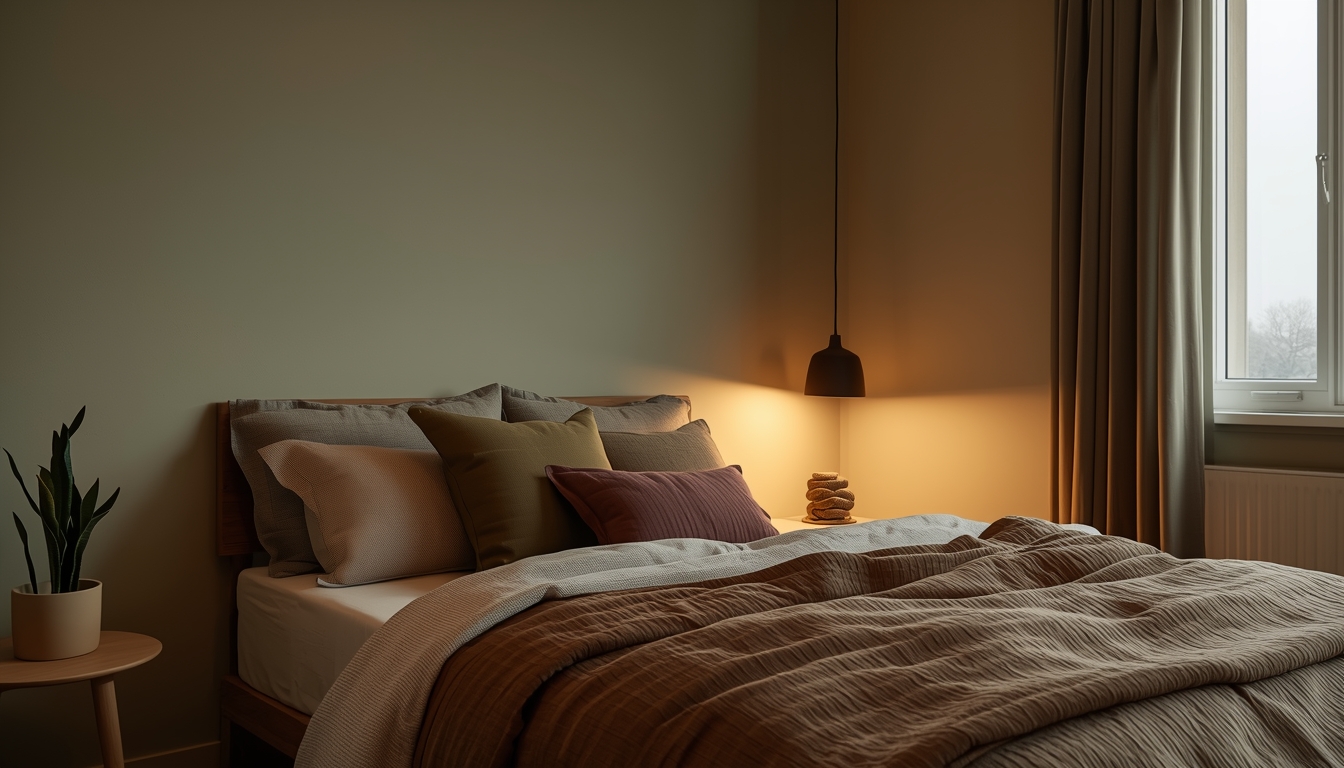
I used to think a “sleep-friendly bedroom” meant expensive blackout curtains and a white noise machine.
Turns out, it’s more interesting than that — and more accessible.
The way your bedroom looks, smells, feels, and breathes has a genuinely significant effect on how well you sleep. Not in a vague, wellness-magazine way. In a measurable, research-explored way. The colour on your walls, the plant on your nightstand, the temperature of the air — these things interact with your nervous system in ways that either support rest or quietly work against it.
This post is about making your bedroom work for you. Science-backed, aesthetically considered, and completely doable without a big renovation budget.
Why Your Bedroom Environment Matters More Than You Think
Sleep isn’t just something that happens when you close your eyes. It’s a biological process that your environment either supports or disrupts.
Your nervous system is constantly scanning for cues — signals that tell it whether it’s safe to rest deeply or whether it should stay alert. Temperature, light, colour, air quality, sound — all of these feed into that unconscious assessment, every single night.
The good news: most of the changes that make a bedroom genuinely sleep-supportive are also the ones that make it feel calm, beautiful, and considered. Good sleep design and good interior design, it turns out, have a lot in common.
Here’s where I’d start.
1. Plants — The Overlooked Sleep Companions
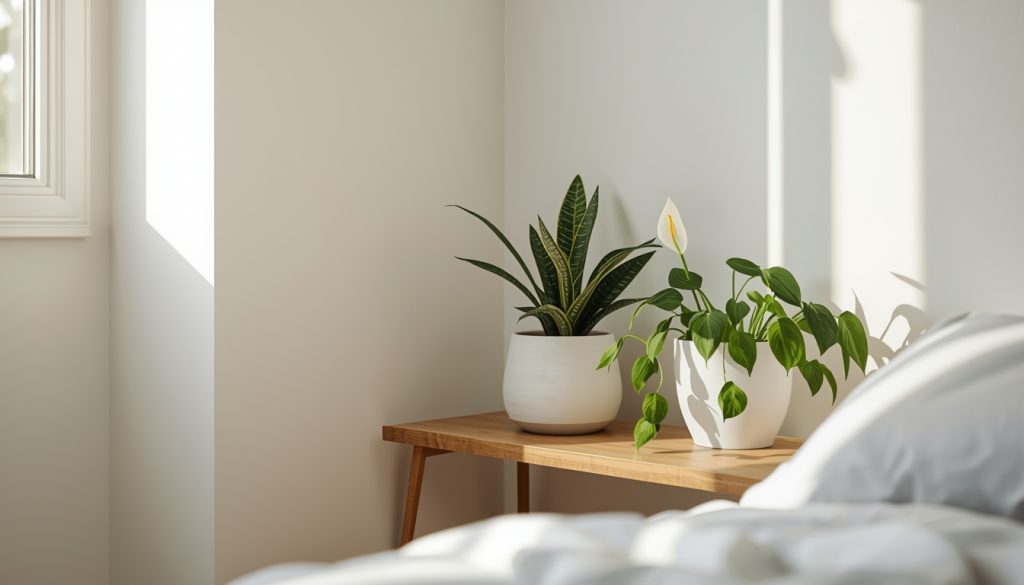
I added a snake plant to my bedroom about two years ago, mostly because I liked how it looked. The sleep benefits were a very pleasant surprise.
Several houseplants have been studied for their potential effects on indoor air quality and psychological wellbeing — both of which may have relevance to sleep. Here’s what the research suggests, with the important caveat that most studies are small and individual responses vary.
Snake Plant (Sansevieria trifasciata)
The snake plant is one of a small number of plants that continues to produce oxygen and absorb carbon dioxide at night — most plants reverse this process after dark. Some research has suggested that elevated CO2 levels in poorly ventilated bedrooms may be associated with disrupted sleep, so anything that supports overnight air quality is potentially worth considering.
It’s also almost impossible to kill, which is personally important to me. 😂
Design note: A single snake plant on a nightstand or floor beside the bed adds a striking vertical element in a minimal footprint. Works beautifully in dark green pots against light walls.
Peace Lily (Spathiphyllum)
The peace lily appeared in a well-known NASA study exploring plants’ potential to filter certain indoor air pollutants. While the real-world applicability of that research has been debated — you’d need a lot of plants to replicate lab conditions — what’s less disputed is the peace lily’s visual effect: soft, rounded, naturally calming in form.
Some research has also explored the psychological effects of plants in bedrooms, suggesting that the presence of greenery may support feelings of calm and reduce perceived stress — which is obviously relevant to sleep.
Design note: Peace lilies thrive in low light, making them genuinely suited to bedrooms. White flowers against deep green leaves look elegant against sage or white walls. Keep soil moist but not waterlogged.
Lavender (Lavandula)
Lavender is the most researched plant in the context of sleep. Several studies have explored the effects of lavender scent on sleep quality, anxiety, and relaxation — with generally positive findings, though again, individual responses differ and effect sizes vary between studies.
Growing lavender in a pot on a windowsill brings both the potential scent benefit and the visual calm of a soft purple-grey plant that looks genuinely beautiful in a bedroom setting.
Design note: Small lavender plants in terracotta or stone pots suit a natural, earthy bedroom aesthetic. Place near a window for best growth — they need good light.
A Note on Plants and Allergies
Some people are sensitive to certain plants, pollens, or soil mould. If you have allergies or asthma, it’s worth checking whether a specific plant is appropriate for you before adding it to your sleeping space.
2. Colour — What Your Walls Are Doing to Your Nervous System
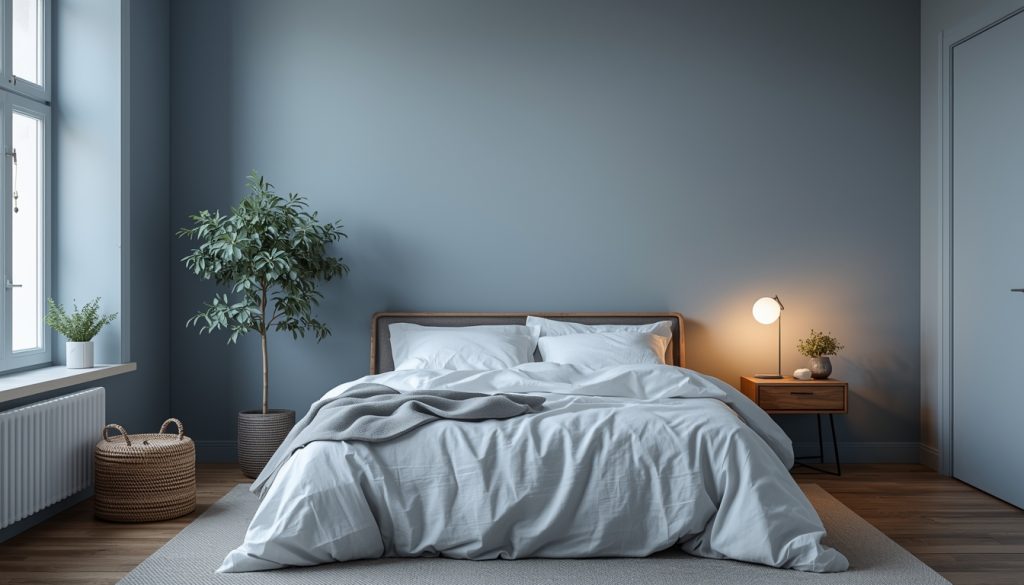
Colour psychology is a genuine field of research — though it’s also one where individual variation is significant and cultural context matters. What follows reflects general findings, not universal rules.
The Colours Research Suggests May Support Rest
Soft blues and blue-greens
Blue tones have been consistently associated in research with feelings of calm and reduced heart rate. A 2018 study by Travelodge surveying sleep by bedroom colour found that people in blue bedrooms reported among the highest average sleep durations — though this is survey data rather than controlled research, so it’s worth treating as indicative rather than definitive.
Practically: a soft dusty blue, pale teal, or blue-grey on walls creates a visually receding effect — the room feels quieter, cooler, more spacious. All of which tends to feel conducive to rest.
Sage green and earthy greens
Green sits at the centre of the visible spectrum and requires the least adjustment from the eye — some researchers suggest this may be part of why it feels inherently restful. Green also connects visually with nature, which ties into biophilic design principles (more on this below).
Sage green in particular has become widely used in sleep-focused interior design — and for good reason. It’s warm enough to feel cosy, cool enough to feel calm.
Warm neutrals — taupe, warm white, soft clay
Not all warmth is equal in bedroom design. Warm neutrals — creamy whites, soft taupes, dusty rose, muted terracotta — can feel deeply cocooning without the stimulating effect of brighter or more saturated colours.
The Colours Worth Avoiding in Bedrooms
Bright white: Visually stimulating, reflects light harshly, can feel clinical rather than restful.
Saturated reds and oranges: Associated with alertness and increased heart rate in some research. Save these for living spaces.
Deep, dark colours on all four walls: Can feel oppressive in a small room — though one dark accent wall behind the bed can feel grounding and elegant.
3. Light — The Single Most Powerful Environmental Sleep Signal
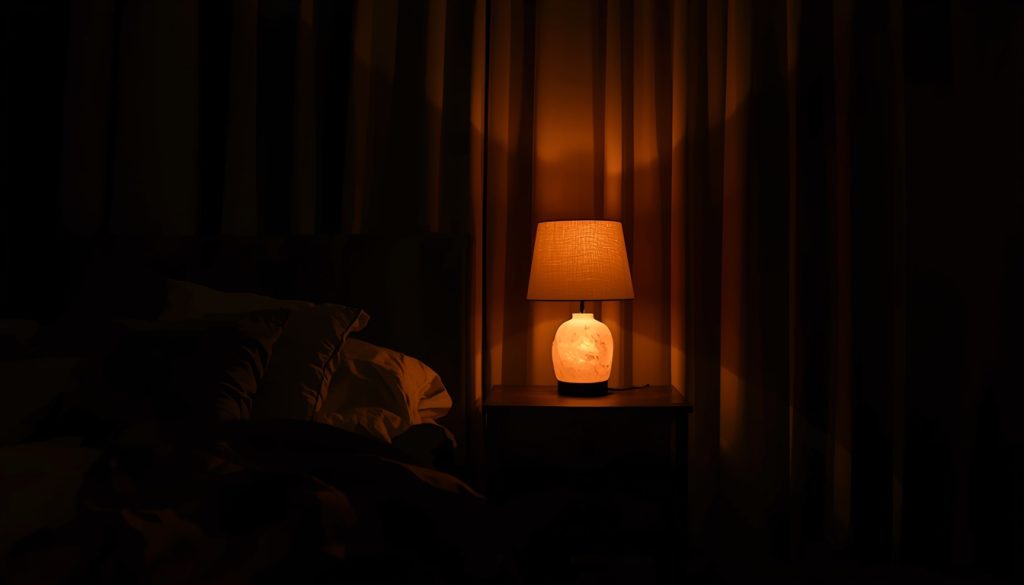
If I had to choose one change that would have the most impact on sleep quality for most people, it wouldn’t be a supplement or a routine. It would be light management.
Light is the primary regulator of your circadian rhythm — the internal clock that governs when you feel sleepy and when you feel alert. Your eyes contain specialised cells that are particularly sensitive to blue-wavelength light — the kind emitted by screens, overhead LEDs, and cool-toned bulbs.
Exposure to this kind of light in the evening sends a direct signal to your brain that it’s daytime. Melatonin production is suppressed. Sleep onset is delayed.
What This Means Practically
Overhead lighting in the evening: Standard overhead LED lighting is typically cool-toned and bright — one of the worst things you can expose yourself to in the two hours before bed. Switching to lamps with warm-toned bulbs (2700K or lower) in the evening is one of the simplest and most effective changes you can make.
Blackout curtains: Even small amounts of light entering a bedroom — street lights, early morning sun — can affect sleep quality, particularly in lighter sleep stages. Blackout curtains or a sleep mask are worth considering, especially if you’re a light sleeper or live in an urban area.
Salt lamps and candles: Both emit warm, low-intensity light in the amber/orange range — the opposite end of the spectrum from blue light. Many people find these conducive to winding down in the evening. Salt lamps also look genuinely beautiful in a bedroom setting.
Morning light: Equally important in the other direction — getting natural light exposure within the first hour of waking helps anchor your circadian rhythm, which in turn makes it easier to feel sleepy at the right time in the evening. A bedroom that allows morning light in (after you’ve slept) can be a genuine asset.
4. Temperature — The Often-Ignored Sleep Variable
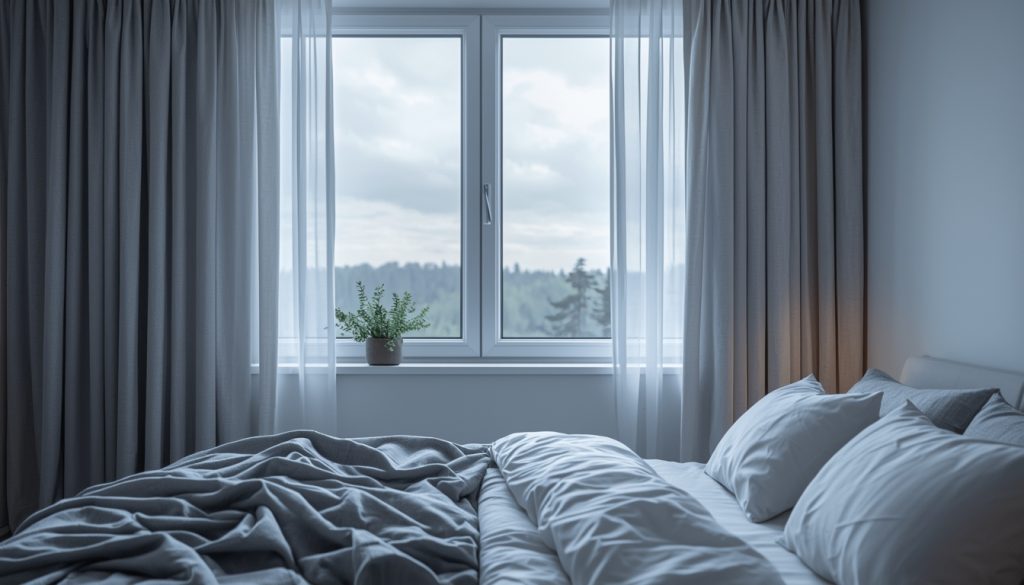
Your body temperature naturally decreases as part of the sleep initiation process. A bedroom that’s too warm can interfere with this drop — making it harder to fall asleep and more likely that you’ll wake in the night.
Sleep researchers often cite a range of approximately 16-19°C as commonly associated with comfortable sleep for many people — though individual preference varies and this isn’t a prescription, just a starting point for experimentation.
Practical Ways to Support Overnight Temperature
Ventilation: A slightly open window, even in cooler months, can significantly improve both temperature and air quality. Fresh air circulation reduces CO2 buildup and keeps the room from becoming stuffy overnight.
Bedding materials: Natural fibres — linen, cotton, wool — are more breathable than synthetic alternatives and better at regulating temperature throughout the night. Linen in particular warms quickly but doesn’t retain heat excessively — many people who sleep warm find it makes a significant difference.
Layering: Rather than one heavy duvet, consider a lighter duvet plus an additional throw. This allows easy temperature adjustment during the night without fully waking.
Cooling before bed: Some people find that a warm shower or bath 60-90 minutes before bed helps — the subsequent drop in body temperature as you cool down may support the natural temperature decrease that accompanies sleep onset.
Air Quality and Humidity: Dry air — common in centrally heated bedrooms in winter — can cause throat and nasal discomfort that disrupts sleep. A simple humidifier can help. Some research has explored optimal bedroom humidity ranges, with 40-60% relative humidity often cited as potentially comfortable for sleep, though again, individual responses vary.
Opening a window briefly before bed to refresh the air is a low-effort habit with potentially meaningful impact on overnight air quality.
Putting It Together: The ideal Driftly Bedroom
If I were designing a bedroom entirely around sleep quality — while also making it somewhere I genuinely wanted to spend time — here’s what it would include:
🌙 THE SLEEP-OPTIMISED BEDROOM

COLOUR:
→ Walls: soft sage green or dusty blue
→ Bedding: warm neutrals — oat, linen, cream
→ Accents: terracotta, warm wood, stone

PLANTS:
→ Snake plant (nightstand or floor)
→ Potted lavender (windowsill)
→ Peace lily (corner or shelf)

LIGHTING:
→ Warm-toned lamps only after 8pm
→ Blackout curtains or sleep mask
→ Salt lamp for evening ambiance
→ Morning light access for circadian anchoring

TEMPERATURE & AIR:
→ Target: slightly cool (experiment from ~18°C)
→ Window cracked overnight where possible
→ Natural fibre bedding (linen or cotton)
→ Humidifier in dry months
The Bottom Line
our bedroom is doing something to your sleep every single night — whether you’ve thought about it or not.
The good news is that the changes most supported by research are also the ones that make a bedroom feel genuinely beautiful: soft colours that calm the nervous system, plants that connect you to the natural world, warm light that signals safety and rest, cool air that lets your body do what it naturally wants to do at night.
This isn’t about perfection. You don’t need to repaint the walls or buy all new bedding at once. Pick one thing — a plant, a lamp, a temperature experiment — and notice what changes.
Your bedroom should feel like the most restful place you know. It can, with surprisingly small adjustments.
What’s one change you’ve made to your bedroom that actually helped your sleep? I’d love to know!


Leave a Reply