
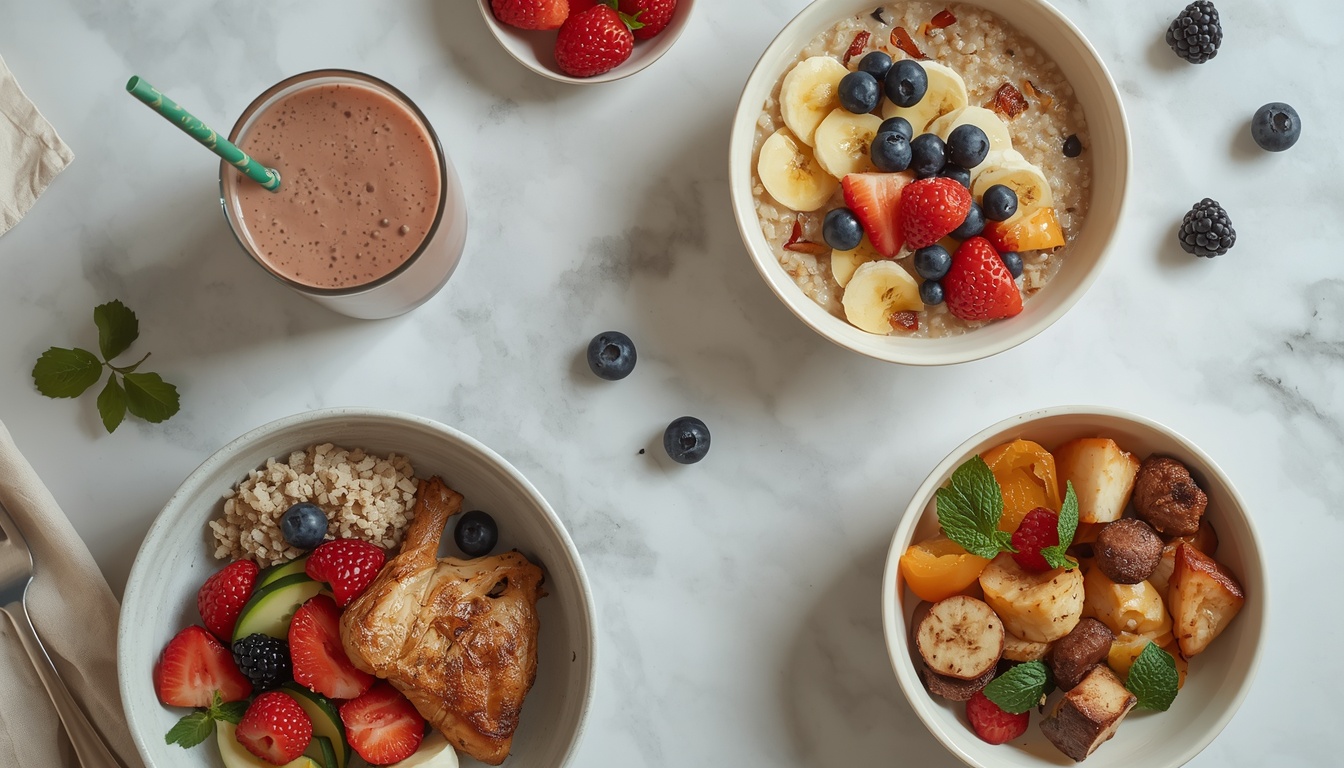
I’ve been wanting to write this post for a while and slightly dreading it at the same time.
“What I eat in a day” content has a reputation. The curated versions where everything is colour-coordinated, every meal takes forty-five minutes to prepare, and the day conveniently contains exactly the right macros without any apparent effort. That’s not this.
This is what I actually eat. On a reasonably normal day when I’ve trained in the morning, have work to do, and don’t want to spend hours in the kitchen. It’s not perfect. Some days it’s better, some days worse. But the general pattern is consistent. And when I started looking into the research behind why I’d landed on each habit, I found it more interesting than expected.
Here it is…
First Thing: Water with Fresh Lemon
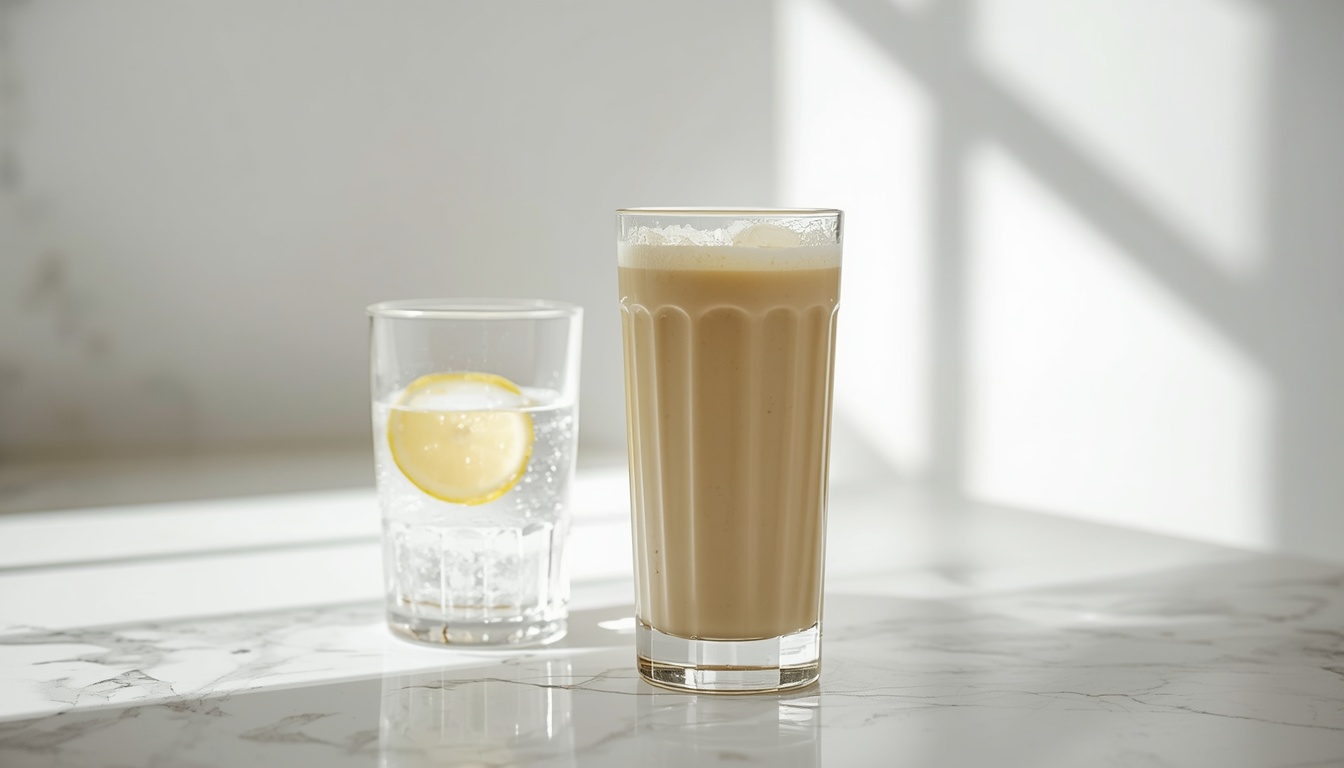
Before anything else, before coffee, before the protein shake, before I look at my phone. A large glass of water with freshly squeezed lemon or just plain warm water.
I started doing this years ago almost accidentally and it’s the one habit I’ve never dropped. Partly it’s about hydration. You lose water overnight and starting the day dehydrated is one of the more underappreciated reasons people feel foggy in the morning. But the lemon part has its own logic too.
Lemon juice is a meaningful source of vitamin C and citric acid. The vitamin C piece is relevant because it’s one of the nutrients most affected by stress and poor sleep. Two things that, if you’re reading Driftly, you’re probably paying attention to. Starting the day with something that actively replenishes it felt like a sensible habit even before I knew why.
The warm water also has a practical function. It gently stimulates digestion before the more substantial things that follow. Not magic. Just useful.
Morning: Protein Shake
I train in the mornings. Most days this means I’m hungry before I’ve fully woken up, and I want something that does the job quickly without requiring me to cook anything or think too hard before I’ve had coffee.
The protein shake is my answer to this. Quick, effective, and the research on post-workout protein timing is some of the most consistent in sports nutrition science.
Protein consumed after resistance training stimulates muscle protein synthesis, which is the process by which your muscles repair and grow. A 2017 meta-analysis published in the British Journal of Sports Medicine (Morton et al., PMID 28698222) found that protein supplementation significantly increased muscle mass and strength gains during resistance training, with effects consistent across age groups and training experience levels.
The timing question is more nuanced than the “anabolic window” mythology suggests. The research doesn’t support the idea that you have to drink your shake within thirty seconds of putting down the weights. But getting protein in within the first couple of hours post-training does appear to support recovery, and a shake is simply the most practical way to do that before a proper meal is on the table.
I’m not prescriptive about the protein powder I use. It changes depending on what’s available and what I feel like. Chocolate works for most things. One powder you can’t do anything wrong and which is available in most countries is Optimum Nutrition.
Mid-Morning: Protein Porridge
This is the meal I come back to most consistently, and the one I’d genuinely recommend to almost anyone who asks what to eat for breakfast.
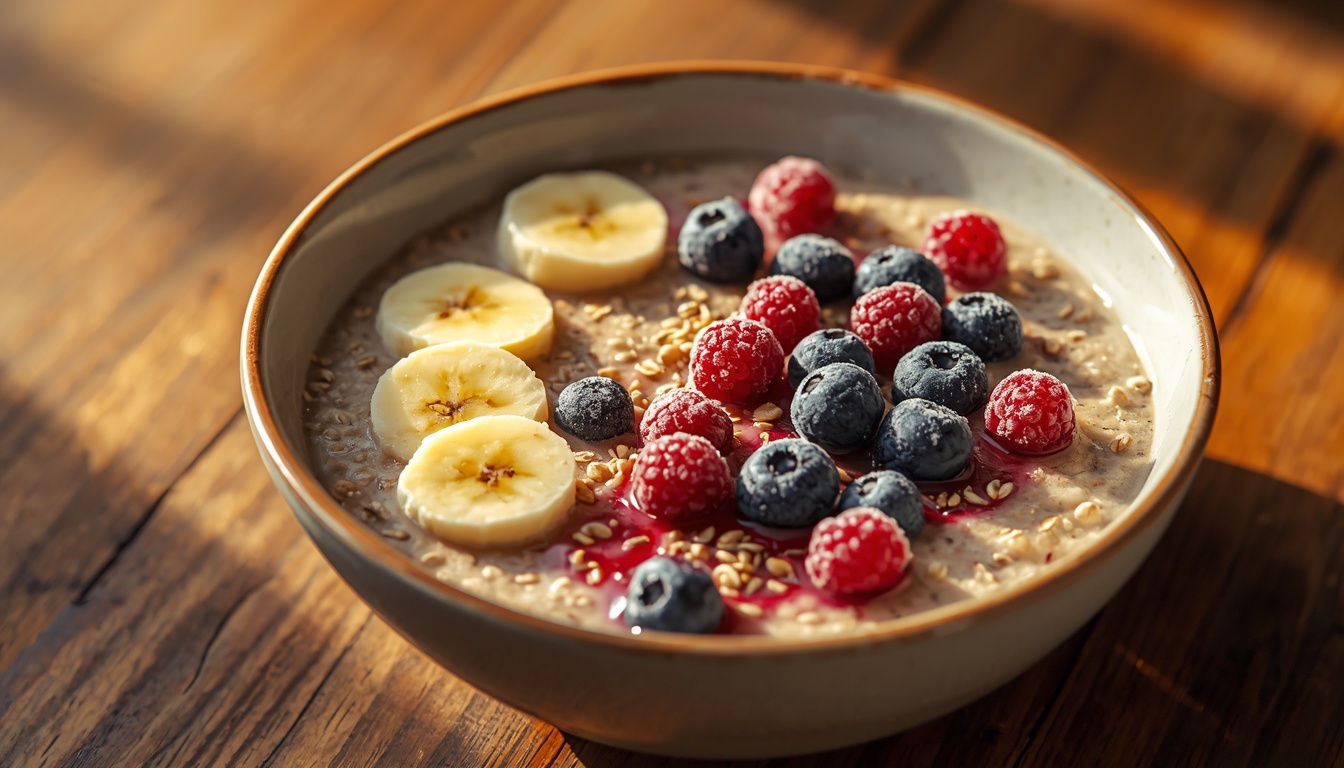
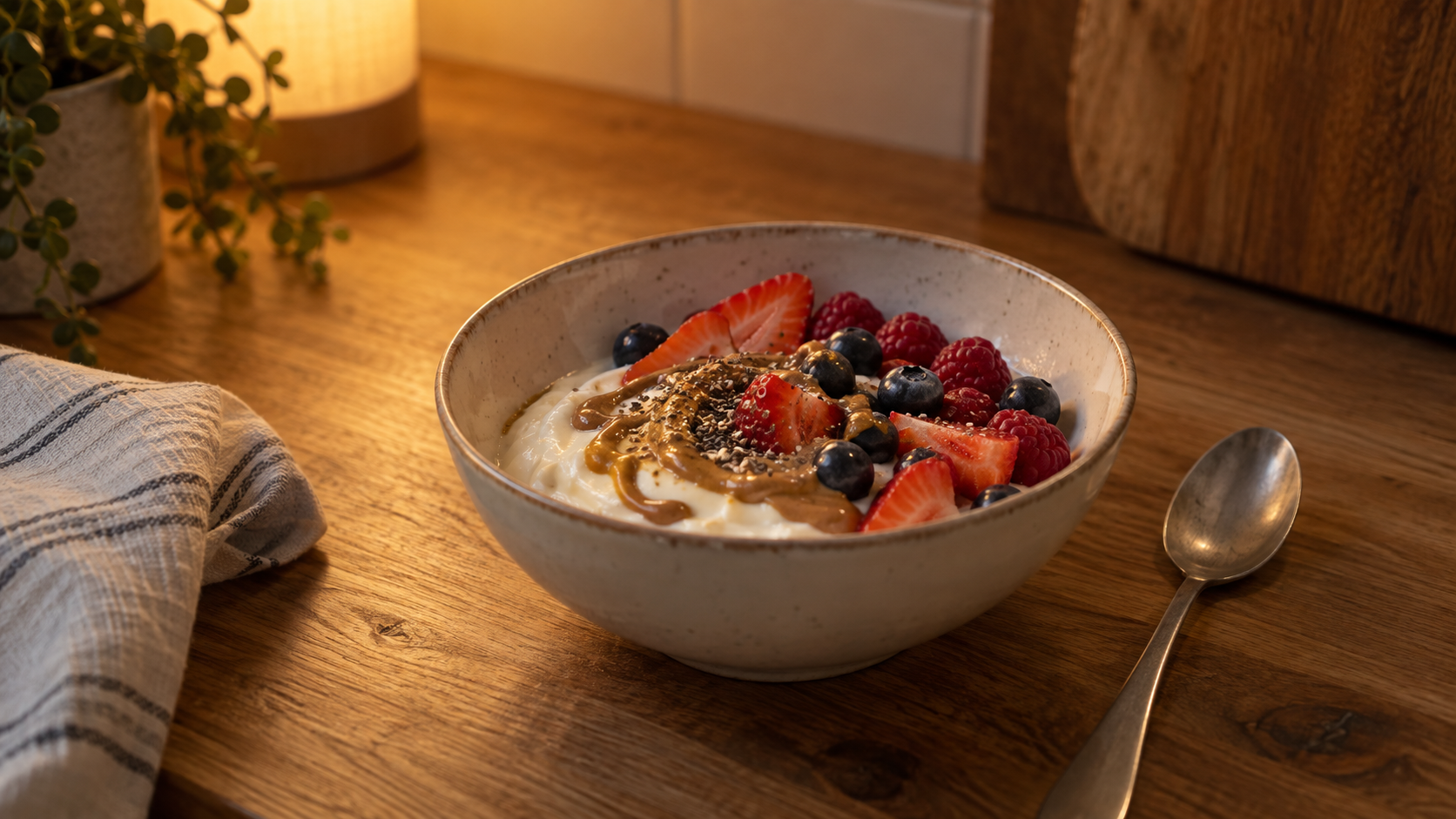
The recipe is simple to the point of being almost embarrassingly so. Rolled oats cooked with unsweetened oat milk, a scoop of protein powder stirred through, one banana, and whatever frozen fruit I have in the freezer. Blueberries usually. Sometimes mango or mixed berries depending on what’s there.
The oat milk I use is the unsweetened version at 14 calories per 100ml, no added sugar. This matters because most flavoured oat milks have enough sugar to work against the stable blood sugar effect that makes oats useful in the first place. If you don’t have Alpro Oat Milk without added sugar in your country, you could try SOWN on Amazon.
Why this works:
Oats contain beta-glucan, a soluble fibre that produces a slow, steady blood sugar response rather than a spike. I wrote about this in more detail in the carrot cake overnight oats post. The short version is that beta-glucan forms a viscous layer in the gut that slows carbohydrate absorption. Research published in Nutrients (Dahl et al.) found that oat beta-glucan consumption was associated with reduced postprandial glucose and insulin responses. Less spike, less crash, longer satiety.
Banana adds natural sweetness and potassium, which is relevant for muscle function and recovery after training. Bananas also contain resistant starch when slightly underripe, which feeds gut bacteria in ways that connect back to the gut-sleep research I covered recently.
Protein powder brings the protein content high enough to make this genuinely satiating rather than just a carbohydrate meal. The combination of slow-release oat carbohydrates and protein is what keeps this breakfast working until well past midday.
Frozen fruit is underrated. Most people assume fresh is always better. The research doesn’t support this. Frozen fruit is typically processed very shortly after harvest, preserving nutrient content well. For a warm porridge where texture matters less, frozen is often the smarter choice.
The whole thing takes about five minutes. I eat it warm, usually with a coffee alongside it, and it holds me comfortably until lunch.
Lunch: High Protein, and Carbs If I’ve Trained
Lunch is where I eat the most. This is intentional. I wrote about chrononutrition and meal timing in a recent post, and the research on eating earlier in the day is consistent enough to have genuinely changed how I distribute my food.
After a morning gym session, I want protein for muscle repair and carbohydrates to refill glycogen stores. These two goals are well supported by exercise physiology research. Glycogen resynthesis is most efficient in the hours after training, and the combination of carbohydrates with protein post-workout appears to enhance recovery compared to either alone.
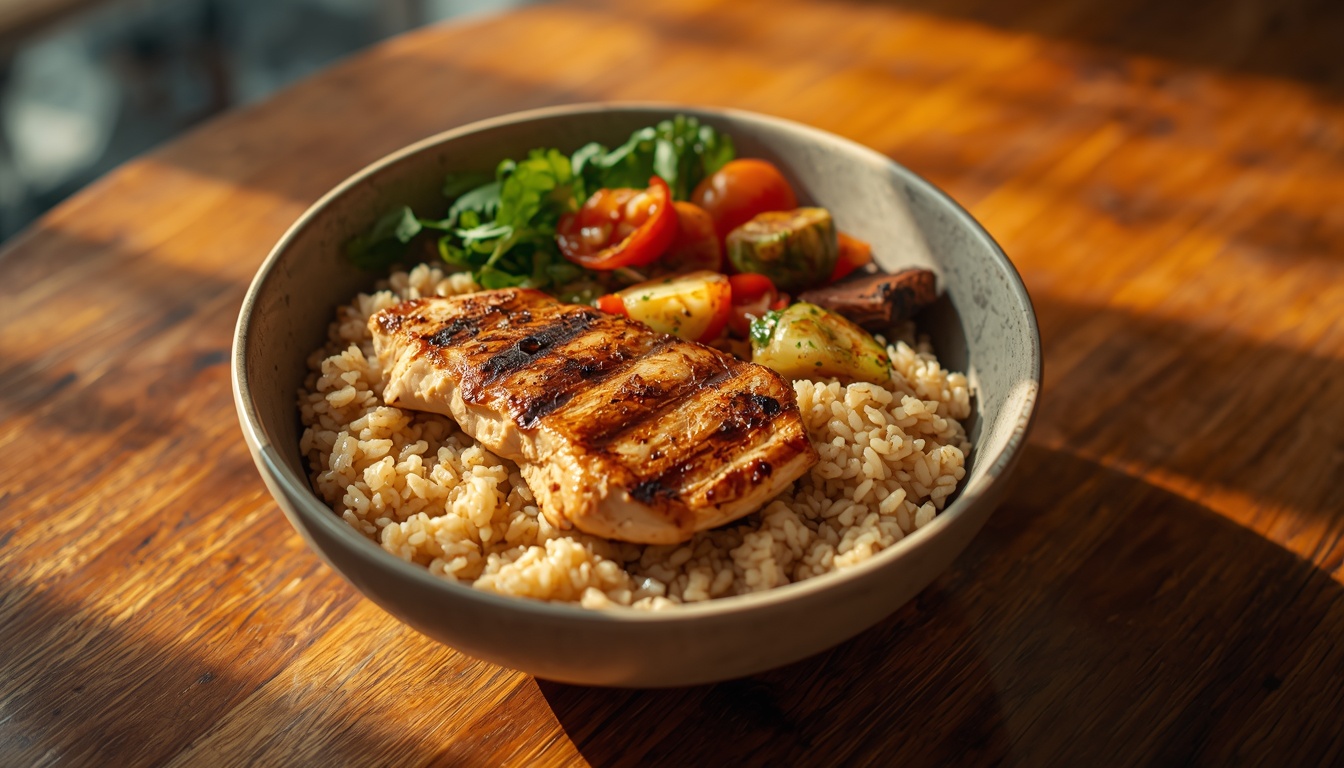
In practice this means a protein source, usually chicken, salmon, eggs, or occasionally red meat, alongside a carbohydrate source on training days. Brown rice, sweet potato, or whole grain bread. Plus vegetables, always, because getting fibre and micronutrients in at this meal takes care of a significant portion of the day’s nutritional requirements in one sitting.
On rest days, the lunch looks similar but lighter on the carbohydrates. More vegetables and protein, less rice or potato. Not out of any strict protocol, just because I’m not hungry for the same volume when I haven’t trained.
This is the meal I spend the most time on and the one I find most satisfying. A proper lunch, something actually filling and well-constructed, is what makes the afternoon not require a complicated battle with the snack cupboard.
Afternoon: Protein Bar, Fruit, Sometimes Chocolate
I’ll be honest about this bit because most “what I eat in a day” posts aren’t.
I snack in the afternoon. Not always, but often. And it’s not always perfectly optimised.
Most days it’s a protein bar. Useful because it keeps the protein intake consistent through the afternoon and tends to be enough to bridge the gap between lunch and dinner without a bigger intervention. I look for ones with a reasonable protein content and not too much added sugar. The ingredient list is usually more informative than the marketing on the front.
Sometimes it’s fruit, whatever’s in the bowl. Sometimes it’s a piece of dark chocolate. Occasionally both.
The chocolate thing I’ve made peace with. A square or two of dark chocolate in the afternoon is not the dietary disaster it gets presented as in certain wellness spaces. Dark chocolate at 70% or above contains flavanols with a research track record I wrote about in the healthy food swaps post, and the amount I eat is small enough that it’s doing nothing but satisfying the craving and contributing something genuinely beneficial.
The protein bar is the more consistent choice though. On days I skip it I tend to arrive at dinner hungrier than I want to be, which makes portion control harder and eating time later. Both of which matter for sleep, as I covered in the eating habits and sleep post.
Dinner: Normal (19–21h), Not Too Late
Dinner is the meal I’m most deliberate about timing. Not what I eat, that varies enormously, but when.
The research on meal timing and sleep is specific enough that finishing eating at least two to three hours before bed has become a habit I take seriously. A large meal close to sleep keeps core body temperature elevated, disrupts digestion timing, and consistently shows up in studies as associated with worse sleep quality and more nighttime awakenings. I covered the mechanism in detail in the eating habits and sleep post.
Between 7 and 9pm works for my schedule most evenings. What I eat is genuinely variable. It depends on what’s in the fridge, how much I cooked at lunch, and whether I feel like cooking at all. Some evenings it’s a proper cooked meal. Some evenings it’s eggs and bread. Some evenings it’s leftovers.
What I try to keep consistent: not too heavy on refined carbohydrates late at night, and nothing spicy. I made the spicy food discovery the hard way, the summer of the chilli noodles, which I wrote about in the eating habits post. Dinner is now a capsaicin-free zone.
What I Like To Add
This isn’t a meal plan. It’s not something I’d suggest copying wholesale. Your training schedule, your hunger patterns, your preferences, and your body are different from mine.
What I’d suggest taking from it is the structure rather than the specifics. Protein early, a substantial lunch, eating distribution front-loaded toward the earlier part of the day, and a consistent gap between the last meal and bed. Those principles have a research base that’s independent of the specific foods involved.
Not complicated. Not perfect. Just a pattern that works consistently enough that I’ve stopped second-guessing it.
The protein porridge is the thing I’d start with if you’re looking for one change to try. Oats, unsweetened oat milk, protein powder, banana, frozen fruit. Five minutes. Genuinely good.
What does your eating day actually look like? And what’s the one habit you’d never give up? I’d genuinely love to know. Comment or send me an email: driftlyblog@gmail.com


Leave a Reply