
⚕️ Medical Disclosure:
Everything in this post is based on personal experience and general lifestyle information. It is not medical advice. If you’re regularly waking at the same time each night and it’s significantly affecting your life, please speak with a doctor, there are conditions worth ruling out that only a professional can assess. Take care.
If you wake up at 3am with an almost eerie consistency, you know exactly how it feels.
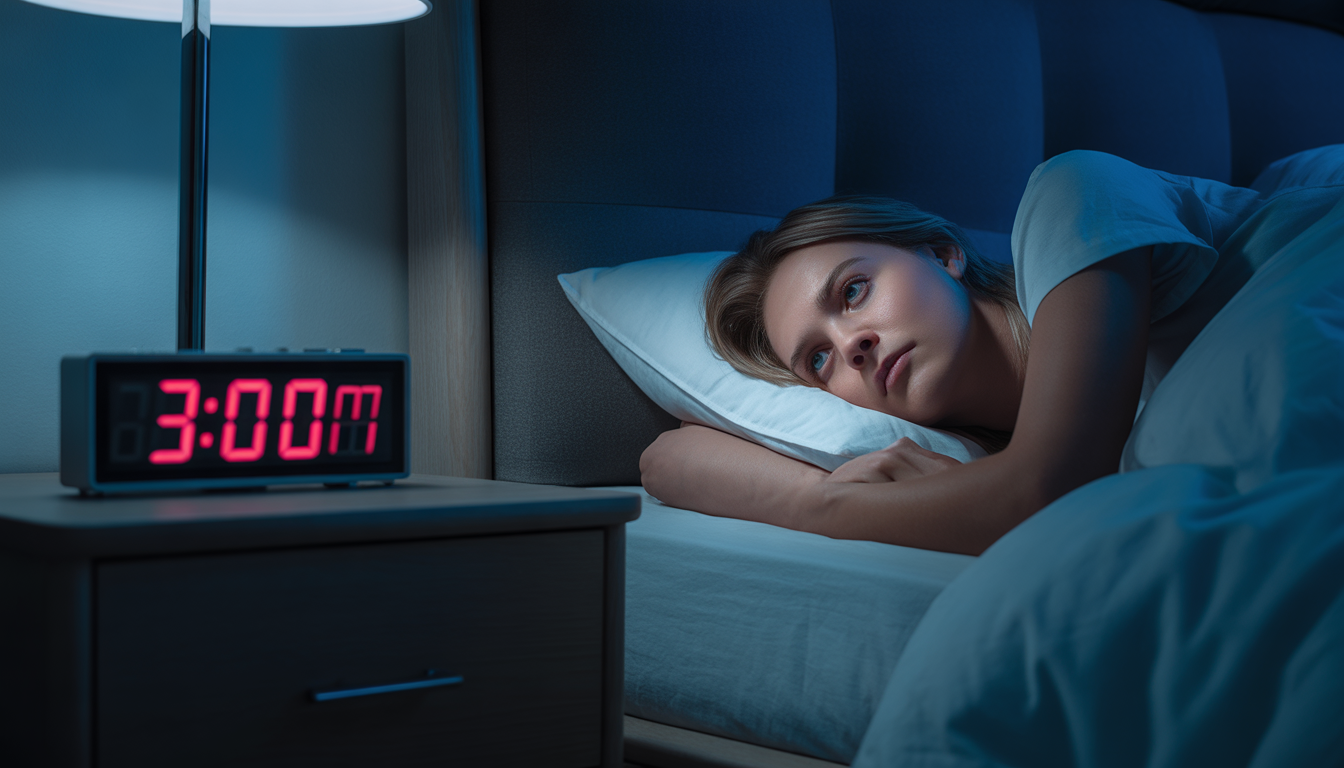
You fall asleep without too much trouble. An hour or two passes. And then, wide awake. 3am. Again.
Not groggy-half-asleep. Properly awake. Mind already running. The kind of awake where you know immediately that getting back to sleep is going to be a project.
If this sounds familiar, you’re not alone. Waking up at 3am is one of the most commonly reported sleep complaints, and one of the most frustrating, because it’s not that you can’t sleep. You can. You just can’t seem to stay asleep.
Here are five possible reasons this might be happening, and some things that may be worth trying.
What’s In This Post
- Why 3am specifically?
- 1. Cortisol rising too early
- 2. Blood sugar dropping overnight
- 3. Alcohol disrupting sleep
- 4. Your bedroom environment
- 5. Your body clock needs recalibrating
- The bottom line
Why 3am Specifically?
Before we get into the reasons, it’s worth noting: there’s nothing uniquely significant about 3am itself. It tends to come up because it falls roughly in the middle of the second half of a typical sleep cycle, a lighter sleep stage where we’re naturally more prone to waking.
If you consistently wake between 2am and 4am, the reasons below are likely relevant regardless of the exact time on the clock.
5 Possible Reasons You Wake Up at 3am
1. Your Cortisol May Be Rising Earlier Than It Should
Here’s something I found genuinely surprising when I first came across it: cortisol, the hormone most associated with stress and alertness, naturally begins to rise in the early hours of the morning as part of your body’s preparation for waking up.
In most people, this rise starts gradually around 6am. But in some people, particularly those under ongoing stress, this early morning cortisol spike may occur earlier than usual, pulling them out of sleep before they’re ready.
I noticed this pattern in myself during a particularly stressful period. The waking felt almost anxious. Heart slightly faster than normal, mind immediately busy. It didn’t feel like natural waking. It felt like being jolted.
What may help: Addressing the underlying stress is the obvious answer, easier said than done, I know. But evening practices that support nervous system regulation, like the evening wind-down routine I put together here, may be worth exploring. Some people also find that limiting news and stressful content in the evenings helps.
Note: if you consistently wake up at 3am with a racing heart or significant anxiety, this is worth discussing with a doctor.

2. Your Blood Sugar May Be Dropping Overnight
This one surprised me too, and it’s one of the more actionable possibilities on this list.
When blood sugar drops during the night, which can happen more readily if you’ve eaten a high-sugar meal in the evening, had alcohol, or gone to bed hungry, the body may release adrenaline and cortisol to bring it back up. These are alerting hormones. They do their job. And sometimes their job wakes you up.
The timing makes sense: one reason people wake up at 3am specifically is that blood sugar from an evening meal has typically been fully processed by this point, and the body’s overnight fast is well underway.
I can’t tell you whether this is what’s happening for you. That would require proper testing and a conversation with a doctor. But it’s a possibility worth being aware of.
What some people find helpful: Eating a small, balanced snack before bed that includes some protein and healthy fat, not a full meal, just something to provide more stable overnight fuel. A small handful of nuts or a spoonful of almond butter are commonly suggested options. For ideas, I put together a guide to low blood sugar snacks that covers some of these. Results vary significantly between individuals.
Always check with a healthcare professional before making changes if you have any conditions related to blood sugar.
3. Alcohol May Be Disrupting Your Sleep Architecture
This is one of the most well-documented sleep disruptors, and one of the most counterintuitive, because alcohol initially makes most people feel drowsy and helps them fall asleep faster.
The problem comes later. As the body metabolizes alcohol, it produces compounds that are stimulating rather than sedating. The sedative effect wears off, typically in the second half of the night, and what replaces it is lighter, more fragmented sleep. Research on alcohol and sleep confirms this consistently.
I went through a period of having a glass of wine most evenings, genuinely believing it helped me sleep. In hindsight, I think it helped me fall asleep and made the quality of what followed considerably worse. If you want to understand how food and drink choices affect sleep, this post on eating habits that ruin sleep goes into detail.
What some people find helpful: Experimenting with alcohol-free evenings for one to two weeks and paying attention to whether sleep changes. It’s not about permanent abstinence. It’s about having useful information about your own body.
4. Your Bedroom Environment May Be Working Against You
Your sleep environment doesn’t just affect how you fall asleep. It affects whether you stay asleep.
A room that becomes too warm overnight, outside noise that picks up in the early hours, light beginning to filter through curtains as the night progresses. Any of these can contribute to waking during lighter sleep stages.
3am is also around the time when some external factors shift: heating systems cycle on or off, traffic patterns change, early morning birds begin. None of these would necessarily wake a person in deep sleep, but in a lighter stage, they can be enough to pull someone who already tends to wake up at 3am fully back to consciousness.
What some people find worth trying:
- Blackout curtains or a sleep mask if light is a factor
- A white noise machine or fan if sound is the issue
- Keeping the bedroom cooler rather than warmer overnight
- Checking whether the heating comes on at a particular time
These are small adjustments, none of them require significant investment, and for some people one of them turns out to be the whole answer. If you want a deeper look at how to set up a sleep-friendly space, I also put together a guide to cozy bedroom ideas for better sleep that covers this.
5. Your Body Clock May Simply Need Recalibrating
Sleep isn’t a single continuous state. It moves through cycles of lighter and deeper sleep throughout the night. The later cycles, in the second half of the night, tend to involve more lighter sleep and more REM sleep.
This means that the window between roughly 2am and 5am is naturally a time when we’re more prone to brief awakenings. Most people have these micro-awakenings and simply don’t remember them because they drift back to sleep quickly.
What makes the difference between a brief awakening and a 45-minute wide-awake-staring-at-the-ceiling episode is often what happens in those first few seconds. If the mind immediately engages, checking the time, calculating how many hours of sleep remain, beginning to worry about being awake, the awakening becomes a proper waking.
I know this because I used to do exactly that. Check the time. Calculate. Worry. And then, predictably, lie awake.
What some people find helpful: Trying not to check the time when you wake. Turning the clock away or covering it. Staying as still and as relaxed as possible rather than immediately engaging the mind. Some people find slow, deliberate breathing helpful, not as a technique, just as something quiet to do with attention while the body finds its way back to sleep.
It sounds almost too simple. But for waking that’s driven by an overactive mind rather than an underlying physical cause, it can make a meaningful difference.
A Few Things Worth Saying Clearly
Not all 3am waking is the same.
Some of what I’ve described above relates to lifestyle and environment. Some may relate to stress. Some may relate to underlying conditions that are worth checking. Sleep apnea, hormonal changes, thyroid function, and others can all affect sleep in ways that these suggestions won’t fix.
If you’ve tried reasonable lifestyle adjustments and are still consistently waking and struggling to get back to sleep, please speak with a doctor. There are things worth ruling out that only proper assessment can address.
The clock-watching thing is real.
Of all the changes I’ve found personally useful, stopping the immediate time-check when I wake in the night has made a noticeable difference. The moment I see 3:07am, my brain does the maths, registers the problem, and gets involved. Removing that information removes a lot of what keeps me awake.
Be patient with yourself.
Sleep is sensitive to attention. The more urgently you try to fix it, the more elusive it can become. Small, consistent changes over time tend to work better than dramatic interventions driven by desperation. I say this from experience.
Quick Summary: What May Help
🌙 IF YOU WAKE UP AT 3AM, TRY THIS:

→ Address evening stress where possible
→ Eat a small balanced snack before bed if you suspect blood sugar is a factor
→ Maximize alcohol-free evenings
→ Check your bedroom environment (temperature, light, noise)
→ Stop checking the time when you wake up
→ Stay still, breathe slowly, don't engage the mind
→ If nothing helps or have big troubles, speak to a doctor
When it’s worth seeing a doctor
Waking at 3am now and then is normal. But if it happens most nights for more than a few weeks, or comes with loud snoring, gasping for air, night sweats, a pounding heart, or daytime exhaustion, it’s worth getting checked. Conditions like sleep apnea, thyroid issues, or anxiety disorders are common causes, and all are treatable.
The Bottom Line
Waking up at 3am is frustrating in a very specific way, because you were sleeping, which means you can sleep, which makes the waking feel all the more unfair.
The good news is that there are usually identifiable factors at play. Stress and cortisol. Blood sugar. Alcohol. Environment. An overactive mind in a light sleep stage.
None of these are guaranteed answers. Sleep is individual and sometimes complicated. But they’re reasonable starting points. Small adjustments, made consistently, that give your body better conditions to do what it already knows how to do.
And if you try the adjustments and nothing shifts, please do speak to a doctor. Some things are worth properly checking.
If your sleep improved, but you are still tired all the time, check out THIS ARTICLE.
Waking at 3am and found something that helped? Or still searching for answers? Either way, I’d love to hear from you!



Leave a Reply