
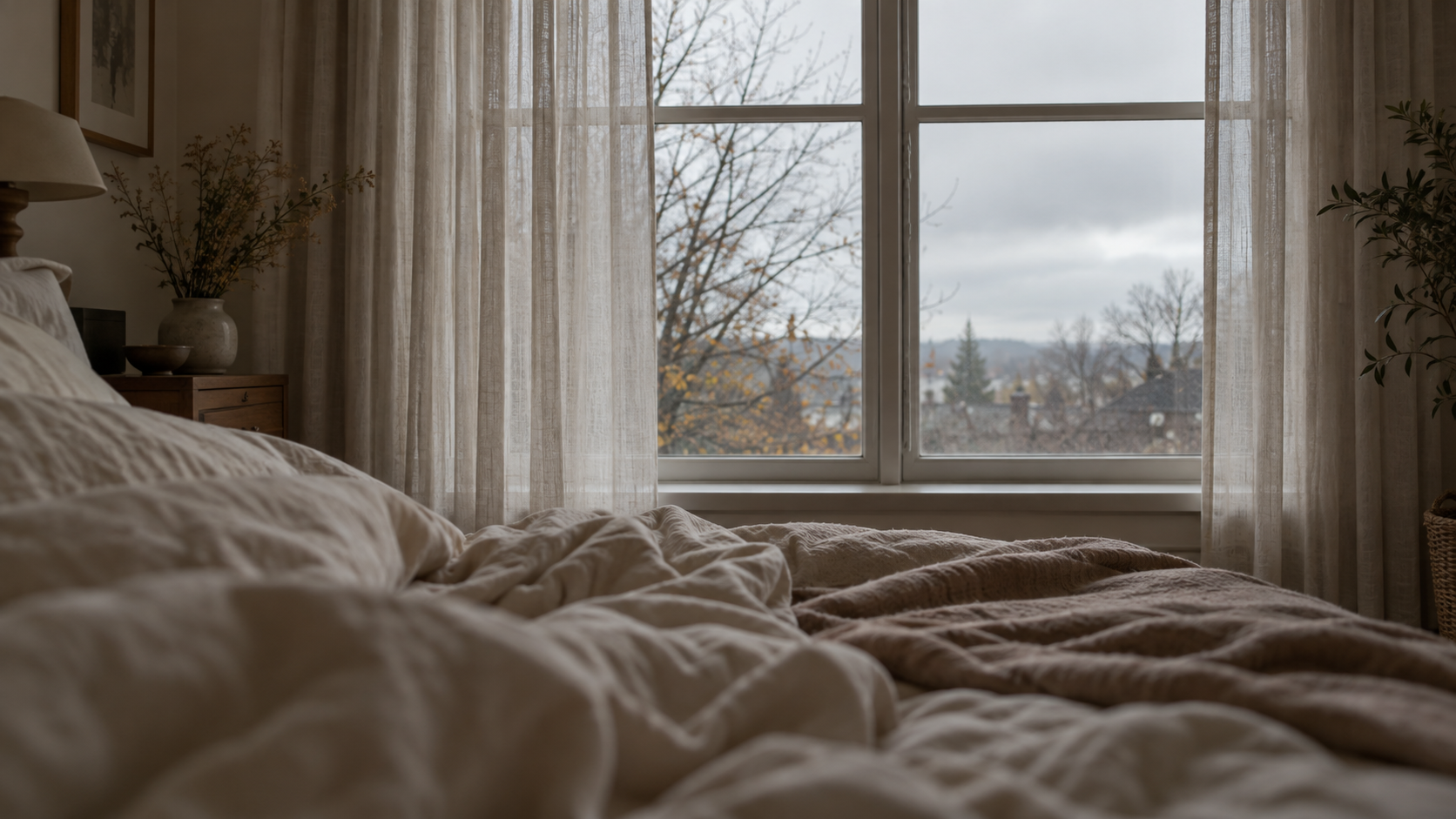
In Hamburg, autumn used to flatten me. Not dramatically, just a general heaviness that arrived some time in October and did not properly lift until spring. Getting up was harder, and I was tired in autumn in a way summer never made me. Everything took slightly more effort than it should have.
Since moving to Cyprus, that has mostly gone. I had assumed it was the weather or simply being happier somewhere warm. The research points somewhere more specific, and it is not really about autumn at all.
What To Expect
Why You Get Tired in Autumn: What Changes in Your Sleep
A 2023 study published in Frontiers in Neuroscience by researchers at Charité in Berlin looked at 292 overnight sleep studies across the year. It is one of the few pieces of work that measured seasonal sleep objectively rather than asking people how they felt.
The finding that caught my attention was specific to autumn. Deep sleep, the slow wave stage that does most of the physical restoration, was at its lowest in autumn, around 25 minutes shorter than in spring. REM sleep, meanwhile, was about 30 minutes longer in winter than in summer.
Total sleep time appeared roughly an hour longer in winter, but that result was not statistically significant, so I would not lean on it.
Worth saying plainly: these participants were people already being investigated for sleep difficulties, in a light polluted urban environment. The authors themselves called for the work to be repeated in healthy sleepers. But the direction is interesting, and it matches what a lot of people describe without being able to name it.
Less deep sleep in autumn would explain exactly the kind of tiredness that does not respond to going to bed earlier.
The Extra Hour That Is Not Real
This is the part that surprised me most, because everyone repeats the opposite.
When the clocks go back, we supposedly gain an hour of sleep. A review published in Sleep Medicine Reviews found little evidence of any extra sleep on that night. Worse, across the following week people consistently got up earlier, which added up to a net loss of sleep rather than a gain.
An actigraphy study in university students found the same pattern. After the autumn change, wake times moved earlier, and both time in bed and total sleep time went down.
The one bit of good news is that autumn is still easier than spring. The body adjusts more readily to a phase delay than a phase advance, so going back is less disruptive than going forward. Less disruptive is not the same as free.
Why Cyprus Changed It For Me
Here is what I think explains why I was tired in autumn in Hamburg and not here, and it is not the temperature.
At the winter solstice, Hamburg gets roughly seven and a half hours of daylight. Cyprus gets close to ten. That is not a small difference, and it compounds because the sun also sits higher, so the light is stronger when it is there.
Research on light exposure across the year at northern latitudes shows large seasonal swings in how much light people actually receive. A study of indoor workers in the Arctic found that winter darkness shifted sleep later and increased daytime sleepiness, even among people working normal daytime hours under electric lighting. The same work found that more morning light was associated with earlier sleep timing, while more evening light pushed it later.
So the reason you feel tired in autumn is not that the season is inherently tiring. It is that the available morning light drops below what your body clock needs to stay anchored, and how far it drops depends almost entirely on where you live.
Hamburg crossed that line every October. Cyprus does not, quite.
What Actually Helps
The research points consistently in one direction, and it is cheaper than anything you can buy.
Get outside in the morning, early. A modelling study published in Scientific Reports examined how light exposure affects adjustment to the clock change and found that a 30 minute morning walk substantially shortened the time needed to adapt. This is the one thing I do deliberately, and it is the reason I have never bought a daylight lamp. Outdoor light on an overcast morning is still far brighter than any indoor lighting.
Dim the evening. The same work found that reducing light after sunset speeds up adjustment in autumn specifically. Not elaborate, just one lamp instead of overhead lighting from about an hour before bed.
Keep your wake time steady through the transition. Since the problem is that people wake earlier after the clocks change, holding your usual wake time is the direct countermeasure. Blackout curtains help here if earlier sunrises are what is waking you.
Do not fight the slightly longer sleep. If your body wants an extra 20 minutes in winter, that appears to be a real seasonal pattern rather than laziness.
What I Use Through the Darker Months
Vitamin D. I take it year round and have written about why in the vitamin D post, where my own level came back lower than I expected despite living in the sun. In autumn and winter the case gets stronger, because the sun sits too low for your skin to produce much of it regardless of how long you are outside. This is the one I take.
A sunrise alarm clock. If your mornings are dark enough that waking feels like being dragged out of a cave, a lamp that brightens gradually before the sound goes off is the most direct fix. This type simulates dawn over 20 to 30 minutes.
Blackout curtains, used the other way round. Most people buy these for summer. In autumn they are more useful for controlling when light reaches you, so the clock change does not pull your wake time earlier than you want it. Reasonable ones do not need to be expensive.
A daylight lamp. This is the obvious product for this topic and I do not own one, so I cannot tell you anything useful from experience. The evidence for light therapy in seasonal low mood is reasonable, and if you genuinely cannot get outside in the morning, it is the fallback worth looking at. If you can get outside, do that instead.
Frequently Asked Questions
Do we really need more sleep in winter?
Possibly a little. Measured REM sleep was about 30 minutes longer in winter than summer in the Charité data. Total sleep time looked roughly an hour longer but did not reach statistical significance, so the honest answer is that the pattern is real but smaller than the popular version suggests.
Why am I more tired in autumn than in winter?
One plausible explanation from the same study is that deep sleep is at its lowest point in autumn specifically, lower than in winter. Autumn is also when the light drops fastest, so your body clock is adjusting rather than settled.
Does the clock change really cost sleep?
In autumn, yes, on balance. The review evidence shows little extra sleep on the night itself and a net loss across the following week because people wake earlier. The autumn change is still easier to adapt to than the spring one.
How long does it take to adjust?
Roughly a week for most people, with wake times taking longer to settle than bedtimes. Morning light exposure shortens it noticeably.
Is a daylight lamp worth buying?
It depends on whether you can realistically get outside in the morning. Outdoor light, even under cloud, is far brighter than indoor lighting or most lamps. The lamp makes sense when daylight genuinely is not available during your waking hours.
The Bottom Line
Feeling tired in autumn is not imagination. Deep sleep measurably drops in autumn, REM climbs through winter, and the hour everyone thinks they gain from the clock change mostly does not exist.
What actually drives it is light, specifically how much reaches you in the morning. That is why the same person can struggle in Hamburg and be fine in Cyprus with the same habits and the same training schedule.
If you only change one thing, go outside within an hour of waking. Thirty minutes, even under cloud. It is the single intervention the research keeps returning to, and it costs nothing.
Does autumn hit your sleep, or do you barely notice it? I would genuinely like to know!


Leave a Reply