
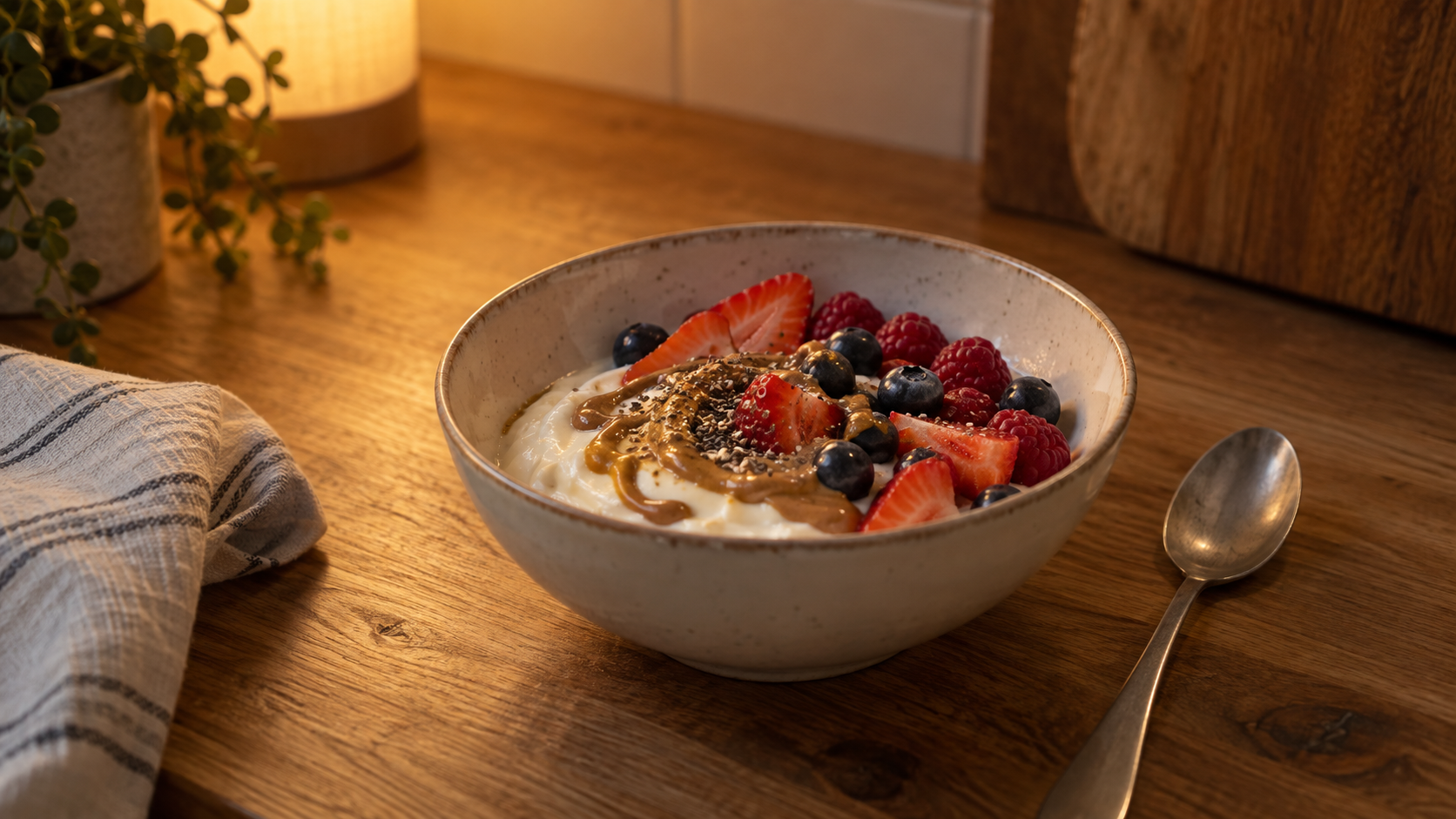
Protein before bed was never a strategy for me. I have eaten a yogurt bowl after dinner most nights for years. Greek yogurt, some fruit, a spoon of nut butter. It started as a dessert habit, and I have honestly never once paid attention to whether it affects how I sleep.
Then I found out that Greek yogurt is naturally high in casein, which happens to be the exact protein a whole body of research has been studying under the name “pre-sleep protein.” I had been accidentally running the experiment for years without noticing.
So I went looking for what the research on protein before bed actually found. The answer splits cleanly into two halves, and only one of them is the one fitness content usually talks about.
Table of Contents
What Protein Before Bed Actually Does
The recovery side is well established and genuinely impressive.
Research from Luc van Loon’s group at Maastricht University found that 40 grams of casein consumed before sleep increased overnight muscle protein synthesis rates by roughly 22 percent compared to a placebo. The mechanism is simple. Your gut keeps working while you sleep, the protein is digested and absorbed normally, and the amino acids stay available through the night instead of running out.
That matters because the overnight window is the longest stretch you go without eating. If you finish dinner at seven and eat breakfast at seven, that is twelve hours with muscle protein breakdown continuing and nothing coming in to offset it. That gap is the whole reason protein before bed works at all.
A follow-up study found that over twelve weeks of resistance training, the group taking pre-sleep protein gained more muscle mass and strength than the group that did not, with no increase in body fat. A systematic review covering nine studies concluded that 20 to 40 grams roughly 30 minutes before sleep reliably stimulates overnight protein synthesis.
For someone training three or four times a week, protein before bed is a meaningful and cheap addition.
The Part Nobody Mentions: It Does Not Help You Sleep
Here is where I expected to find a sleep benefit and did not.
The same research group that established the recovery findings also measured sleep, and reported no effect of pre-sleep protein ingestion on sleep onset latency, sleep quality or next morning appetite in either young or older participants. Not worse. Just not better.
A 2025 randomised crossover study in elite female athletes tested casein, alpha-lactalbumin, carbohydrate and a placebo before sleep and reached the same conclusion. Pre-sleep protein did not impair sleep or recovery, but it did not improve sleep either.
So the honest summary is this. Protein before bed is a recovery tool, not a sleep aid. Anyone selling it as something that will help you fall asleep faster is going beyond what the evidence supports.
Which, to be fair, explains why I never noticed anything from protein before bed. There was nothing to notice.
The Casein Myth Worth Correcting
The standard advice is that casein specifically is required because it digests slowly over six to eight hours, whereas whey is absorbed quickly and therefore wasted overnight.
The logic is reasonable. A 2023 randomised controlled trial published in Sports Medicine tested it directly. Thirty-six men took 45 grams of casein, 45 grams of whey, or a placebo 30 minutes before sleep after evening exercise. The conclusion was that casein is not preferred over whey for increasing overnight muscle protein synthesis. Both worked. Neither was better.
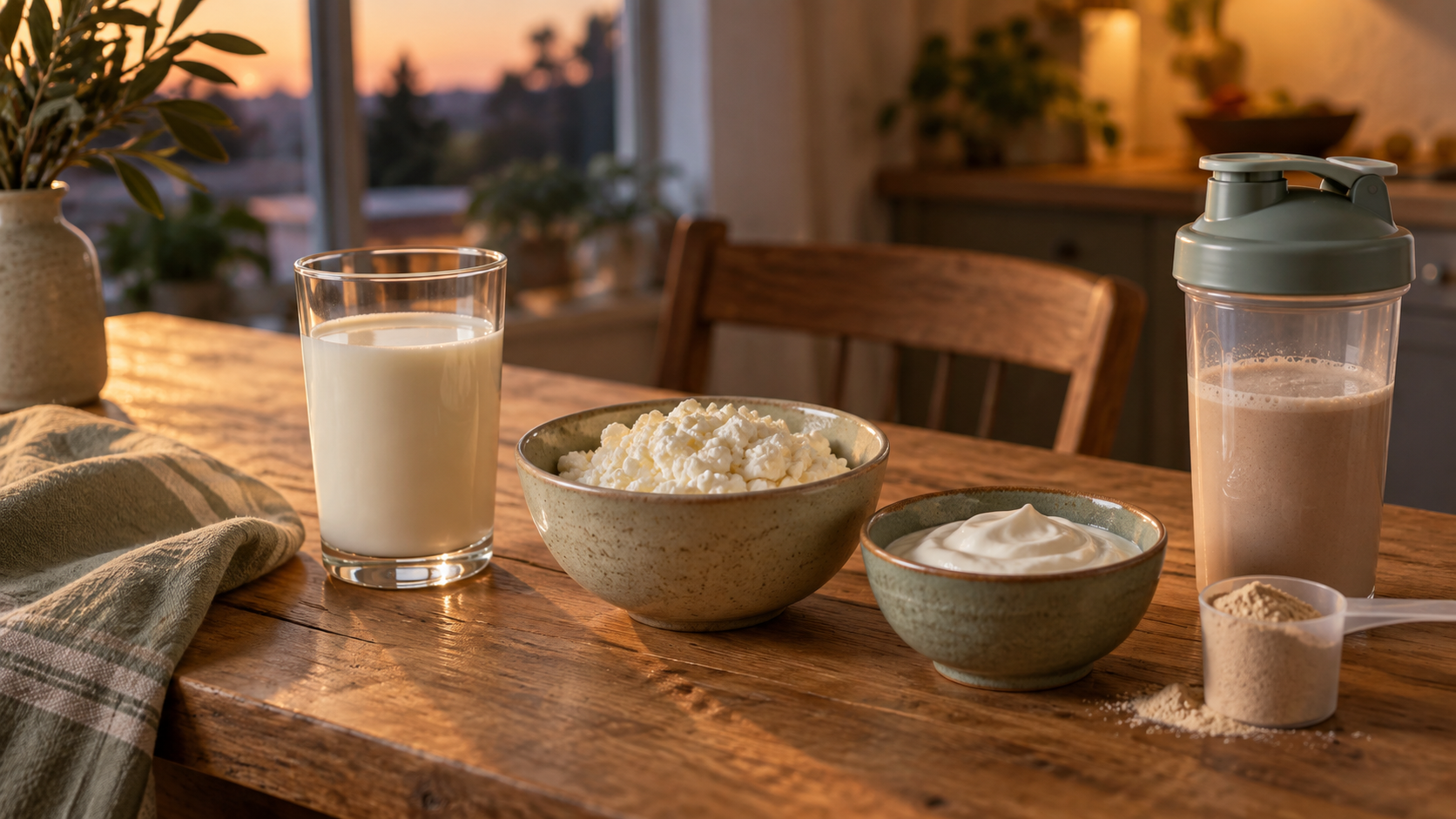
So if you already have a whey protein at home, there is no need to buy a separate casein product for evenings. The total amount of protein matters more than the specific type. For protein before bed, the type matters far less than simply having some.
What This Means in Practice
A few things I took from this that changed how I think about my own evening habit.
The dose is higher than most snacks provide. The robust effect shows up at 40 grams. Twenty grams produces a more modest response. A standard serving of Greek yogurt sits somewhere around 15 to 20 grams, which means my yogurt bowl is probably at the lower end rather than the optimal end.
Timing in the studies is tighter than mine. Most research used roughly 30 minutes before sleep. I eat mine right after dinner, which is considerably earlier. Whether that matters much is unclear, since the relevant variable is amino acid availability through the night rather than the exact clock time, but it is an honest difference worth naming.
It is additional protein, not replacement protein. The research frames pre-sleep protein as an extra meal moment to raise total daily intake. If you are already comfortably hitting your daily target, the marginal benefit is smaller. I aim for roughly 1.5 to 2 grams per kilogram of body weight and at least 30 grams per main meal, so the evening bowl is topping up rather than rescuing a deficit.
A large protein snack is still a snack close to bed. Eating substantially in the last hour before sleep keeps digestion active when your body is trying to cool down, which I wrote about in eating habits that quietly ruin your sleep. The studies used a drink rather than a full bowl of food, and that distinction is probably worth respecting.

What I Actually Use
My evening bowl is Greek yogurt, frozen berries and a spoon of almond butter, which adds a bit of fat and makes it feel like dessert rather than a supplement.
On days I have not hit my protein target, which happens more often than I would like, I add a scoop of protein powder stirred through it. Plain vanilla (or my favourite cinnamon roll), minimal ingredients, nothing fancy. That takes the bowl from around 18 grams to closer to 40, which is the range the research actually points to.
Cottage cheese is the other obvious option and is naturally higher in casein per serving than yogurt. I do not eat it myself, but it is the most efficient whole food route to 40 grams if the texture does not bother you.
Frequently Asked Questions
Does protein before bed help you sleep better?
No. The research consistently found no effect on sleep onset, sleep quality or sleep duration. It also found no negative effect. Protein before bed is a recovery strategy rather than a sleep strategy.
How much protein do I need before bed?
Around 40 grams produces the most reliable increase in overnight muscle protein synthesis. Twenty grams still does something, just less. A standard Greek yogurt serving is usually below that range, so adding protein powder or choosing cottage cheese gets you closer.
Is casein better than whey before bed?
Not according to the direct comparison. A 2023 controlled trial found no difference between 45 grams of casein and 45 grams of whey for overnight muscle protein synthesis. Use whichever you already have.
Will eating protein before bed make me gain fat?
The twelve week training study found greater muscle and strength gains with no increase in body fat. That said, it is still calories, and the finding applies within a diet where total intake is accounted for rather than as a free addition on top of everything else.
Is Greek yogurt enough or do I need a supplement?
Greek yogurt is naturally casein rich and a perfectly good source. The issue is dose rather than quality. If your serving is 15 to 20 grams and you want to reach the range used in the research, either a larger portion, cottage cheese, or added protein powder closes the gap.
The Bottom Line
Protein before bed does something real, just not the thing it is usually sold as. It measurably improves overnight muscle recovery, and over months of training that adds up. It does nothing at all for sleep quality, in either direction.
The dose matters more than the type. Forty grams is the number, casein has no special advantage over whey, and if you are already meeting your daily protein target the extra benefit is smaller.
I have been eating a yogurt bowl after dinner for years without thinking about any of this. I am not stopping. I am just clearer now on what it is and is not doing.
Do you eat protein in the evening, and have you ever noticed it affecting your sleep or your recovery? I would genuinely like to know!


Leave a Reply