
I used to think eating better meant starting over.
New meal plan. New shopping habits. New relationship with food. The whole thing. And every time I tried that version of it, I’d last about eleven days before I was back to exactly where I started, feeling vaguely guilty about it.
What actually changed things for me wasn’t a new diet. It was noticing that a few very specific, very boring substitutions made a difference that I could actually feel. Not “feel” in the way wellness content promises you’ll feel — some immediate glow of virtue. More quietly than that. Better energy in the afternoon. Less reaching for something sweet at 3pm. Sleeping more solidly.
I started looking into why that was, which sent me down a research rabbit hole I’ve been crawling out of ever since. And what I found was that the research on food swaps is actually quite interesting — and considerably more encouraging than the “eat less, move more” version of dietary advice that most people have already heard and mostly ignored.
Here’s what I actually changed — and what the science says about why it matters.
Why Swaps Work Better Than Overhauls
Before the list, because this part is worth understanding.
There’s a 2024 randomised controlled trial published in Appetite (Schruff-Lim et al., PMID 38113984) that specifically studied what happens when people are offered targeted food swap suggestions — a healthier alternative to something they’re already buying — versus general healthy eating advice. The swap model was considerably more effective. The reason the researchers pointed to was exactly what you’d expect: swaps work with existing habits rather than against them. They don’t ask you to become a different person with a different routine. They ask you to buy the brown rice instead of the white rice.
A UK government study on sugar swaps (PMID 35010942) found that families who made targeted sugar substitutions for just two weeks reduced their daily sugar intake by an average of 32 grams per family member. More interestingly: 61% of that improvement was still present at one-year follow-up. From a two-week intervention. That’s a number worth pausing on.
The long version of all of this is: small and specific beats big and vague, every time. Which is why the list below is eight specific swaps rather than “eat more whole foods.
1. White Bread → Whole Grain Bread
I resisted this one for years because I genuinely believed it would make sandwiches worse. It doesn’t — I just needed to find the right bread.
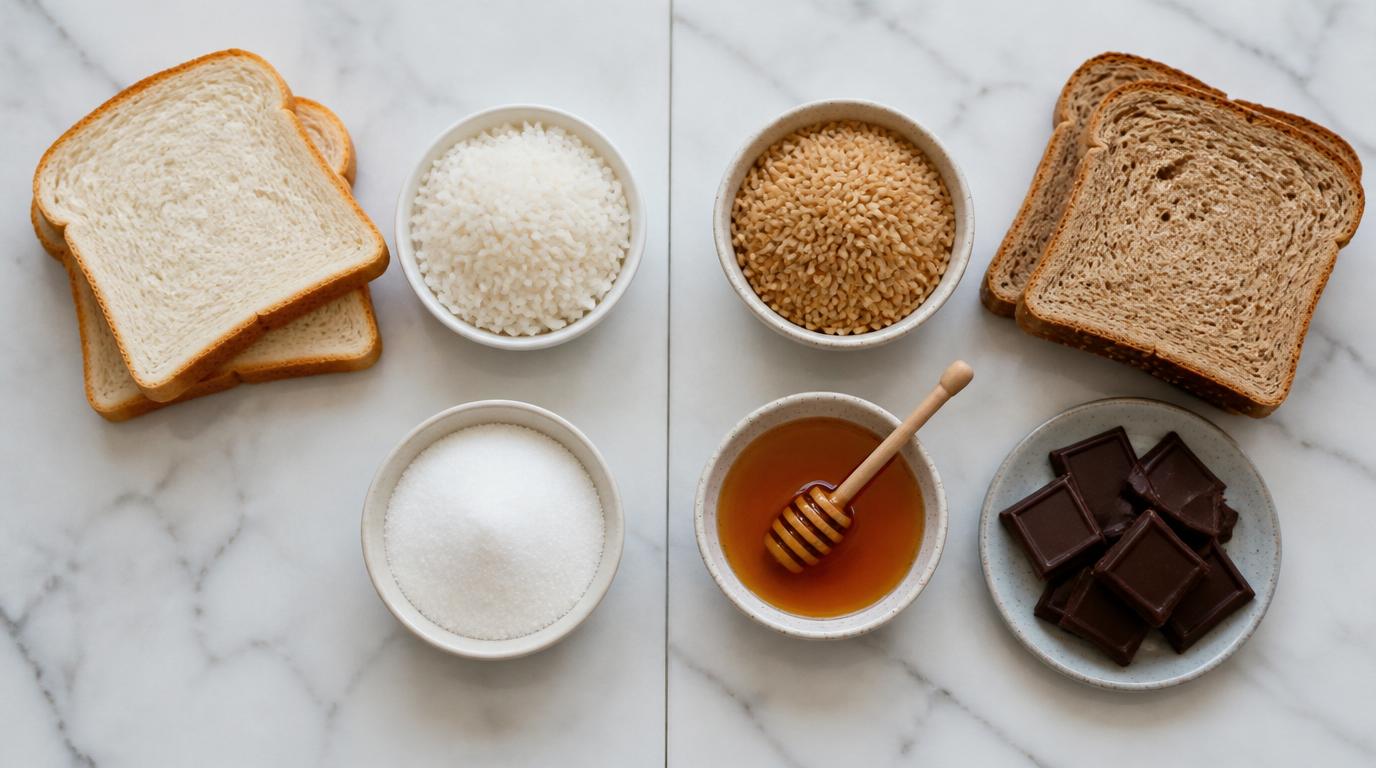
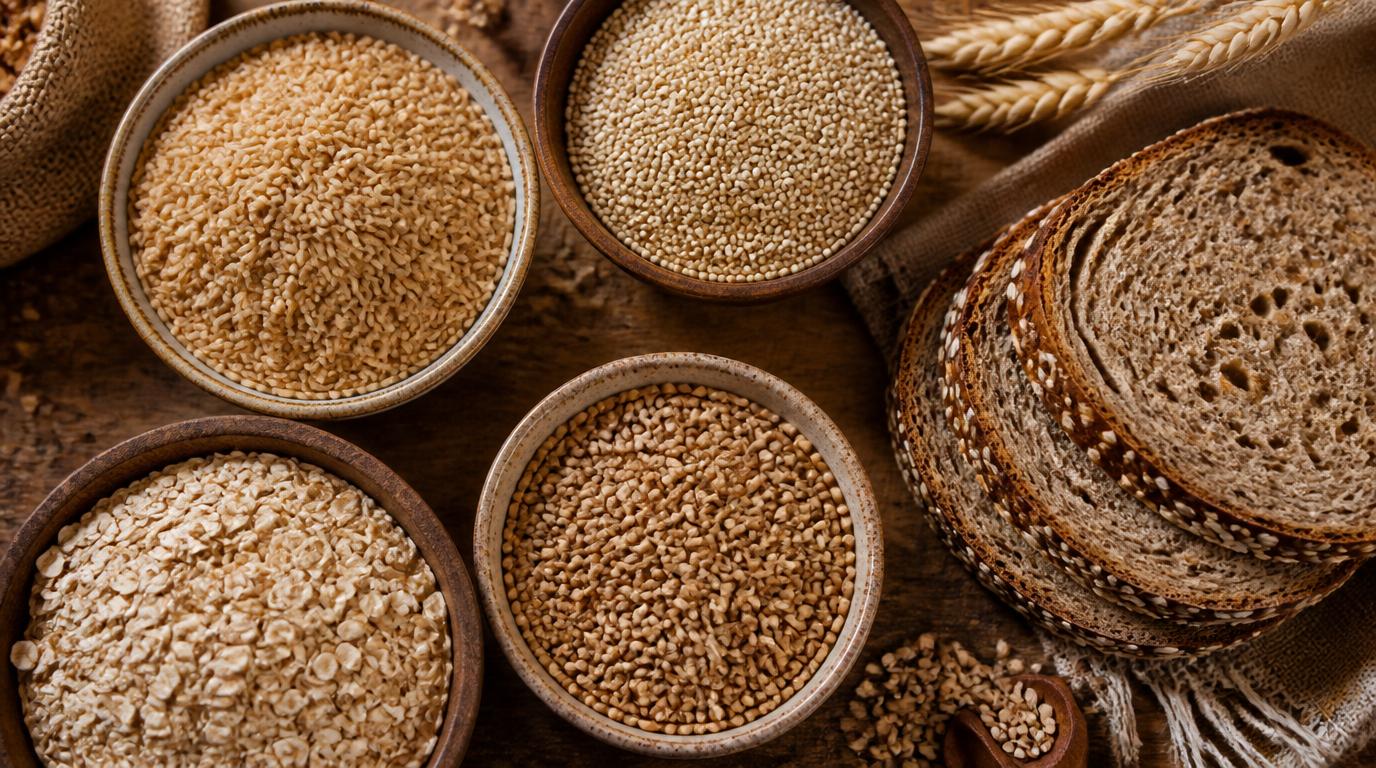
The research on this swap is probably the most consistent in nutrition science. A growing body of research shows that choosing whole grains and cutting back on refined grains improves health in many ways. The reason is structural: when grains are refined, the bran and germ are removed along with most of the fibre, B vitamins, iron, magnesium, and antioxidants. What’s left is predominantly starch.
A review of 16 studies concluded that replacing refined grains with whole varieties and eating at least two servings of whole grains daily could lower your risk of diabetes: https://pubmed.ncbi.nlm.nih.gov/24158434/
Practically: check the label before you buy. “Whole wheat” or “whole grain” needs to be the first ingredient — not “wheat flour,” which is just white flour renamed. The word “whole” in front of the grain is what you’re looking for.
2. White Rice → Brown Rice or Quinoa
Same logic, different food. Brown rice is white rice before the process that strips away the bran and germ layers — taking the fibre, magnesium, B vitamins, and antioxidants with them.
A follow-up study including participants from the Nurses’ Health Studies I and II and the Health Professionals Follow-Up Study found that swapping white rice for whole grains could help lower diabetes risk. https://pmc.ncbi.nlm.nih.gov/articles/PMC3024208/
The honest thing I’ll say about this one: brown rice takes longer to cook, and that friction is enough to make most people not bother on a Tuesday evening. What worked for me was batch-cooking a large amount on Sunday and keeping it in the fridge. Same total effort, distributed more sensibly.
Quinoa is worth trying separately — it’s technically a seed, provides all nine essential amino acids, and has a slightly nuttier flavour that works well when you want something a bit different from rice.

3. Refined Sugar → Raw Honey or Dates
I want to be careful here because “natural sugar is healthy” is not what the research says. Honey and dates are still sugar — your body metabolises them as sugar. This isn’t a permission slip to eat more sweetness guilt-free.
What the research does show is more nuanced than that. A 2022 review published in Heliyon (Arshad et al., PMC9519493) found that raw honey contains phenolic compounds, antioxidants, and trace minerals that refined sugar simply doesn’t have. These compounds show modest positive effects on inflammation markers and gut microbiome activity in studies.
Dates contain fibre alongside their natural sugars — which slows absorption and produces a more gradual blood sugar response than the same sweetness from refined sugar.
So the swap isn’t “this is now healthy.” It’s “this does the same job as refined sugar and comes with a few things refined sugar doesn’t.” Which, for a small daily amount of sweetness, seems like a reasonable trade.
What I buy: Raw Manuka Honey — for tea, for baking, for stirring into Greek yogurt or my leon tea.
4. Butter → Extra Virgin Olive Oil
I wrote about olive oil in the anti-inflammation meals post and I keep coming back to it because the research genuinely keeps coming back to it.
The oleocanthal in extra virgin olive oil has been studied for structural similarities to ibuprofen in how it acts on inflammatory pathways — something butter doesn’t offer. The Mediterranean diet research, which is among the most consistent in nutrition science, points to olive oil as one of the central reasons that dietary pattern produces the outcomes it does.
For cooking at medium heat, for dressings, for anything where fat is doing flavour work — olive oil does everything butter does and more. The one honest exception: sweet baking. Butter has a flavour profile olive oil doesn’t replicate in a chocolate cake. So I use olive oil everywhere except sweet baking, where butter stays.
5. Crisps and Processed Snacks → Nuts
The snacking swap that I was most sceptical of and am now most convinced by.
Processed snacks — crisps, most crackers, most snack bars — are high in refined carbohydrates and low in protein and fibre. The result is a blood sugar spike and then, fairly quickly, hunger again. Nuts give you the opposite: protein, healthy fat, and fibre that produce genuine satiety and a far flatter energy curve.
The research on nuts spans decades and is remarkably consistent — regular nut consumption is associated with improved cholesterol profiles, reduced cardiovascular risk, and lower inflammatory markers across multiple large studies. Walnuts specifically appear frequently in anti-inflammatory research for their omega-3 content.
The practical note: a small handful — roughly 30g — is what most studies use and what most people find genuinely satisfying. More than that and the calorie density makes it less useful as a swap.
6. Flavoured Yogurt → Plain Greek Yogurt with Fresh Fruit
This one surprised me when I first looked at the label properly.
Most flavoured yogurts contain more added sugar per serving than the equivalent amount of ice cream. The fruit imagery and health positioning is doing a lot of heavy lifting for what is, nutritionally, often a fairly sugary product. The live cultures that make yogurt interesting are frequently reduced or eliminated by the additional processing that goes into flavoured varieties.
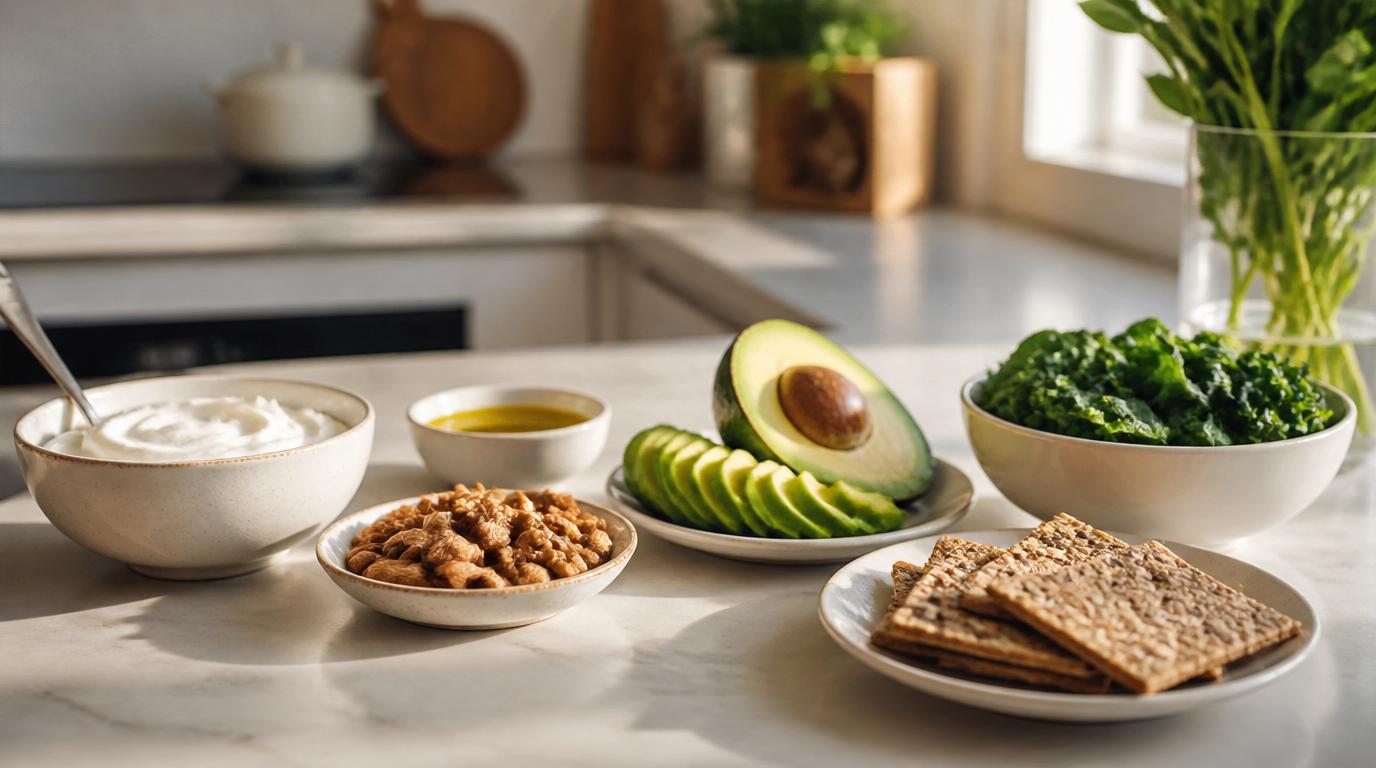
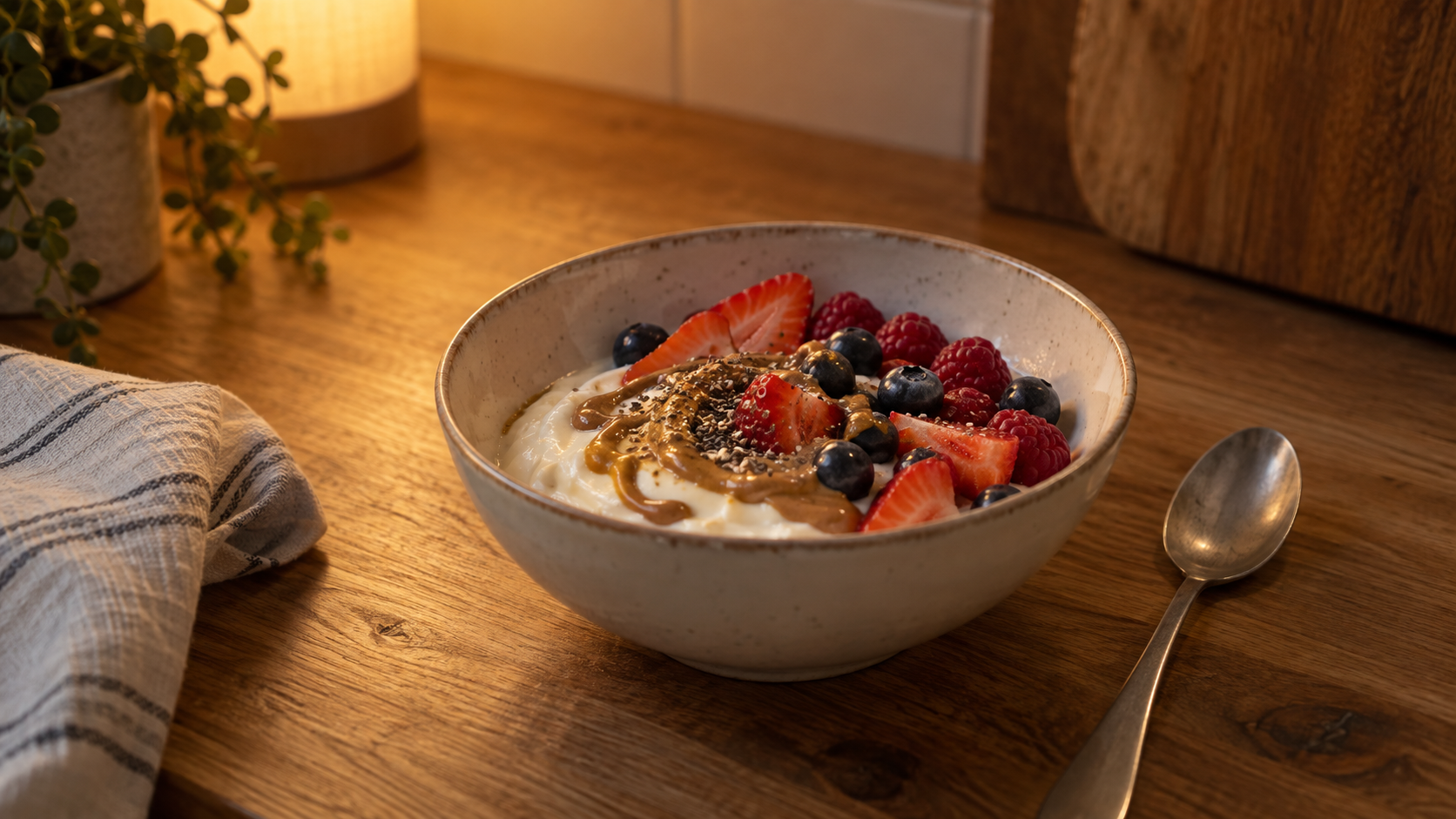
Plain Greek yogurt with fresh fruit does the same thing — sweet, creamy, convenient — with considerably more protein, no added sugar, and genuine probiotic benefit. The protein difference alone makes it worth making: flavoured yogurt typically provides 4-6g per serving. Greek yogurt provides 15-17g.
I add frozen berries defrosted overnight or fresh ones (depending on the season), a drizzle of raw honey if I want it sweeter, and a handful of granola for texture. It takes about the same time as opening a flavoured yogurt and tastes considerably better.
7. Fruit Juice → Whole Fruit
This is the swap that surprised people most when I mention it in conversation.
Fruit juice — even 100% fresh-squeezed — removes the fibre from fruit while keeping the sugar. The fibre in whole fruit is what slows fructose absorption and produces a gradual blood sugar response. Without it, fruit juice produces a blood sugar spike broadly similar to other sugary drinks, despite the natural framing.
A 2013 study in BMJ (PMID 23990623) that followed 187,000 people over several years found that replacing three servings of fruit juice per week with whole fruit was associated with a significant reduction in type 2 diabetes risk. Replacing with blueberries specifically showed a 26% reduction.
Eat the orange rather than drinking it. If you want something fruit-flavoured in the morning, a squeeze of lemon in water gives the flavour without the concentrated sugar — and I’ve genuinely come to prefer it.
8. Milk Chocolate → Dark Chocolate (70%+)
The swap that feels the most like a reward, which is the main reason it’s on this list.
Dark chocolate at 70% cocoa or above contains meaningful amounts of flavanols — compounds studied for their effects on blood pressure, blood flow, and cognitive function. A 2022 meta-analysis in Nutrients found consistent associations between dark chocolate consumption and improved endothelial function and reduced blood pressure. Milk chocolate has significantly lower flavanol content because the cocoa percentage is lower and milk interferes with flavanol absorption.
The adjustment takes about two weeks — and most people find that after that, milk chocolate starts tasting too sweet and the bitterness they initially noticed in dark chocolate becomes part of what they enjoy. That shift happened to me and I wasn’t expecting it.
What I buy: Lindt 85% Dark Chocolate — 85% is high enough for meaningful flavanol content and low enough to actually enjoy.
None of these swaps is transformative on its own. I want to be clear about that because wellness content tends to overclaim and I find that annoying.
What Harvard research on long-term dietary patterns does consistently show is that gradual, sustained improvements over years produce significantly better outcomes than dramatic short-term changes that don’t last. Which is the whole argument for swaps over overhauls — not that any one of them changes everything, but that eight of them, made consistently over time, add up to something meaningfully different from what you were doing before.
The 2024 Appetite study I mentioned at the start was explicit about why the swap model works: it changes behaviour without requiring identity change. You’re not becoming someone who eats differently. You’re just buying the brown rice.
Eight swaps. No new meal plan. No eliminated food groups. No eleven-day streak followed by guilt.
Whole grain instead of refined. Honey instead of refined sugar. Olive oil instead of butter. Nuts instead of crisps. Plain Greek yogurt instead of flavoured. Whole fruit instead of juice. Dark chocolate instead of milk chocolate.
None of them are dramatic. Together, made consistently, they add up to something real.
Start with the one that requires the least effort. For most people that’s the bread. Buy a different loaf next time you shop. See how it goes.
Which of these swaps have you already made — or been meaning to try? I’m always curious what people actually find manageable — driftlyblog@gmail.com 🌿


Leave a Reply