
⚕️ Medical Disclosure:
This post shares general nutritional information based on publicly available research. It is not medical advice. Individual dietary needs vary significantly — if you have specific health conditions or goals, please speak with a healthcare professional or registered dietitian.
There is a particular kind of afternoon that most people recognise.
You ate lunch. A reasonable lunch — something that felt healthy at the time. And yet by 3pm you’re staring into the fridge looking for something, anything, to get you through to dinner. Not because you didn’t eat. Because what you ate didn’t last.
High protein, low carb bowls are trending on Pinterest right now with a +400% increase in saves this month — and the reason isn’t complicated. They solve a real problem. Built correctly, they keep you full for hours, avoid the blood sugar spike and crash cycle that drives afternoon hunger, and come together in under 20 minutes if you have the right ingredients prepped.
Here’s what the research says about why they work — and three bowls worth making.
Why High Protein Low Carb Actually Works
Before we get into the recipes, it’s worth understanding the mechanism — because it’s more interesting than “protein good, carbs bad.”
Research consistently shows that higher protein intake enhances fullness, reduces cravings, and preserves lean mass when calories are reduced. Paired with low glycemic carbohydrates such as leafy greens and cruciferous vegetables, this combination stabilises energy and avoids the post-meal crashes common with higher carbohydrate meals. St-aug
The satiety piece is particularly well-documented. The benefits of combining high protein with low carb are well-documented: better appetite control — protein is the most satiating macronutrient — improved body composition with more muscle retention during fat loss, and a higher thermic effect meaning your body burns more calories simply digesting protein-rich food. Heal Nourish Grow
Research now indicates that higher protein intake during carbohydrate restriction produces better outcomes for body composition, satiety and muscle preservation. The International Society of Sports Nutrition recommends 1.6 to 2.2 grams of protein per kilogram during fat loss — and the 30-gram threshold per meal is the amount research shows is needed to fully stimulate muscle protein synthesis. Heal Nourish Grow
None of this means you need to track every gram or follow a rigid protocol. What it does suggest is that building meals around protein — with vegetables doing the carbohydrate work rather than grains — produces a noticeably more sustained energy response for most people.
That’s what these bowls are designed to do.
Bowl 1: The Classic Grilled Chicken Kale Bowl
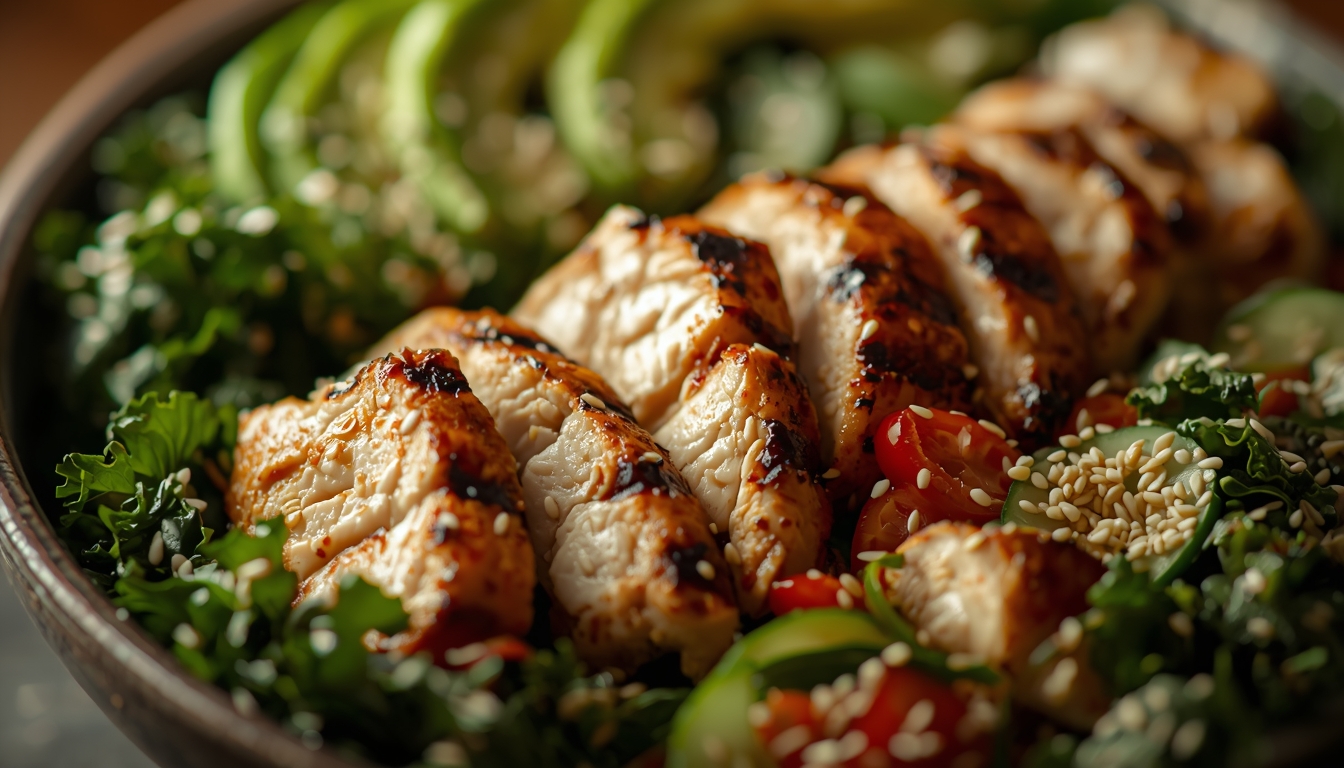
The one that started the trend. Simple, reliable, endlessly adaptable — and one I come back to more than any other lunch option.
Recipe
Serves 1-2 | Prep: 5 min | Cook: 15 min

PROTEIN:
→ 1 chicken breast (approx 150-200g)
→ 1 tbsp olive oil
→ Salt, black pepper, garlic powder
→ Optional: pinch of smoked paprika

BASE:
→ 2 large handfuls of kale,
   stems removed
→ 1 tsp olive oil + pinch of salt
   (for massaging)

TOPPINGS:
→ ½ avocado, sliced
→ ½ cucumber, ribboned or sliced
→ Handful of cherry tomatoes, halved
→ 1 tbsp pumpkin seeds

DRESSING:
→ 2 tbsp tahini
→ Juice of ½ lemon
→ 1 tbsp water to thin
→ Salt and pepper
→ Optional: small garlic clove, grated

METHOD:
1. Season chicken with olive oil, salt, pepper and garlic powder. Grill or pan-fry on medium-high heat for 6-7 minutes each side until cooked through. Rest for  3 minutes then slice.

2. Massage kale with olive oil and salt for 60 seconds until softened and slightly darker.

3. Arrange kale in a bowl. Add sliced chicken, avocado, cucumber and cherry tomatoes.

4. Whisk tahini dressing and drizzle generously over the bowl.

5. Top with pumpkin seeds and serve immediately.

PROTEIN: approx. 38-42g per serving
NET CARBS: approx. 8-10g
The Ingredients Worth Knowing About
Chicken breast is one of the most researched protein sources for satiety and body composition. High-quality proteins like lean poultry stimulate muscle protein synthesis more effectively than lower-quality proteins. A 100g serving of grilled chicken breast provides approximately 31-32g of protein at around 165-170 calories with just 3-4g of fat — making it one of the most efficient protein sources available. Luke Coutinho
Kale brings far more than a green base. Kale has just 2.1g of total carbs per cup with nearly half coming from fibre, giving it a very low net carb count of about 1.2g — making it ideal for low-carb meals while having minimal impact on blood sugar. Its combined nutrients promote bone health through calcium and vitamin K synergy, and its antioxidant-rich profile supports cardiovascular function. Noom
Avocado earns its place beyond texture. Healthy fats from avocado contribute essential fatty acids and prolonged satiety, helping prevent overeating later in the day. The monounsaturated fat content also supports the absorption of fat-soluble nutrients from the kale and other vegetables in the same bowl.
Pumpkin seeds are a small but useful addition — approximately 7g of protein per ounce, plus magnesium which consistently appears in research on sleep quality, muscle function, and stress regulation.
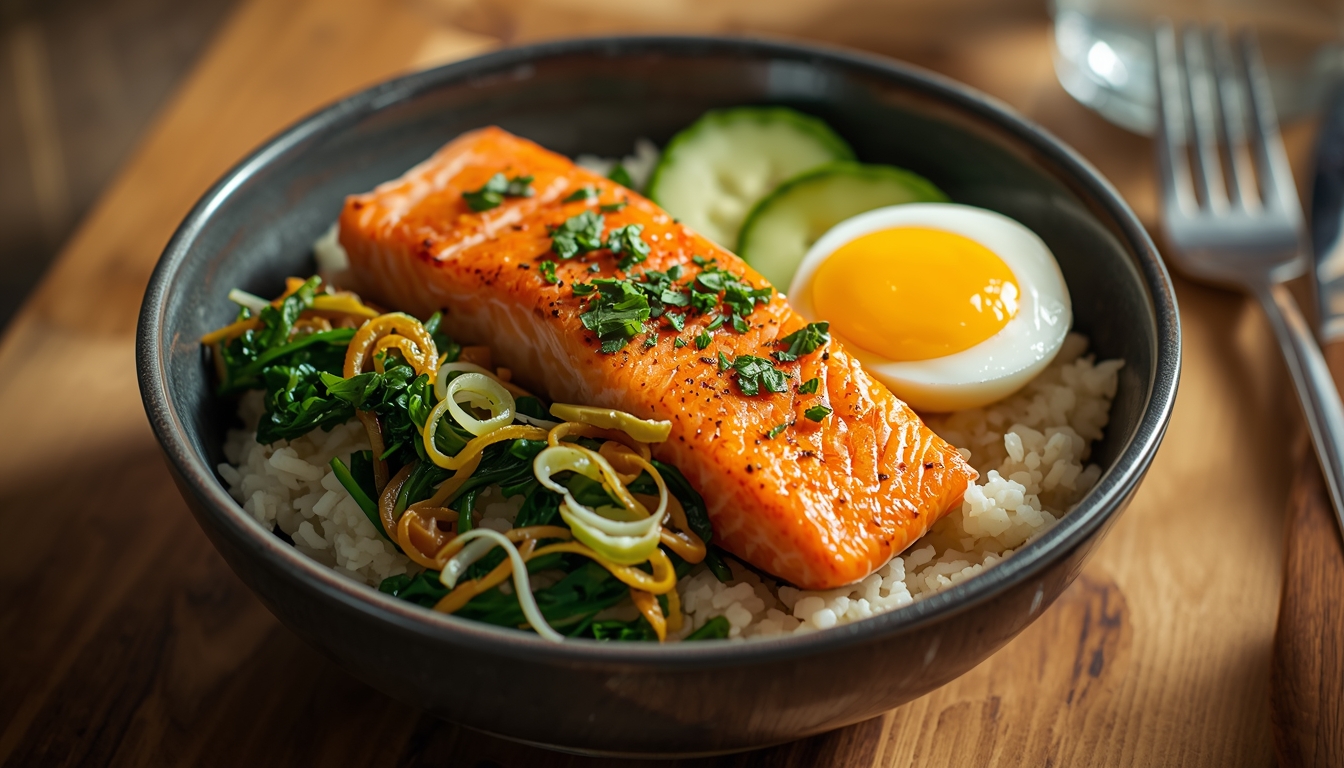
Bowl 2: Salmon Cauliflower Rice Bowl
For days when you want something that feels more substantial — and the omega-3 hit from salmon.
Recipe
Serves 1-2 | Prep: 5 min | Cook: 15 min

PROTEIN:
→ 1 salmon fillet (approx 150g)
→ 1 tsp sesame oil
→ Salt, pepper, splash of tamari
   or soy sauce

BASE:
→ 200g cauliflower rice
   (fresh or frozen)
→ 1 tsp sesame oil
→ 2 large handfuls of spinach

TOPPINGS:
→ 1 soft-boiled egg
→ ½ cucumber, sliced
→ 1 tbsp edamame (optional)
→ 1 tsp sesame seeds
→ 2 spring onions, sliced

DRESSING:
→ 1 tbsp soy sauce or tamari
→ 1 tsp sesame oil
→ 1 tsp rice vinegar
→ Optional: ½ tsp sriracha

METHOD:
1. Rub salmon with sesame oil, salt, pepper and a splash of tamari. Pan-sear on medium-high for 3-4 minutes per side until golden and just cooked through.

2. In the same pan, sauté cauliflower rice in sesame oil for 4-5 minutes until golden. Wilt spinach through in the last minute.

3. Build the bowl: cauliflower rice and spinach base, salmon on top, then cucumber, egg, edamame and spring onions.

4. Drizzle dressing over everything. Scatter sesame seeds and serve.

PROTEIN: approx 35-40g per serving
NET CARBS: approx 6-8g
Why Salmon Works So Well Here
Beyond the protein content, salmon brings omega-3 fatty acids — specifically EPA and DHA — which appear consistently in research on inflammation, brain function, and cardiovascular health. For a high protein bowl that’s also genuinely nutrient-dense, salmon is one of the better choices.
Cauliflower rice is the low-carb workhorse of this bowl — it provides the volume and texture of a grain base with a fraction of the carbohydrates. The flavour is mild enough to absorb the sesame dressing without fighting it.
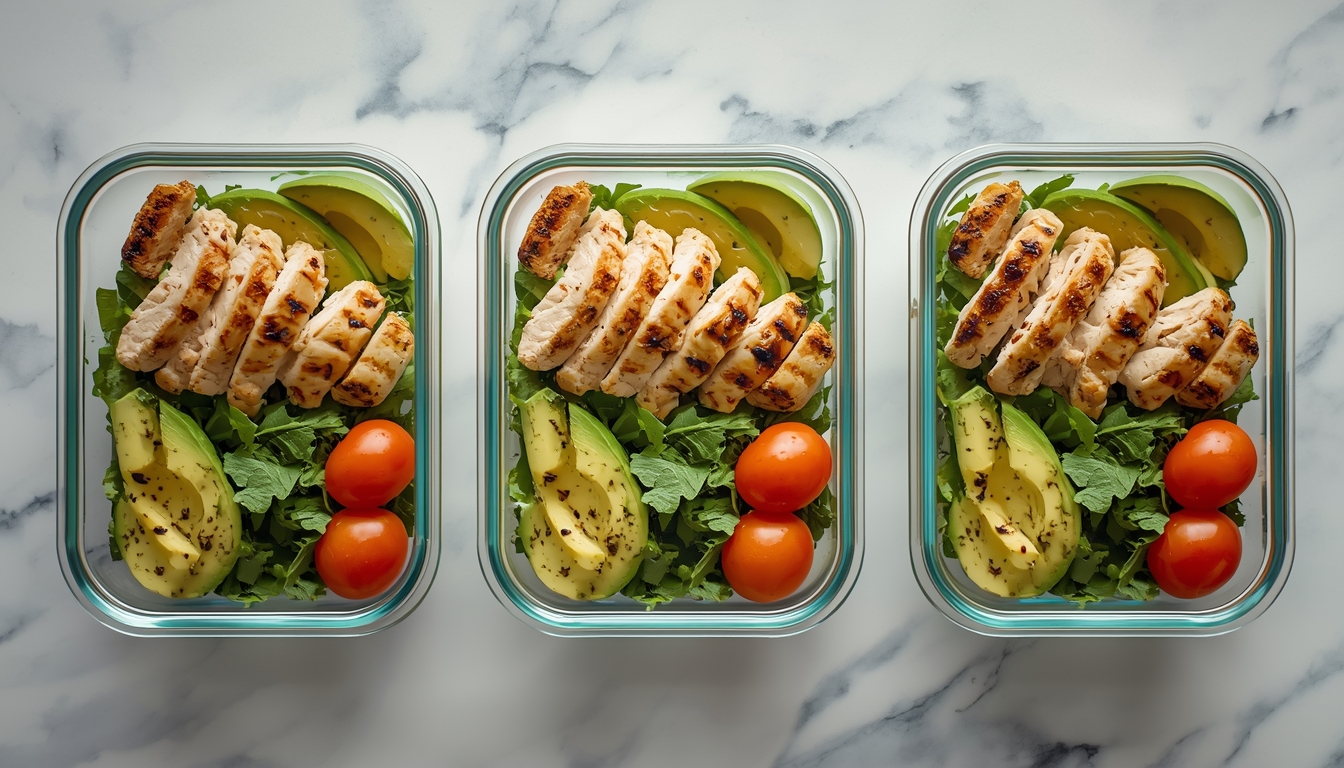
Bowl 3: The Meal Prep Bowl
This one is designed specifically for making four portions on Sunday and eating them across the week. It travels well, holds its texture for three to four days, and doesn’t require reheating if you’d rather eat it cold.
Recipe
Serves 4 | Prep: 15 min | Cook: 20 min

PROTEIN:
→ 4 chicken breasts OR 400g firm tofu (plant-based option)
→ 2 tbsp olive oil
→ 1 tsp each: cumin, smoked paprika, garlic powder, salt

BASE:
→ 4 large handfuls of kale or mixed greens
→ 1 large cucumber, diced
→ 200g cherry tomatoes, halved
→ 1 tin chickpeas, drained (adds plant protein + fibre)

TOPPINGS:
→ 2 avocados (add fresh when serving — don't meal prep avocado)
→ 4 tbsp pumpkin or sunflower seeds
→ Optional: crumbled feta

DRESSING (make in bulk):
→ 4 tbsp olive oil
→ 2 tbsp lemon juice
→ 1 tsp Dijon mustard
→ 1 tsp honey
→ Salt and pepper

METHOD:
1. Toss chicken in spices and olive oil. Bake at 200°C for 18-20 minutes. Cool completely before storing.

2. Divide greens, cucumber, tomatoes and chickpeas evenly across 4 containers.

3. Add sliced chicken to each.

4. Store dressing separately — add just before eating.

5. Add fresh avocado when serving.

6. Keeps 3-4 days in the fridge.

PROTEIN: approx 40-45g per serving
NET CARBS: approx 12-14g (chickpeas add fibre-rich carbs)
Building Your Own High Protein Bowl
Once you understand the structure, you can build endless variations with whatever is in your fridge.
THE FORMULA:

PROTEIN BASE (pick one — aim for 30g+):
→ Grilled chicken breast   ~32g/100g
→ Salmon fillet            ~25g/100g
→ Tinned tuna              ~26g/100g
→ Hard-boiled eggs (2)     ~12g
→ Firm tofu                ~17g/100g
→ Chickpeas + seeds combo  ~20g/cup

LOW-CARB GREENS (pick one or mix):
→ Kale                     1.2g net carb/cup
→ Spinach                  0.4g net carb/cup
→ Rocket/Arugula           0.4g net carb/cup
→ Cauliflower rice         3g net carb/cup
→ Cucumber                 2g net carb/cup

HEALTHY FAT (pick one):
→ Avocado                  ½ = 1g net carb
→ Olive oil drizzle
→ Tahini dressing
→ Pumpkin or sunflower seeds

FLAVOUR + CRUNCH:
→ Cherry tomatoes
→ Red onion
→ Fresh herbs
→ Lemon juice
→ Sesame seeds
A Note on “Low Carb” — What It Actually Means Here
I want to be clear about something: these bowls are not keto, and they’re not designed to be. They are lower in carbohydrates than a typical lunch that includes pasta, rice, or bread — not because carbohydrates are the enemy, but because getting the same volume and satiety from vegetables rather than grains produces a different energy response for most people.
Focusing only on protein, especially in low carb eating, can lead to gaps in fibre, healthy fats, micronutrients, and overall digestive health. The Low Carb Grocery Which is exactly why these bowls are built around dark leafy greens, avocado, seeds, and olive oil — not just protein on a plate.
The chickpeas in Bowl 3 are technically a moderate-carb ingredient. I included them deliberately because the fibre and plant protein they contribute makes the bowl more nutritionally complete, and because eating varied sources of protein tends to serve long-term health better than relying on animal protein alone.
To sum it up
High protein low carb bowls are trending because they work — and the research behind them is more consistent than most nutrition trends manage to be.
Protein is the most satiating macronutrient. Pairing it with leafy greens, avocado, and olive oil rather than grains produces a steadier energy response. And building that into a meal you can prep in advance means the 3pm fridge raid becomes considerably less likely.
Three bowls, all under 20 minutes, all genuinely satisfying. Start with Bowl 1 this week and see how the afternoon feels.
Which high protein bowl combination are you most likely to try? I’m always collecting new variations – driftlyblog@gmail.com


Leave a Reply