
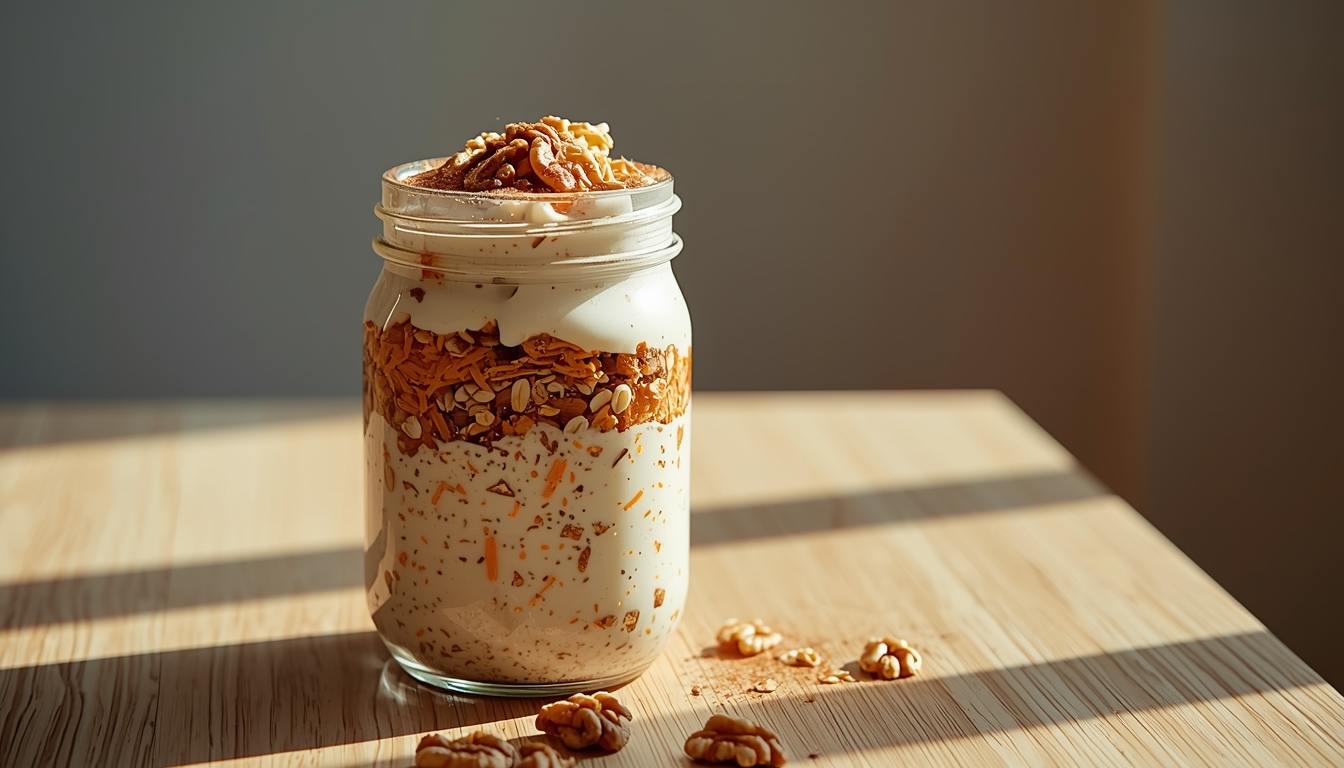
I’ll be honest — I noticed carrot cake overnight oats trending on Pinterest and immediately thought it sounded like a dessert dressed up as breakfast.
Then I actually looked at what’s in them. And it turns out there’s something genuinely interesting happening in this jar.
This recipe is one of those rare things that manages to taste like a treat while also being a reasonably well-constructed breakfast from a nutritional standpoint. Not because the ingredients are miraculous — but because several of them have a decent amount of research behind them, particularly around sustained energy and blood sugar stability.
Here’s the recipe — and the quick version of what the science says about what’s in it.
The Recipe: Carrot Cake Overnight Oats
Makes 1 jar | Prep time: 5 minutes | Refrigerate overnight
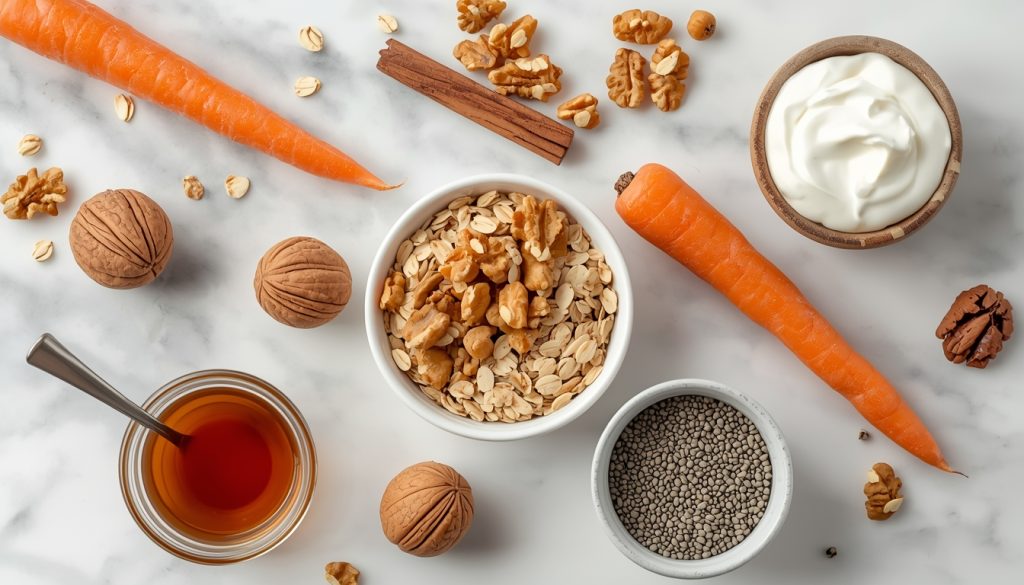
Ingredients
BASE:
→ ½ cup rolled oats
→ ½ cup milk of your choice
→ ¼ cup Greek yogurt (plain, unsweetened)
→ 1 tablespoon chia seeds

CARROT CAKE FLAVOUR:
→ ½ cup grated carrot (roughly 1 medium carrot)
→ ½ teaspoon cinnamon
→ ¼ teaspoon nutmeg
→ ¼ teaspoon vanilla extract
→ 1 teaspoon maple syrup or honey (optional)

TOPPINGS:
→ A small handful of walnuts
→ Extra grated carrot
→ Pinch of cinnamon
→ A drizzle of maple syrup or another topping if you like it sweeter
Step 1: Add the oats, milk, Greek yogurt, and chia seeds to a jar or container with a lid. Stir well to combine.
Step 2: Add the grated carrot, cinnamon, nutmeg, vanilla, and maple syrup if using. Stir again until everything is evenly mixed.
Step 3: Seal the jar and refrigerate overnight — or for at least four hours.
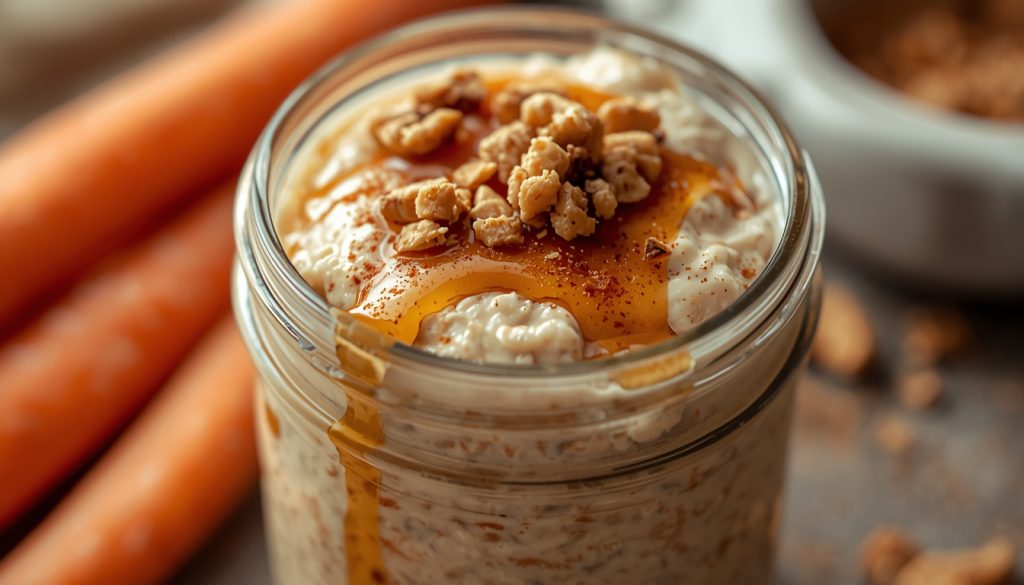
Step 4: In the morning, give it a stir. Add a splash more milk if it’s thicker than you’d like. Top with walnuts, a pinch of cinnamon, and any other toppings.
Step 5: Eat straight from the jar. No reheating required.
Why This Breakfast Is More Interesting Than It Looks
I’m not going to claim this jar will change your life. But there’s a reason overnight oats have staying power as a breakfast — and a few of the ingredients in this version have genuinely interesting research behind them.
Oats — The Reason You Stay Full Until Lunch
Oats are probably the most researched ingredient in this recipe.
Oats contain a type of soluble fibre called beta-glucan, which is associated with lower blood glucose and cholesterol levels. Beta-glucan also promotes healthy gut bacteria and intestinal health. Mayo Clinic Health System
What makes beta-glucan particularly interesting for breakfast is the mechanism: it forms a viscous layer in the upper gut that delays the absorption of carbohydrates, which is associated with a lower blood glucose response compared to most other breakfast cereals. PubMed Central
In practical terms: oats tend to produce a flatter, more sustained blood sugar curve than many other breakfast options. This may be part of why they’re associated with feeling full longer and avoiding the mid-morning energy crash.
Research examining overnight oats specifically — soaked in milk and eaten cold — found that they retain their low glycaemic impact even when prepared this way, rather than cooked. Inquis
A note on the soaking process: overnight soaking may slightly increase the amount of resistant starch in oats — a form of carbohydrate that escapes digestion and ferments in the large intestine, which may support gut health and contribute further to a reduced glycaemic response. takenoats
Carrots — More Than Just Vitamin A
Carrots bring colour, texture, and the “cake” element to this recipe. They also bring something worth knowing about.
Beta-carotene, the compound that gives carrots their orange colour, is converted into vitamin A in the body and functions as an antioxidant — helping protect cells from oxidative damage. It also has anti-inflammatory properties. Cleveland Clinic
Research shows that the beta-carotene in carrots may help reduce insulin resistance, and the fibre-rich carbohydrates in non-starchy vegetables like carrots don’t spike blood sugar levels — on the contrary, a diet rich in these vegetables supports insulin sensitivity and balanced blood sugar levels. Cleveland Clinic
One practical note worth knowing: beta-carotene is a fat-soluble compound, which means eating it alongside a source of healthy fat — like the walnuts and yogurt in this recipe — improves how well the body absorbs it. Healthline The recipe is conveniently structured to support this.
Cinnamon — The Spice With an Interesting Research Track Record
Cinnamon is one of those ingredients that keeps appearing in nutrition research, which I wasn’t expecting when I first looked into it.
Several studies have explored cinnamon’s potential effects on blood sugar regulation and insulin sensitivity, with generally positive findings — though most studies are relatively small and the research is ongoing. The mechanism thought to be involved is cinnamon’s potential to improve how cells respond to insulin, which could support more stable blood sugar levels after eating.
I want to be careful not to overstate this — cinnamon is a spice, not a supplement, and the amounts used in cooking are considerably smaller than those used in most studies. But it’s a genuine area of active research, and it adds flavour without adding sugar. Both things are useful.
Walnuts — A Useful Breakfast Addition
Walnuts earn their place in this recipe beyond texture.
They’re one of the better plant-based sources of omega-3 fatty acids, specifically alpha-linolenic acid (ALA). Research has explored the effects of walnuts on cardiovascular health, inflammation, and cognitive function, with generally supportive findings across multiple study types.
For breakfast specifically, adding healthy fats slows the digestion of the meal as a whole — contributing to that sustained energy release that makes overnight oats a better choice than, say, toast and jam.
Greek Yogurt — Protein That Matters in the Morning
The Greek yogurt does two things: it makes the oats creamier, and it adds protein.
As we covered in our morning routine post, getting protein into your breakfast tends to produce a more stable blood sugar response and reduce the likelihood of an energy slump mid-morning. Greek yogurt is a convenient way to add a meaningful amount of protein without significantly changing the flavour of the recipe.
Plain, unsweetened Greek yogurt is what this recipe calls for — flavoured versions tend to contain enough added sugar to work against the blood sugar stability benefits.
Chia Seeds — Small but Useful
Chia seeds add texture and a small but meaningful fibre contribution.
They also absorb liquid overnight, which is part of why the oats become creamy rather than watery. The omega-3 content is a bonus — chia seeds are one of the more concentrated plant sources of ALA alongside walnuts.
Make-Ahead and Variations
The base recipe scales easily. Make three or four jars at once on a Sunday evening and you have breakfast sorted for most of the week. The oats keep well in the refrigerator for up to four days.
Variations worth trying:
Higher protein version:
→ Add a scoop of vanilla protein powder to the base before refrigerating
→ Increase Greek yogurt to ½ cup

Dairy-free version:
→ Use oat milk or almond milk
→ Replace Greek yogurt with coconut yogurt

Extra sweetness without sugar:
→ Add half a mashed ripe banana to the base — it adds sweetness and potassium naturally
A Practical Note on Sweetness
The recipe as written uses one teaspoon of maple syrup, which keeps the overall sugar content low. If you find it’s not sweet enough, a ripe mashed banana in the base adds natural sweetness and is worth trying before reaching for more syrup.
The carrot itself adds a subtle sweetness that many people underestimate — grated finely, it blends into the oats rather than tasting distinctly vegetable-y.
Tried this recipe or adapted it in some way? I’d genuinely love to hear!


Leave a Reply