
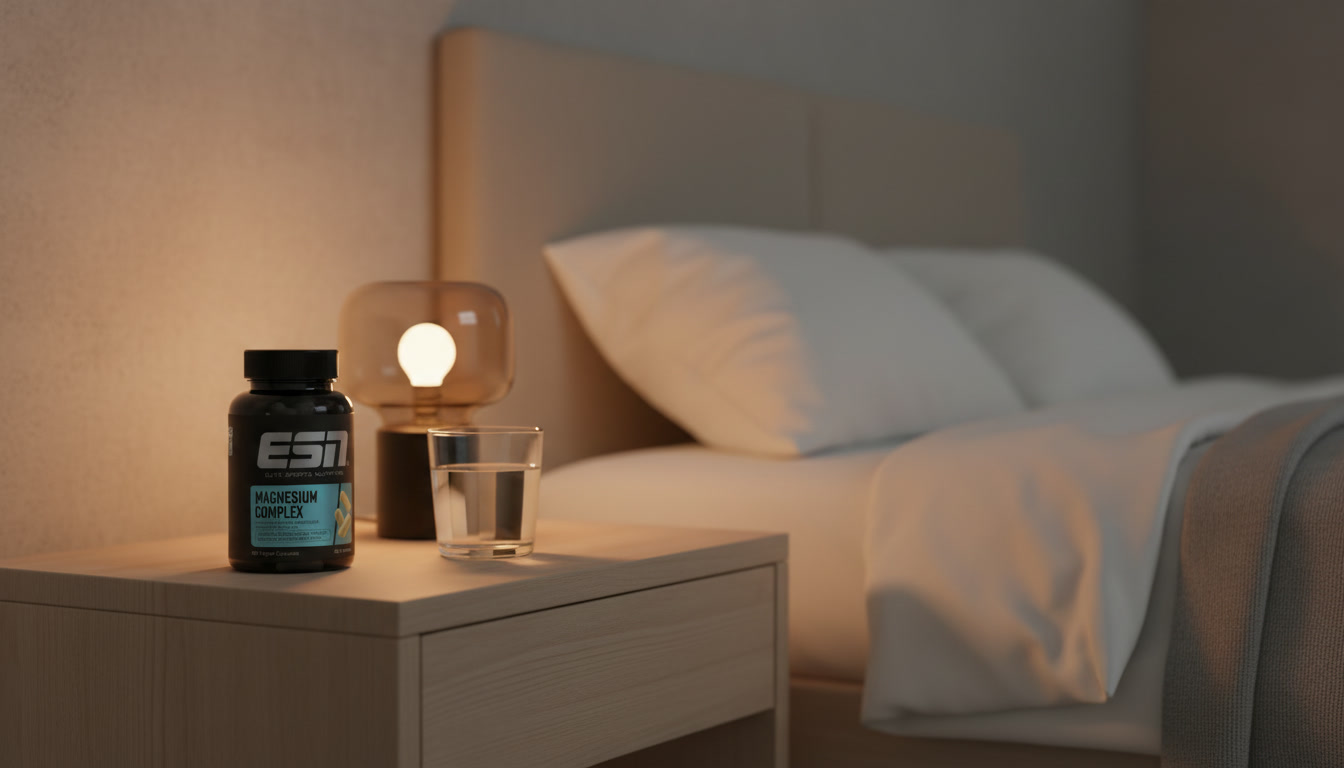
I train 3 to 4 times a week, and because of that load I take magnesium glycinate every evening, preventively, not because I have a problem but because I assumed it would stop one before it started.
For the most part it works. Leg cramps at night after exercise are rare for me. But not zero. If I push my calves harder than usual, or do a long hike, I’ll sometimes get a cramp that evening, in the middle of the night, or stiffness the next morning that feels like it was building toward one. Which made me wonder, somewhat uncomfortably, whether the magnesium was actually doing what I assumed it was doing.
So I looked into the actual trial data. What I found was not what I expected.
In this post
- How Common This Actually Is, and Why It Matters for Sleep
- What the Magnesium Evidence Actually Shows
- The Mechanism That Actually Fits My Situation
- The Detail I Did Not Expect: Pickle Juice and Mustard Are Real
- So Does Magnesium Do Anything for Me, or Not?
- What Actually Has Decent Evidence Behind It
How Common This Actually Is, and Why It Matters for Sleep
Nocturnal leg cramps are far more common than most people realise. Up to 60% of adults report experiencing them, and they typically last under 10 minutes, usually in the calf, foot, or thigh. For people who train regularly, leg cramps at night after exercise tend to cluster around the sessions that push hardest.
The sleep connection is direct enough that StatPearls, the clinical reference used by many physicians, notes that clinicians should be aware a patient’s presenting complaint may simply be insomnia. Someone dealing with leg cramps at night after exercise may not realise the cramp itself is what woke them.
That’s the part that made me want to actually understand the mechanism rather than just keep taking a supplement and hoping.
What the Magnesium Evidence Actually Shows
This is the part I found genuinely surprising.
For general nocturnal leg cramps, the kind that show up at rest with no clear trigger, the trial evidence for magnesium is weak. A randomised clinical trial in older adults found magnesium oxide performed no better than placebo for nocturnal leg cramp frequency. A Cochrane review reached the same conclusion, stating it is unlikely that magnesium supplementation provides clinically meaningful cramp prophylaxis to older adults experiencing skeletal muscle cramps. The same review also found that magnesium caused more minor side effects than placebo, mostly digestive ones like diarrhoea, affecting over a third of participants in some of the included studies.
Pregnancy related cramps get cited as the exception, and for a while I assumed that held up. But the most current Cochrane review on leg cramps in pregnancy actually found the evidence inconsistent: magnesium reduced cramp frequency in some trials and not in others, and the authors concluded it isn’t clear whether any of the oral interventions tested, including magnesium, are an effective and safe treatment. An earlier, smaller Cochrane review had reported a more promising result, but it was based on lower quality trials that have since been superseded by the newer one.
So even the exception turns out to be less settled than it’s usually presented. None of that is the headline most supplement marketing leads with.
The Mechanism That Actually Fits My Situation
Here’s the distinction that made everything click for me. What I get isn’t a general, unexplained nighttime cramp. It’s an exercise-associated muscle cramp, triggered by a specific hard effort, which is studied as a genuinely different phenomenon.
There are three competing explanations: dehydration, electrolyte depletion, and what’s called altered neuromuscular control. For years, electrolyte depletion was the default assumption, the one behind most sports drink marketing. But the evidence for the neuromuscular theory now appears stronger. The idea is that an overworked muscle sends confused signals between its spindle fibres and Golgi tendon organs, and the nerve that’s supposed to tell it to relax keeps firing instead. Fatigue, not fluid loss, is the trigger.
That actually maps onto my own pattern better than the electrolyte story does. It’s not random days. It’s the days I specifically overload my calves, or push distance on a hike, exactly the kind of localised fatigue the neuromuscular theory describes.
The Detail I Did Not Expect: Pickle Juice and Mustard Are Real
I want to flag this because it surprised me enough that I had to read it twice.
Athletes have used small amounts of pickle juice or mustard for acute cramp relief for decades, and it turns out there’s a documented mechanism. A controlled study found pickle juice relieved an induced cramp roughly 45% faster than no fluid at all, working in under two minutes. That’s far too fast to come from electrolyte absorption, which takes much longer to reach the bloodstream. Researchers measured plasma electrolyte levels directly and found no change.
Instead, the leading explanation is that the vinegar and salt trigger receptors in the mouth and throat called TRP channels, which send a fast signal up to the nervous system that interrupts the misfiring nerve causing the cramp. Mustard appears to work through the same pathway, via its own pungent compounds.
It’s not about replacing what you sweated out. It’s a reflex.
So Does Magnesium Do Anything for Me, or Not?
Probably something, just not necessarily the thing I assumed.
A 2024 systematic review looking at magnesium and muscle soreness in physically active people concluded that getting enough magnesium, at the recommended dietary allowance, supports muscle recovery from intense exercise, while taking more than that had only a modest effect on maintaining muscle integrity. It’s a different and more modest claim than cramp prevention, but it’s likely closer to why my evening habit actually helps on the days it does. The cramp-specific trial evidence is thin. The recovery and soreness side is where the more credible benefit sits, at least for someone training as often as I do.
I’m keeping the habit. I’m just no longer telling myself a slightly inaccurate story about why.
What Actually Has Decent Evidence Behind It
Stretching before bed. This is the one with the cleanest trial behind it. A randomised trial of 80 adults found that nightly calf and hamstring stretching, done immediately before sleep for six weeks, significantly reduced both the frequency and severity of leg cramps at night after exercise compared to a control group who did nothing. It’s the same stretching most people already do after a hard leg session, just moved to right before bed instead of right after the gym. I’ve started doing mine as part of my evening wind-down routine rather than only at the gym, and it’s a small enough addition that it’s stuck.
Hydration, specifically around hard or long efforts. If you get leg cramps at night after exercise, this is worth paying more attention to than the general advice suggests. Not because dehydration is now the leading theory, it isn’t, but because fluid loss still compounds fatigue, and fatigue is what the stronger theory points to. On hike days I now drink more deliberately in the few hours before, not just during.
A small amount of pickle juice, mustard, or diluted vinegar, for the cramp itself. Genuinely useful to know, even if it sounds odd. It won’t prevent one, but it can shorten one that’s already started.
Magnesium, as a recovery habit rather than a guaranteed cramp cure. I take magnesium every evening, the form I’ve found gentlest on my stomach compared to magnesium oxide. Given what the research actually shows, I’d frame it honestly as supporting recovery in people training regularly, not as a proven fix for the cramp itself.
What I don’t recommend: quinine. It has moderate evidence for reducing cramp frequency, but the FDA issued a warning against using it for leg cramps specifically due to serious, occasionally life-threatening reactions. It’s not worth the risk for something this manageable otherwise.
What I Do Now to Prevent Leg Cramps at Night After Exercise
I went into this expecting to confirm that my magnesium habit was the reason I rarely get leg cramps. The actual trial evidence is more mixed than that, especially for leg cramps at night after exercise in general. What fits my situation better is the altered neuromuscular control theory, which points to overworked muscles and fatigue rather than depleted electrolytes, and a stretching routine moved to right before bed has genuinely solid evidence behind it.
I’m still taking the magnesium. I’m just doing it for the recovery benefit it likely provides, not the cramp-prevention story I’d been telling myself.
Do you get cramps after specific kinds of training or activity, or does it feel random? I’d genuinely like to know!



Leave a Reply